Biography
Introduction: The Soldier-President of Burundi
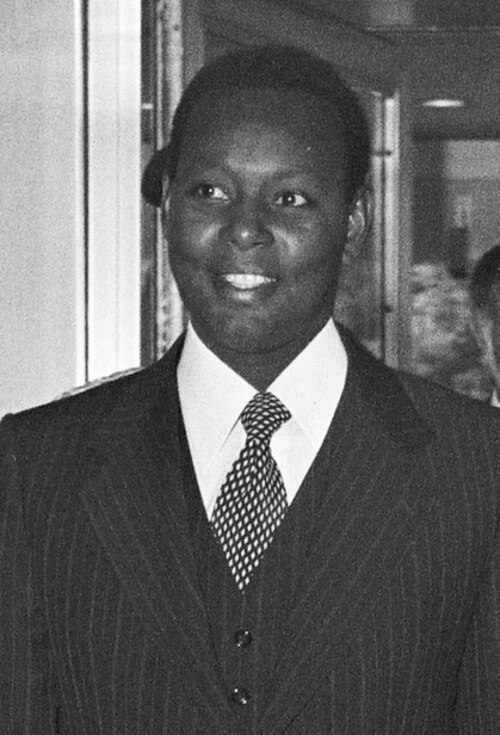
Jean-Baptiste Bagaza† stands as a pivotal and controversial figure in the modern history of Burundi, a small nation in the Great Lakes region of Africa marked by deep ethnic tensions. As the second President of the Republic, ruling from November 1976 to September 1987, Bagaza's tenure was defined by military authority, ambitious state-building projects, and a paradoxical relationship with religion. A career military officer who seized power in a bloodless coup, his leadership period was characterized by efforts to modernize the country, assert state control over all aspects of life, and navigate the perilous Hutu-Tutsi divide. His presidency, ultimately ended by another coup, left an indelible mark on Burundi's Politics & Government structures and continues to influence the nation's political discourse today.
Early Life & Education: From Rural Roots to Military Academy
Jean-Baptiste Bagaza was born in 1946 in the commune of Rutovu, Bururi Province, in what was then the Ruanda-Urundi trust territory under Belgian administration. He belonged to the Tutsi ethnic group, specifically the Hima clan, which would play a dominant role in Burundian military and political life. Details of his earliest years are sparse, but his formative education took place in local Catholic mission schools, a common path for ambitious young men of his generation.
His trajectory shifted decisively towards a military career. Bagaza received advanced military training at the École Royale des Cadets in Belgium, reflecting the enduring colonial ties in post-independence officer education. He further honed his skills at military academies in France, becoming part of a new, Western-trained officer corps. Before his political ascendancy, Jean-Baptiste Bagaza served as a captain in the Burundian army. His military background and training were crucial, placing him within the tight-knit circle of officers from Bururi who would come to control the levers of power in Burundi following the 1976 coup against President Michel Micombero, his cousin.
Career & Major Achievements: The Bagaza Presidency (1976-1987)
The 1976 Coup and Consolidation of Power
On November 1, 1976, then-Lieutenant Colonel Jean-Baptiste Bagaza led a bloodless military coup that ousted President Michel Micombero. The coup was orchestrated by the Union for National Progress (UPRONA) party's military wing, citing economic mismanagement and failure to resolve ethnic strife. Bagaza established the Supreme Revolutionary Council and assumed the presidency, promising order, development, and national unity. His rule marked the continuation of military-dominated, Tutsi-led governance in Burundi.
Policies of Modernization and Secularization
President Bagaza embarked on an ambitious program of state-led modernization. His government invested heavily in public infrastructure, notably in education and healthcare. He expanded the road network and pursued agricultural reforms. A defining, and ultimately most contentious, aspect of his rule was his campaign against the Catholic Church, which held significant social and economic influence. Bagaza's regime:
- Nationalized Catholic schools and seminaries, bringing them under state control.
- Banned most religious meetings and youth movements.
- Arrested and expelled clergy, accusing the Church of counter-revolutionary activities.
- Promoted a state-centric ideology that sought to replace religious allegiance with loyalty to the party-state.
This anti-clerical campaign, unusual in predominantly Catholic Africa, was driven by a desire to eliminate a potential rival center of power and to forge a unified national identity under UPRONA.
Ethnic Policy and Human Rights Record
While Bagaza's rule was less overtly violent than the cataclysmic events of 1972 that preceded him, his tenure was not free from ethnic repression. His policies aimed at controlled integration, allowing some Hutu into lower levels of government and the army, but ultimate power remained firmly with the Tutsi elite, particularly from his own Bururi region. Political life was strictly controlled under the one-party system of UPRONA. Human rights organizations documented systematic repression, including the suppression of free speech, arbitrary arrests, and the persecution of political opponents. The space for dissent was virtually non-existent.
Foreign Relations and Regional Dynamics
On the international stage, Jean-Baptiste Bagaza portrayed himself as a progressive leader. He maintained close ties with socialist states like China and Libya while also receiving aid from Western nations. Regionally, he was a founding member of the Economic Community of the Great Lakes Countries (CEPGL) alongside Rwanda and Zaire (now DR Congo). However, his relationships with neighbors were often strained by the refugee crisis stemming from Burundi's internal ethnic conflicts.
The 1987 Coup and Exile
Bagaza's increasingly authoritarian style and his alienation of the powerful Catholic Church and army elements led to his downfall. While attending a francophone summit in Quebec, Canada, Major Pierre Buyoya, another Tutsi officer from Bururi (and Bagaza's former classmate), staged a coup on September 3, 1987. Bagaza was deposed and went into exile, first in Libya and later settling in Uganda. He was later allowed to return to Burundi and even served as a senator in the post-2005 constitution era, a testament to the complex political reconciliations of the country.
Personal Life, Legacy, and Death
Compared to his public life, Jean-Baptiste Bagaza's personal life was kept relatively private. He was known as a disciplined and austere figure, consistent with his military background. His legacy is profoundly dualistic. On one hand, he is remembered for his vigorous, if heavy-handed, modernization efforts and infrastructure projects. On the other, his regime is criticized for its human rights abuses, religious persecution, and failure to genuinely address the root causes of ethnic division. The paradox of his rule—development alongside repression—exemplifies the challenges of military rule in post-colonial Africa. Jean-Baptiste Bagaza died on May 4, 2016, in Brussels, Belgium, at the age of 69. His passing marked the end of an era for a key architect of modern Burundian state structures.
Net Worth & Business Ventures
As with many leaders of his era, precise details of Jean-Baptiste Bagaza's net worth are not publicly verifiable. During his presidency, the lines between state resources and personal wealth in Burundi were often blurred under the one-party state model. His period in power saw state control over major sectors of the economy. After his 1987 ouster and during his exile, he lived away from the levers of economic power. Upon his return to Burundi and his subsequent role as a senator, he would have received a state salary. Any significant personal business ventures are not well-documented in public sources, suggesting that his economic influence was intrinsically tied to his political and military position rather than independent commercial enterprises. His primary legacy remains in the political and institutional realm, not in notable private business wealth.
For further reading on the political context of his rule, credible sources include the Encyclopædia Britannica and historical analyses from institutions like the International Crisis Group focusing on Central Africa.
Frequently Asked Questions
What is Jean-Baptiste Bagaza†'s estimated net worth?
Net worth details for Jean-Baptiste Bagaza† are currently being updated.
What is Jean-Baptiste Bagaza†'s role and nationality?
Jean-Baptiste Bagaza† is a Ex-President (1976-1987) from Burundi.
How did Jean-Baptiste Bagaza† make their money?
Jean-Baptiste Bagaza† built their fortune primarily through Jean-Baptiste Bagaza was a former military ruler of Burundi, a country with a very low GDP per capita, and there are no credible public reports of significant personal wealth or assets attributed to him..
How old is Jean-Baptiste Bagaza†?
Jean-Baptiste Bagaza† was born in 1946 (80 years old).
Which category is Jean-Baptiste Bagaza† listed under?
Jean-Baptiste Bagaza† is featured under the Politics & Government category on NetWorth Africa.
How is Jean-Baptiste Bagaza†'s net worth calculated?
NetWorth Africa estimates financial valuations using publicly available stock equity holdings, company ownership records, real estate assets, and verified market data.
Net Worth Analysis
Jean-Baptiste Bagaza was a former military ruler of Burundi, a country with a very low GDP per capita, and there are no credible public reports of significant personal wealth or assets attributed to him.
Quick Stats
Related People
Aaron Motsoaledi
LP; Minister of Home Affairs • South Africa
Abane Ramdane†
FLN Leader & Strategist • Algeria
Abdalla Hamdok
Ex-Prime Minister • Sudan
Abdallah Kigoda
Ex-Minister of Natural Resources • Tanzania