Financial Breakdown
Asset Distribution
Assets vs Liabilities
Assets
Disclaimer: These financial estimates are based on publicly available information and should be considered approximate. Last updated: 12/29/2025
Biography
Introduction: The Doctor-President in a Time of Turmoil
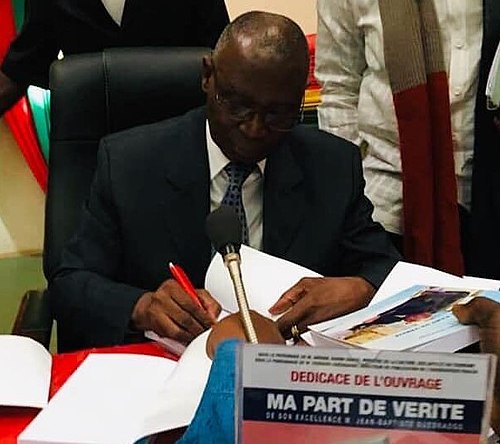
Jean-Baptiste Ouédraogo† (1942–2024) occupies a unique and often transitional place in the annals of Burkina Faso history. He is best known as the Ex-President of Burkina Faso who served from November 1982 to August 1983, a brief but critical nine-month period that bridged two eras of Military Rule. A medical doctor by training, Ouédraogo was thrust into the highest office following a bloodless coup against Colonel Saye Zerbo. His tenure is primarily defined by the intense ideological struggle within his government between moderate factions and radical revolutionaries led by Captain Thomas Sankara. This internal conflict culminated in Sankara's seizure of power, an event that propelled Burkina Faso onto a revolutionary path. Thus, Jean-Baptiste Ouédraogo's presidency represents a pivotal, albeit short-lived, chapter in the nation's volatile journey through Politics & Government in the late 20th century.
Early Life & Education: From Yako to Medical School
Jean-Baptiste Ouédraogo was born in 1942 in Yako, a town in the Passoré Province of what was then the French Upper Volta. His early years were shaped within the colonial context, but he pursued education with distinction. Demonstrating academic promise, he embarked on a path toward medicine, a field that commanded respect and offered a avenue for service. His medical training was extensive and rigorous, primarily conducted in France, a common trajectory for the educated elite of Francophone West Africa during the post-colonial period.
This formative experience abroad not only equipped him with professional medical credentials but also exposed him to European political and social systems. Upon completing his studies, Dr. Ouédraogo returned to his homeland, committing his skills to public health. He joined the military medical corps, rising to the rank of major. This dual identity as a physician and a military officer positioned him uniquely within the Upper Voltan establishment. He was seen as an intellectual, a healer, and a disciplined member of the armed forces—a combination that made him a compelling compromise candidate during moments of political crisis. His background lacked the overt political ambition of career soldiers, which initially made him an acceptable leader to various factions within the volatile Politics & Government landscape of the early 1980s.
Career & Major Achievements: Nine Months of Transition
The major arc of Jean-Baptiste Ouédraogo's political career is inextricably linked to the coup of November 7, 1982. Dissatisfaction with Colonel Saye Zerbo's regime led junior army officers to stage a takeover. Seeking a respectable and unifying figurehead, the Military Rule council, known as the Council of Popular Salvation (CPS), turned to Major Dr. Jean-Baptiste Ouédraogo. On November 8, 1982, he was sworn in as President, promising a return to civilian rule and an improvement in the nation's dire economic conditions.
The Presidency and Internal Struggle
Ouédraogo's government was a coalition of contrasting ideologies. His key appointment was making the charismatic and radical Captain Thomas Sankara as Prime Minister in January 1983. This move, intended to harness Sankara's popularity, instead created a powerful rival center of power. Sankara's fiery, anti-imperialist rhetoric and populist policies, such as selling off the government's luxury vehicles, galvanized the youth and leftists but alarmed conservative military officers and neighboring French-aligned states.
President Jean-Baptiste Ouédraogo found himself attempting to navigate between these ferocious pressures. His approach was markedly more cautious and diplomatic than Sankara's. The defining conflict of his administration was this ideological tug-of-war, which played out in public speeches and behind closed doors. The tension reached its peak in May 1983, when Ouédraogo, under pressure from conservative officers and possibly foreign allies, ordered the arrest of Sankara and his closest allies.
The May Coup and Its Aftermath
The arrest of Thomas Sankara backfired spectacularly. It provoked widespread outrage among Sankara's supporters within the military and the populace. On May 17, 1983, pro-Sankara forces, led by Captain Blaise Compaoré, launched a counter-move that effectively placed President Ouédraogo under house arrest and freed Sankara. Although Ouédraogo was formally reinstated days later after negotiations, his authority was irreparably shattered. The country was effectively divided, with Ouédraogo leading a weakened official government in Ouagadougou and Sankara commanding immense revolutionary loyalty.
This untenable situation culminated on August 4, 1983, when Sankara and Compaoré's forces seized power definitively in what became known as the "August Revolution." Jean-Baptiste Ouédraogo was deposed and placed in detention. His major achievement, albeit an unintended one, was serving as the transitional figure during a period of intense ideological fermentation. His presidency provided the platform from which Thomas Sankara's revolutionary vision could coalesce and ultimately triumph, forever changing the nation's trajectory, including its renaming from Upper Volta to Burkina Faso in 1984.
Personal Life, Later Years & Legacy
Following his overthrow, Jean-Baptiste Ouédraogo was imprisoned by the Sankara government until 1985. After his release, he largely retreated from the public political sphere, returning to his first profession: medicine. He maintained a low profile for decades, a stark contrast to the tumultuous period of his presidency. In his later years, he was sometimes consulted as a elder statesman and a living witness to a critical juncture in the nation's history. He passed away on February 21, 2024, at the age of 82.
The legacy of Jean-Baptiste Ouédraogo is complex and often overshadowed by the towering figure of Thomas Sankara. Historians view him not as a transformative leader himself, but as a symptom and a catalyst of the transformative forces of his time. He is remembered as a decent man, a competent physician, and a moderate who was ultimately overwhelmed by the revolutionary fervor he attempted to channel. His brief rule highlights the extreme instability and ideological fractures that characterized Burkina Faso in the early 1980s. In the broader narrative of West African Politics & Government, his story serves as a poignant case study of a transitional leader caught between the old order and a radical new dawn.
Net Worth & Business Ventures
Unlike many political and military figures, Jean-Baptiste Ouédraogo† was not associated with significant personal wealth, business empires, or allegations of corruption. His primary professional identity was that of a military doctor, and his ascent to the presidency was sudden and not driven by personal financial ambition. There are no credible reports or public records indicating he amassed a substantial net worth during or after his time in office. His life after politics was marked by a return to a relatively modest existence, consistent with his medical background.
Any discussion of his finances is speculative at best. In the context of Burkina Faso's Politics & Government, his administration was too brief and too internally conflicted to be associated with major economic programs or personal enrichment schemes. His legacy is firmly political and historical, rather than financial. This absence of a business or wealth narrative further underscores his image as an interim figure whose role was defined by political and ideological mediation, not by economic enterprise or accumulation.
Key Facts & Timeline
- 1942: Born in Yako, French Upper Volta.
- Early 1980s: Served as a Major in the Military Medical Corps.
- November 8, 1982: Installed as President after a coup against Saye Zerbo.
- January 1983: Appoints Captain Thomas Sankara as Prime Minister.
- May 17, 1983: Sankara arrested, leading to a temporary crisis and Ouédraogo's brief house arrest.
- August 4, 1983: Deposed by the August Revolution led by Sankara and Compaoré.
- 1983-1985: Imprisoned by the new revolutionary government.
- 2024: Died at the age of 82.
For further reading on this era of Burkinabè history, credible sources include the Encyclopædia Britannica and academic works on West African political transitions.
Frequently Asked Questions
What is Jean-Baptiste Ouédraogo†'s estimated net worth?
Jean-Baptiste Ouédraogo† has an estimated net worth of $1.0 Million.
What is Jean-Baptiste Ouédraogo†'s role and nationality?
Jean-Baptiste Ouédraogo† is a Ex-President of Burkina Faso from Burkina Faso.
How did Jean-Baptiste Ouédraogo† make their money?
Jean-Baptiste Ouédraogo† built their fortune primarily through As a former military officer and short-term president of a low-income country, his wealth is not publicly documented but is estimated to be modest relative to business leaders..
How old is Jean-Baptiste Ouédraogo†?
Jean-Baptiste Ouédraogo† was born in 1942 (84 years old).
Which category is Jean-Baptiste Ouédraogo† listed under?
Jean-Baptiste Ouédraogo† is featured under the Politics & Government category on NetWorth Africa.
How is Jean-Baptiste Ouédraogo†'s net worth calculated?
NetWorth Africa estimates financial valuations using publicly available stock equity holdings, company ownership records, real estate assets, and verified market data.
Net Worth Analysis
As a former military officer and short-term president of a low-income country, his wealth is not publicly documented but is estimated to be modest relative to business leaders.
Quick Stats
Related People
Aaron Motsoaledi
LP; Minister of Home Affairs • South Africa
Abane Ramdane†
FLN Leader & Strategist • Algeria
Abdalla Hamdok
Ex-Prime Minister • Sudan
Abdallah Kigoda
Ex-Minister of Natural Resources • Tanzania