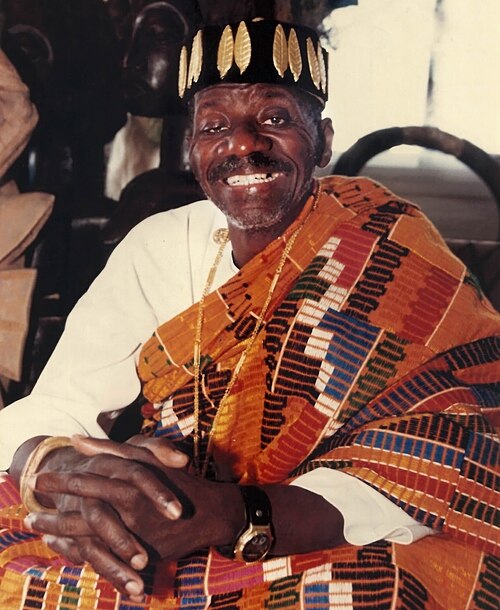
Biography
Introduction: The Voice of a Continent
In the vibrant tapestry of West African Arts & Culture, few figures shine as brightly as Jean-Marie Adiaffi†. Born in 1941 in the Ivory Coast, Adiaffi emerged as a seminal novelist, playwright, poet, and philosopher whose work profoundly shaped post-colonial African literature. His career, spanning from the heady days of independence to the turn of the 21st century, was dedicated to excavating and revalorizing African identity, spirituality, and history. Adiaffi is perhaps best known for his groundbreaking 1980 novel, La Carte d'identité (The Identity Card), which earned him the prestigious Grand prix littéraire d'Afrique noire in 1981. More than just a storyteller, Jean-Marie Adiaffi† was a cultural theorist who championed the concept of "paléo-négritude," seeking the deep, spiritual roots of African civilization. His legacy endures as a cornerstone of Ivorian and pan-African literary heritage.
Early Life & Education: Forging an Intellectual Path
Jean-Marie Adiaffi† was born in 1941 in Bettié, in the eastern region of the then-French colony of Ivory Coast. His early life was immersed in the rich oral traditions and spiritual beliefs of the Akan people, particularly the Abbey and Agni cultures. These formative experiences with myth, proverb, and ritual would become the bedrock of his entire literary oeuvre. His educational journey mirrored that of many African intellectuals of his generation, navigating the colonial system to emerge with a powerful, critical voice.
He pursued secondary studies at the Lycée Classique d'Abidjan before moving to France for higher education. In Paris, he studied at the Lycée Henri-IV and later at the prestigious École Normale Supérieure de Saint-Cloud, where he delved into philosophy, literature, and the social sciences. This rigorous academic training in Western thought provided him with the tools to deconstruct its hegemony. The 1960s were a period of immense political and cultural ferment across Africa, and Adiaffi, alongside peers like Bernard Dadié, actively engaged in debates about négritude, authenticity, and the path forward for newly independent nations. This blend of deep indigenous upbringing and elite Western education created the unique tension and perspective that would define his writing.
Career & Major Achievements: Architect of "Paléo-Négritude"
The career of Jean-Marie Adiaffi† was multifaceted, encompassing fiction, theater, poetry, and essay writing. He returned to a newly independent Ivory Coast, teaching and eventually serving in significant cultural administrative roles, including as a director at the Ministry of Culture. His work consistently aimed to bridge the gap between the ancestral African world and the contemporary realities of a post-colonial society.
The Seminal Novel: La Carte d'identité
His magnum opus, La Carte d'identité (1980), is a powerful allegorical novel that tackles the crisis of identity. The plot revolves around an African king who, under colonial rule, is demanded to produce an identity card—a bureaucratic document symbolizing the negation of his inherent, sovereign identity. The king's refusal and subsequent descent into madness is a poignant critique of colonialism's psychological violence. Winning the Grand prix littéraire d'Afrique noire in 1981, this novel cemented Adiaffi's reputation and remains a critical text in African literary studies.
Theatrical Innovations and Poetic Explorations
As a playwright, Adiaffi sought to revitalize African theater by infusing it with traditional performance elements. Plays like Une Hypothèse explicative de la mentalité des nègres ou les Mauresques and L'Île de l'éternel été are known for their complex symbolism, poetic dialogue, and engagement with historical and metaphysical themes. His theatrical work was a direct extension of his literary philosophy, aiming to create a truly African dramaturgy.
The Philosophical Core: Paléo-Négritude
Beyond individual works, Adiaffi's greatest contribution may be his philosophical framework. He moved beyond the foundational négritude of Senghor and Césaire to propose "paléo-négritude." This concept urged a return to the most ancient, pre-colonial sources of African civilization—its cosmogonies, spiritual systems, and ethical codes—to find solutions for modern challenges. He articulated this in essays and lectures, positioning himself as a thinker deeply concerned with the cultural and spiritual rearmament of Africa.
His major achievements can be summarized as follows:
- 1980: Publication of the landmark novel La Carte d'identité.
- 1981: Awarded the Grand prix littéraire d'Afrique noire for the aforementioned novel.
- Prolific Output: Author of numerous plays, poetry collections (like Galeries souterraines), and critical essays.
- Cultural Leadership: Influential roles in shaping Ivorian cultural policy and education.
- Intellectual Legacy: Creation and propagation of the "paléo-négritude" philosophy.
Personal Life, Legacy, and Passing
While intensely private about his personal life, it is known that Jean-Marie Adiaffi† was a dedicated teacher and mentor to younger generations of writers and thinkers in the Ivory Coast. His life was his work—a continuous quest to understand and express the African soul. He was a charismatic and demanding intellectual figure, respected for the depth of his erudition and the strength of his convictions.
Jean-Marie Adiaffi passed away in November 1999, leaving behind an unfinished manuscript, a testament to his relentless creative drive until the end. His legacy is profound. He is remembered as one of the most original and philosophical voices in Francophone African literature. His exploration of identity, spirituality, and history continues to inspire scholars, writers, and students. In his homeland, he is recognized as a national treasure, a pillar of Ivorian Arts & Culture whose work provides a crucial link to the ancestral past while critically examining the post-colonial present. Institutions like universities and libraries in Ivory Coast bear his name, ensuring his contributions to Literature are not forgotten.
Literary Estate and Lasting Value
While specific details of the net worth or business ventures of Jean-Marie Adiaffi† are not publicly documented in the manner of contemporary commercial authors, his value is measured in cultural and intellectual capital. As a celebrated author and winner of major literary prizes, his published works continue to generate royalties for his estate and are staple texts in academic curricula across Africa and in Francophone studies worldwide. The primary "business" of Adiaffi was the business of ideas—the cultivation of African philosophical and literary independence.
His published oeuvre, including novels, plays, and poetry, remains in print and is studied extensively. The value of his literary estate lies in its enduring relevance and its critical role in the canon of African literature. Furthermore, his influence extends indirectly to the broader cultural economy of the Ivory Coast, as his work promotes a deep, sophisticated understanding of Ivorian heritage, contributing to cultural tourism and national pride. The legacy of Jean-Marie Adiaffi† is thus not quantified in monetary terms but in the indelible mark he left on the consciousness of a continent and the ongoing scholarly and creative engagement with his profound body of work.
Frequently Asked Questions
What is Jean-Marie Adiaffi†'s estimated net worth?
Jean-Marie Adiaffi† has an estimated net worth of $5.0 Million.
What is Jean-Marie Adiaffi†'s role and nationality?
Jean-Marie Adiaffi† is a Novelist & Playwright from Ivory Coast.
How did Jean-Marie Adiaffi† make their money?
Jean-Marie Adiaffi† built their fortune primarily through Jean-Marie Adiaffi was a renowned Ivorian novelist and playwright, not a business figure; his wealth derived from literary work and cultural influence, not corporate holdings..
How old is Jean-Marie Adiaffi†?
Jean-Marie Adiaffi† was born in 1941 (85 years old).
Which category is Jean-Marie Adiaffi† listed under?
Jean-Marie Adiaffi† is featured under the Arts & Culture category on NetWorth Africa.
How is Jean-Marie Adiaffi†'s net worth calculated?
NetWorth Africa estimates financial valuations using publicly available stock equity holdings, company ownership records, real estate assets, and verified market data.
Net Worth Analysis
Jean-Marie Adiaffi was a renowned Ivorian novelist and playwright, not a business figure; his wealth derived from literary work and cultural influence, not corporate holdings.
Quick Stats

Related People
Abasse Ndione
Novelist & Playwright • Senegal
Abdel Rahman al-Abnudi†
Poet (Egypt-Sudan) • Sudan
Abdelkrim Ghallab†
Novelist & Journalist • Morocco
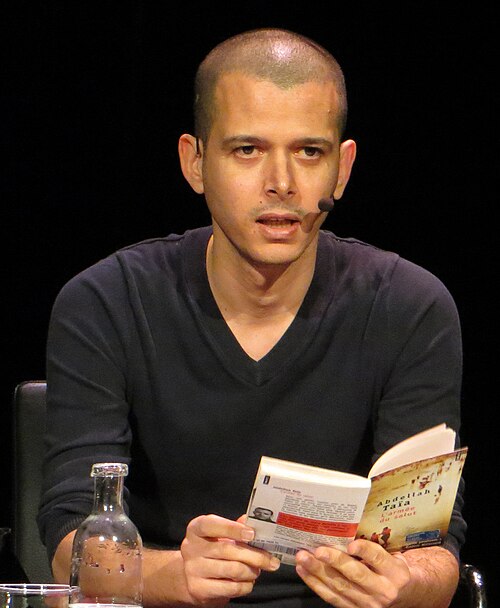
Abdellah Taïa
Novelist & Filmmaker • Morocco