Financial Breakdown
Asset Distribution
Assets vs Liabilities
Assets
Liabilities
Disclaimer: These financial estimates are based on publicly available information and should be considered approximate. Last updated: 12/31/2025
Biography
Introduction: The Chronicler of Contemporary Africa
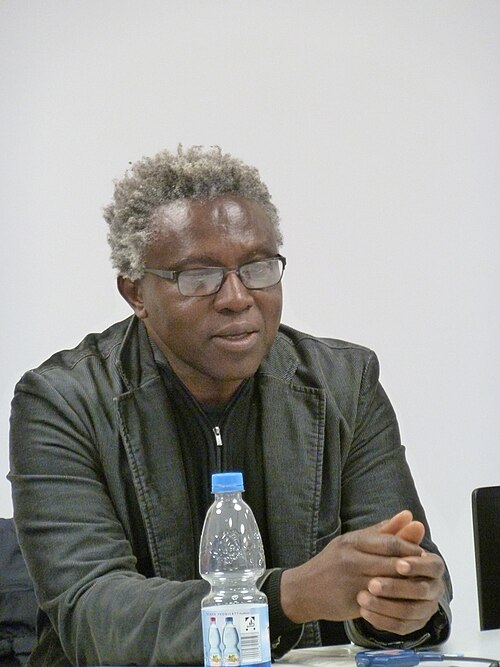
Jean-Marie Téno stands as one of the most significant and incisive voices in African cinema, a documentary filmmaker whose work has relentlessly interrogated the social, political, and cultural realities of post-colonial Africa. Born in Cameroon in 1954, Téno has crafted a profound body of work that moves beyond simple observation to engage in a deep, critical dialogue about history, memory, power, and resistance. His films are essential viewing for anyone seeking to understand the complex legacies of colonialism and the ongoing struggles for authentic autonomy and cultural identity on the continent. Operating firmly within the realm of Arts & Culture, Téno uses the documentary form as a tool for education, critique, and the preservation of collective memory, establishing himself as a crucial intellectual and artistic figure whose influence extends far beyond his home country of Cameroon.
A key achievement of Jean-Marie Téno's career is his unwavering commitment to an African perspective. He consciously positions his camera and narrative voice from within the African experience, challenging Western media representations and offering nuanced, often uncomfortable, truths. His international acclaim, including awards at major festivals like FESPACO and the Berlin International Film Festival, underscores the global resonance of his locally rooted stories. For over three decades, the work of Jean-Marie Téno has served as both a mirror and a map, reflecting the contradictions of the present while charting paths toward a more conscious future.
Early Life & Education: Formative Years in Cameroon and France
Jean-Marie Téno was born in 1954 in Bafoussam, in the West Region of Cameroon, a nation that had just entered a turbulent period of struggle for independence from French colonial rule. Growing up in the nascent post-colonial era, Téno was directly exposed to the tensions between traditional cultures and the imposed structures of the new state. This environment seeded the critical questions about power, history, and identity that would later define his filmography. His early education in Cameroon provided a foundational understanding of his own society, but it was his subsequent journey that would shape his artistic lens.
In the 1970s, Téno moved to France to pursue higher education. He initially studied audiovisual techniques at the University of Valenciennes, followed by film at the University of Paris I. This technical training in the West was pivotal, but perhaps more formative was his immersion in the vibrant cinematic and intellectual debates of the time. He engaged with the works of African film pioneers like Ousmane Sembène and engaged in discussions about the role of the filmmaker in society. This period solidified his belief that filmmaking, particularly documentary, was not a neutral act but a political and ethical undertaking. The experience of being an African in Europe also sharpened his perspective on colonialism's enduring psychic and cultural impacts, a theme he would relentlessly explore upon returning his focus to the African continent.
Career & Major Achievements: A Pioneering Documentary Oeuvre
Jean-Marie Téno's career began in the 1980s, and he quickly distinguished himself with a style that blended journalistic inquiry with personal essay and historical investigation. His early short films like Hommage (1985) and La Gifle et la caresse (1987) showed his interest in cultural displacement and social dynamics. However, it was with his first feature-length documentary, Afrique, je te plumerai (1992), that Téno announced his major thematic concerns. The film is a sweeping, critical examination of Cameroon's history from German colonization through French administration to the authoritarian one-party state. Its title, translating to "Africa, I Will Pluck You," references a colonial-era children's song, symbolizing the systematic cultural and economic plundering of the continent.
Key Films and Themes
Téno's filmography forms a cohesive and expanding critique. Chef! (1999) uses the microcosm of a village chieftaincy conflict to explore the manipulation of tradition by political power. Le Malentendu colonial (2004) delves into the complex and often tragic history of German colonialism in Namibia and Cameroon, questioning the very possibility of a benign colonial mission. In Sacred Places (2009), he shifts focus to the resilience of culture, documenting a small cinema club in Burkina Faso as a site of community and resistance against cultural homogenization. His 2013 film, Lieux Saints, continues this exploration of urban African spaces. Throughout, Jean-Marie Téno maintains a consistent focus on:
- The Mechanics of Power: How colonial structures were replicated and maintained by African elites.
- Cultural Memory: The importance of preserving and critically engaging with history and tradition.
- Everyday Resistance: Highlighting the ways ordinary people assert their dignity and agency.
- The Role of Media: Critiquing both Western and state-controlled African media while advocating for independent voices.
Impact and Recognition
The impact of Jean-Marie Téno's work is profound. He is a central figure in the canon of African documentary, inspiring a generation of filmmakers to pursue critical, personally invested non-fiction storytelling. His films are staples in university curricula worldwide, used to teach post-colonial studies, African history, and documentary theory. He has received numerous awards, including the prestigious Étalon de Yennenga at FESPACO (the Panafrican Film and Television Festival of Ouagadougou) for Chef! in 1999. Beyond accolades, his legacy lies in creating an archive of critical thought on film, offering nuanced counter-narratives to simplistic portrayals of Africa and cementing his status as a vital public intellectual in the field of Arts & Culture.
Personal Life, Philosophy & Legacy
While Jean-Marie Téno maintains a degree of privacy regarding his personal life, his philosophical and ethical stance is vividly present in every frame of his work. He is known as a thoughtful, deeply principled artist who views filmmaking as a form of activism and pedagogy. His personal commitment is to truth-telling, however inconvenient, and to amplifying the voices of those marginalized by official histories. He splits his time between Cameroon and France, a physical duality that reflects the transnational nature of his subjects—the enduring links and conflicts between Africa and Europe.
His legacy is multifaceted. As a filmmaker, he has expanded the language of the African documentary, moving between essay, reportage, and poetic observation. As a thinker, he has provided a robust framework for analyzing post-colonial disillusionment and resilience. For aspiring filmmakers in Cameroon and across Africa, Jean-Marie Téno represents the possibility of a successful, internationally recognized career built on uncompromising artistic and political integrity. He has also contributed through mentorship and participation in film juries and workshops, fostering the next wave of African cinematic talent. His body of work ensures that the critical questions about governance, memory, and cultural sovereignty remain at the forefront of discourse on Africa's future.
Net Worth & Professional Standing
As an independent documentary filmmaker working primarily on sociopolitical themes, Jean-Marie Téno's career is not typically associated with the commercial film industry or publicly discussed net worth figures. His financial model relies on a combination of international film grants, production funding from European cultural institutes (like the French Centre national du cinéma), festival prizes, and distribution through educational and non-theatrical channels. This is common for filmmakers engaged in specialized, auteur-driven documentary work within the realm of global Arts & Culture.
His "wealth" is more accurately measured in his cultural capital and professional standing. Jean-Marie Téno's business is one of ideas and impact. He owns the rights to his extensive filmography, which constitutes his primary professional asset. His income is derived from his work as a director, producer, and occasionally as a writer and speaker. The true value of his career lies in its profound influence on African cinema and intellectual thought, his sustained ability to fund and produce challenging films for over 30 years, and his respected position as a leading voice in global documentary filmmaking. His success demonstrates that significant impact in the film world can be achieved through critical acclaim and pedagogical value, alongside sustainable international co-production strategies.
Frequently Asked Questions
What is Jean-Marie Téno's estimated net worth?
Jean-Marie Téno has an estimated net worth of $1.0 Million.
What is Jean-Marie Téno's role and nationality?
Jean-Marie Téno is a Documentary Filmmaker from Cameroon.
How did Jean-Marie Téno make their money?
Jean-Marie Téno built their fortune primarily through Jean-Marie Téno is a respected but not commercially mainstream documentary filmmaker; his wealth is derived from his artistic career, not business, and he is not on any billionaire list..
How old is Jean-Marie Téno?
Jean-Marie Téno was born in 1954 (72 years old).
Which category is Jean-Marie Téno listed under?
Jean-Marie Téno is featured under the Arts & Culture category on NetWorth Africa.
How is Jean-Marie Téno's net worth calculated?
NetWorth Africa estimates financial valuations using publicly available stock equity holdings, company ownership records, real estate assets, and verified market data.
Net Worth Analysis
Jean-Marie Téno is a respected but not commercially mainstream documentary filmmaker; his wealth is derived from his artistic career, not business, and he is not on any billionaire list.
Quick Stats

Related People
Abasse Ndione
Novelist & Playwright • Senegal
Abdel Rahman al-Abnudi†
Poet (Egypt-Sudan) • Sudan
Abdelkrim Ghallab†
Novelist & Journalist • Morocco
Abdellah Taïa
Novelist & Filmmaker • Morocco