Biography
Introduction: The Polarizing Figure of Congolese Politics
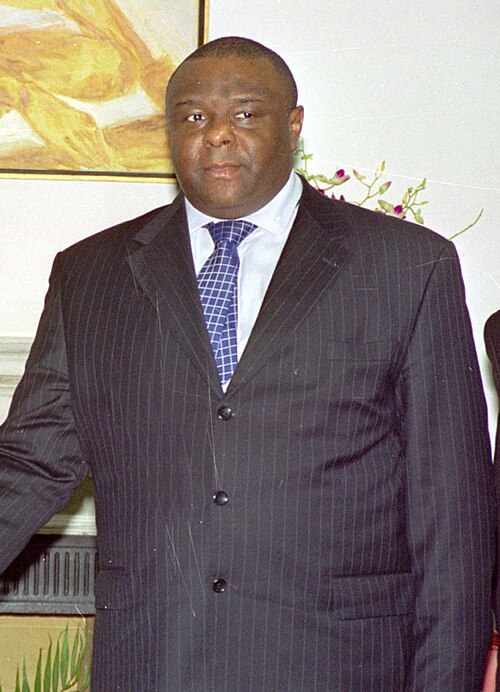
Jean-Pierre Bemba Gombo is one of the most prominent, wealthy, and controversial figures in modern Democratic Republic of the Congo (DRC) history. A key player in the nation's turbulent transition from war to fragile peace, Bemba's life story is a complex tapestry woven with threads of immense political power, military command, immense business wealth, and groundbreaking international legal reckoning. He rose to become a Vice President in the DRC's transitional government (2003-2006) and a formidable opposition leader, nearly winning the presidency in 2006. However, his legacy is inextricably linked to his role as a commander of the Mouvement de Libération du Congo (MLC) and his subsequent status as an ICC defendant. His trial at the International Criminal Court (ICC) made him the first person convicted for sexual assault as a war crime and a crime against humanity, though this conviction was later overturned on appeal. The saga of Jean-Pierre Bemba encapsulates the brutal conflicts of Central Africa, the challenges of post-war governance, and the evolving pursuit of international justice.
Early Life and Education: Privilege and Political Pedigree
Born on November 4, 1962, in Bokada, Nord-Ubangi, in what was then the Republic of the Congo (Léopoldville), Jean-Pierre Bemba was born into privilege and political influence. His father, Jeannot Bemba Saolona, was a wealthy businessman and close confidant of longtime dictator Mobutu Sese Seko. This connection provided the young Bemba with significant advantages and positioned his family within the elite circles of Zairian society. His early education took place within the DRC before he traveled to Europe for higher studies.
Bemba's formative academic years were spent in Belgium, where he earned a degree in Finance from the Institut Catholique des Hautes Études Commerciales (ICHEC) in Brussels in the 1980s. This Western business education would later prove crucial in managing his family's vast commercial empire and funding his political ambitions. Upon returning to Zaire, he did not immediately enter the political fray but instead focused on expanding the family business conglomerate, which included interests in aviation (the airline Scibe Airlift), telecommunications, and agriculture. His father's death in 1995 left him at the helm of this empire, amassing considerable personal wealth and a network of resources that would fuel his future military and political ventures.
Career and Major Achievements: From Warlord to Vice President
Jean-Pierre Bemba's political career was forged in the fires of the Second Congo War (1998-2003). When the conflict erupted, President Laurent-Désiré Kabila, facing rebellion and foreign invasion, distributed weapons to various militias to bolster his forces. Bemba, with his financial resources, founded and led the Mouvement de Libération du Congo (MLC) in 1998. Backed by Uganda, the MLC quickly became a powerful rebel group, controlling vast swathes of northern DRC, including the important city of Gbadolite.
Rise to the Transitional Government
Following the assassination of Laurent Kabila in 2001 and the rise of his son Joseph, peace negotiations culminated in the 2002 Global and All-Inclusive Agreement. This established a transitional government where Bemba, as leader of a major armed faction, was appointed one of four Vice Presidents in July 2003. His portfolio included economic and financial supervision. This period marked his official entry into high-state Politics & Government, transforming him from a rebel commander into a central figure in the country's fragile unity government tasked with steering the DRC toward elections.
The 2006 Elections and Aftermath
The transitional period led to historic elections in 2006. Jean-Pierre Bemba emerged as the main challenger to Joseph Kabila. He secured 42% of the vote in the first round but was defeated by Kabila in the runoff with 48% to Kabila's 58%. Bemba's refusal to accept the results initially led to violent clashes in Kinshasa between his guard and the national army. After a tense standoff, he agreed to demobilize his forces. In 2007, he was elected to the Senate, maintaining his role as the leader of the primary opposition party. However, his relationship with the Kabila government remained fraught with tension.
The Central African Republic Mission and ICC Charges
A pivotal chapter in Bemba's life began in 2002, when at the request of then-President Ange-Félix Patassé of the Central African Republic (CAR), he dispatched MLC troops to help quell a coup attempt. It was the conduct of these troops between October 2002 and March 2003 that led to his international infamy. The ICC issued a warrant for his arrest in May 2008, charging him with war crimes and crimes against humanity—including murder, rape, and pillaging—allegedly committed by his forces in the CAR. The principle of command responsibility was central to the case. Bemba was arrested in Belgium and transferred to The Hague.
The Landmark ICC Trial and Appeal
The trial of Jean-Pierre Bemba was a landmark for international law. In March 2016, the ICC found him guilty on all counts, marking the first ICC conviction for sexual violence as a war crime and crime against humanity, and a major application of command responsibility. He was sentenced to 18 years imprisonment. However, in a dramatic turn in June 2018, the ICC Appeals Chamber unanimously overturned the conviction, ruling that he could not be held criminally liable for the crimes of his subordinates, as the trial chamber had erred in its assessment of his control over the troops and their actions. He was immediately released after over a decade in detention.
Personal Life, Legacy, and Lasting Impact
Outside of politics and war, Jean-Pierre Bemba is known as a family man, married to his wife and having children. His personality is often described as charismatic and shrewd, traits that helped him build both a business empire and a loyal political following. His legacy is profoundly dualistic. To his supporters, primarily in the northwestern DRC, he remains a popular figure—a son of the region who challenged the political establishment in Kinshasa and represented a viable alternative. His political movement, the MLC, remains an active opposition party.
To critics and victims, he is a warlord whose troops committed horrific atrocities. The ICC trial, even with its eventual acquittal on appeal, permanently etched his name into the history of international criminal law as a defining case on the limits of command responsibility. His story is a stark reminder of the complex interplay between local conflicts, international intervention, and the pursuit of justice. His return to the DRC after his release was met with both celebration and condemnation, highlighting the deep divisions within Congolese society that he both reflected and influenced.
Net Worth and Business Ventures
Long before his political ascent, Jean-Pierre Bemba was a business magnate. He inherited and expanded a vast conglomerate from his father. His business interests were diverse and lucrative, forming the financial backbone for his later military and political campaigns. Key ventures included:
- Scibe Airlift: A major airline and cargo service operating in Central Africa.
- Telecommunications: Investments in cellular network infrastructure.
- Agriculture and Forestry: Significant holdings in cocoa, rubber, and timber plantations.
- Media: Ownership of a television station and radio network, which proved vital for his political messaging.
While his exact net worth has never been officially confirmed, it was widely estimated to be in the hundreds of millions of dollars at its peak. However, his assets were repeatedly targeted and seized by the Congolese government during his ICC detention, and the long legal battles have likely impacted his fortune. Nevertheless, his business acumen and the wealth it generated remain a fundamental, though often overshadowed, aspect of his biography and a key factor in understanding his rise to power in the Democratic Republic of the Congo.
Financial Breakdown
Connected People & Network
Explore Full Interactive Map
Net Worth Analysis
As a former rebel leader and politician convicted by the ICC, his wealth is not from business but political/military activity, and he has faced asset freezes and legal costs.
Frequently Asked Questions
What is Jean-Pierre Bemba's estimated net worth?
Net worth details for Jean-Pierre Bemba are currently being updated.
What is Jean-Pierre Bemba's role and nationality?
Jean-Pierre Bemba is a Ex-Vice President & ICC Defendant from Democratic Republic of the Congo.
How did Jean-Pierre Bemba make their money?
Jean-Pierre Bemba built their fortune primarily through As a former rebel leader and politician convicted by the ICC, his wealth is not from business but political/military activity, and he has faced asset freezes and legal costs..
How old is Jean-Pierre Bemba?
Jean-Pierre Bemba was born in 1962 (64 years old).
Related Personalities

Aaron Motsoaledi
LP; Minister of Home Affairs • South Africa

Abane Ramdane†
FLN Leader & Strategist • Algeria

Abdalla Hamdok
Ex-Prime Minister • Sudan

Abdallah Kigoda
Ex-Minister of Natural Resources • Tanzania