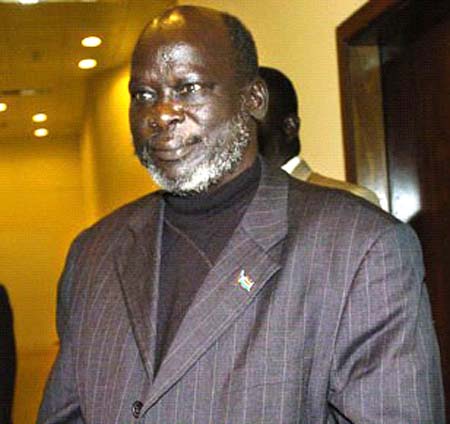
Biography
Introduction: The Architect of South Sudan's Liberation
Dr. John Garang† stands as a colossus in the modern history of Sudan and South Sudan. A revolutionary leader, military strategist, and political visionary, he is best known as the founding father of the Sudan People's Liberation Movement/Army (SPLM/A). His life's work was dedicated to fighting against marginalization and advocating for a new, unified, and secular Sudan, ultimately setting in motion the process that led to the independence of South Sudan. Garang's most notable achievement was signing the Comprehensive Peace Agreement (CPA) in 2005, ending Africa's longest-running civil war. This landmark agreement installed him as the First Vice President of Sudan, a position of immense symbolic and practical power meant to shepherd the nation through a six-year interim period leading to a referendum on Southern self-determination. Though his tenure was tragically cut short just three weeks after taking office, his legacy as the unifier and liberator of the South Sudanese people remains indelible.
Early Life & Education: Forging a Leader
John Garang† was born on June 23, 1945, in Wangulei village, in the Jonglei region of what was then Anglo-Egyptian Sudan. His early life was marked by the pastoralist Dinka culture, but his intellectual prowess soon set him on a different path. He received his primary education in Wau and later attended the prestigious Rumbek Secondary School. In 1962, his academic excellence earned him a scholarship to study in Tanzania. This period exposed the young Garang to the pan-African ideologies and liberation movements sweeping the continent, profoundly shaping his political consciousness.
Returning home, he joined the first Sudanese civil war (1955-1972) as a rebel with the Anyanya movement. However, the 1972 Addis Ababa Agreement, which granted the South regional autonomy, prompted him to pursue further education. He earned a Bachelor of Arts in economics from Grinnell College in Iowa, USA, in 1969. Demonstrating exceptional discipline and intellect, he later obtained a Master of Arts in agricultural economics (1981) and a Ph.D. in economics (1991) from Iowa State University. This unique combination of grassroots military experience and advanced Western economic training equipped John Garang† with a rare perspective, allowing him to articulate the Southern struggle not just as a military conflict, but as a fight for economic justice and equitable development within the Sudanese state.
Career & Major Achievements: From Rebel Commander to First Vice President
Garang's formal military career began after the collapse of the Addis Ababa Agreement in 1983. President Gaafar Nimeiry's imposition of Sharia law and plans to redraw Southern borders ignited widespread dissent. As a colonel in the Sudanese army, Garang was sent to quell a mutiny in Bor by Southern troops. Instead, he joined the rebellion, becoming its leader. On May 16, 1983, he announced the formation of the Sudan People's Liberation Movement/Army (SPLM/A), with its manifesto calling for a "New Sudan"—a secular, democratic, and pluralistic state where all regions and religions had equal rights.
The Long War and the "New Sudan" Vision
For 22 years, John Garang† commanded the SPLA through the brutal Second Sudanese Civil War, which claimed an estimated 2 million lives. Unlike the secessionist aims of the first war, Garang's ideology was initially unionist. He fought not solely for Southern independence, but to radically reform the entire Sudanese state from the center. This "New Sudan" vision aimed to address the root causes of conflict by dismantling the entrenched political and economic dominance of the Northern elite. Under his leadership, the SPLM/A became a formidable guerrilla force, controlling large swathes of Southern territory and engaging in complex international diplomacy.
The Comprehensive Peace Agreement and Vice Presidency
Exhausted by war and under intense international pressure, the Khartoum government under President Omar al-Bashir entered into serious negotiations. The talks, mediated by IGAD, culminated in the signing of the historic Comprehensive Peace Agreement (CPA) on January 9, 2005. This was Garang's crowning political achievement. The CPA granted:
- Autonomy for Southern Sudan for a six-year interim period.
- Wealth-sharing agreements, particularly on oil revenues.
- Security arrangements integrating forces.
- The crucial guarantee of a referendum on Southern independence in 2011.
A Sudden and Tragic End
On July 30, 2005, after a meeting with Ugandan President Yoweri Museveni, Garang's Ugandan presidential helicopter crashed in the Imatong Mountains near the Sudan-Uganda border. The death of John Garang† on that day sent shockwaves across the region and plunged South Sudan into profound mourning and uncertainty. Millions had seen him as the guarantor of the fragile peace. His successor, Salva Kiir Mayardit, assumed the roles of First Vice President and SPLM Chairman, ultimately leading the South to a successful independence vote in 2011.
Personal Life & Legacy: The Enduring Symbol
Beyond the battlefield and political arena, John Garang† was a family man, married to Rebecca Nyandeng De Mabior, who later became a prominent political figure and Vice President of South Sudan. He was known for his formidable intellect, charismatic oratory, and a demanding, often authoritarian, leadership style within the SPLM/A. His personal interests were deeply tied to his academic background in economics and his vision for developing the impoverished regions of Sudan.
The legacy of John Garang† is complex and multifaceted. He is revered in South Sudan as the father of the nation, the man whose relentless struggle made independence possible. Major landmarks, including the country's main university and the mausoleum where he is buried in Juba, bear his name. His "New Sudan" vision, though unfulfilled at the national level, remains a powerful idea for those advocating for a more inclusive politics in the entire region. However, his legacy is also scrutinized for the authoritarian tendencies within the SPLM and the internal conflicts that plagued the movement, some of which sowed seeds for future strife in the young nation of South Sudan. Nevertheless, his role as the principal force that ended the war and created the pathway to statehood is unquestioned.
Net Worth & Business Ventures
As a revolutionary leader who spent over two decades in a liberation struggle, John Garang†'s life was not one oriented toward personal wealth accumulation in a conventional business sense. His "capital" was political and symbolic. There are no credible public records or estimates of a personal net worth for Garang. His economic focus was always collective, centered on the SPLM/A's war economy and, later, on the development frameworks outlined in the CPA for Southern Sudan. Resources under his influence were dedicated to funding the war effort, administering SPLM-held territories, and providing basic services to the civilian population. Any discussion of assets or finance related to John Garang† is intrinsically linked to the treasury and logistical networks of the rebel movement he led, rather than to private business ventures or personal fortune. His lasting value is measured in political legacy, not monetary worth.
This biography is compiled from widely documented historical accounts of the Sudanese civil wars and the life of John Garang†. Key sources include official records of the Comprehensive Peace Agreement, declassified diplomatic cables, and historical analyses from institutions like the BBC, Sudan Tribune, and academic publications on South Sudanese history.
Frequently Asked Questions
What is John Garang†'s estimated net worth?
Net worth details for John Garang† are currently being updated.
What is John Garang†'s role and nationality?
John Garang† is a SPLM/A Founder & First VP from South Sudan.
How did John Garang† make their money?
John Garang† built their fortune primarily through John Garang died in 2005 and was a military leader and politician, not a business figure; there are no credible reports of significant personal wealth..
How old is John Garang†?
John Garang† was born in 1945 (81 years old).
Which category is John Garang† listed under?
John Garang† is featured under the Politics & Government category on NetWorth Africa.
How is John Garang†'s net worth calculated?
NetWorth Africa estimates financial valuations using publicly available stock equity holdings, company ownership records, real estate assets, and verified market data.
Net Worth Analysis
John Garang died in 2005 and was a military leader and politician, not a business figure; there are no credible reports of significant personal wealth.
Quick Stats
Related People
Aaron Motsoaledi
LP; Minister of Home Affairs • South Africa
Abane Ramdane†
FLN Leader & Strategist • Algeria
Abdalla Hamdok
Ex-Prime Minister • Sudan
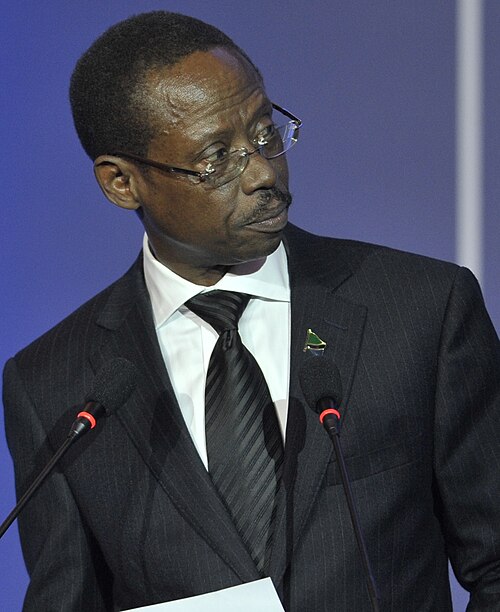
Abdallah Kigoda
Ex-Minister of Natural Resources • Tanzania