Biography
Introduction: A Polarizing Force in Angolan History
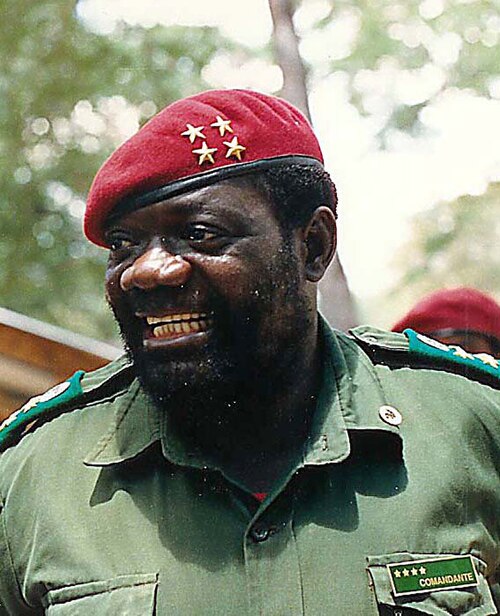
Jonas Savimbi† stands as one of the most complex and consequential figures in modern African history. As the founder and longtime leader of the National Union for the Total Independence of Angola (UNITA), he was a central protagonist in Angola's decades-long struggle for liberation and subsequent civil war. A charismatic orator, shrewd military tactician, and unyielding anti-communist, Jonas Savimbi's life was a tapestry of revolutionary fervor, geopolitical intrigue, and devastating conflict. His key achievement was building UNITA from a small separatist movement in the 1960s into a formidable guerrilla army that controlled vast swathes of Angola and became a pivotal player in the Cold War's final African theater. To understand the trajectory of Angola—from Portuguese colony to independent nation scarred by war—one must grapple with the enduring and controversial legacy of Jonas Savimbi†.
Early Life & Education: Forging an Anti-Colonial Mindset
Jonas Malheiro Savimbi was born on August 3, 1934, in Munhango, Moxico Province, in eastern Angola, then a Portuguese colony. He was born into the Ovimbundu ethnic group, the largest in Angola, and his father, Lote Savimbi, was a stationmaster on the Benguela Railway and a preacher. This background placed the young Savimbi at a cultural crossroads, exposed to both traditional Ovimbundu society and the structures of colonial administration.
His formative education began at Protestant missionary schools, demonstrating an early academic prowess. Savimbi's political consciousness was ignited when he applied for a scholarship to study abroad. The Portuguese authorities initially denied him, favoring applicants of mixed race. This experience of colonial discrimination left a deep mark. He eventually secured a scholarship and left Angola in 1958 to pursue higher education in Portugal. There, he studied medicine but quickly became involved with anti-colonial student circles. Fearing arrest by the PIDE (Portugal's secret police), he fled to Switzerland in 1961, where he continued his studies in political science and law at the University of Lausanne. It was in the vibrant, politically charged exile communities of Europe that Jonas Savimbi honed his ideology and oratory skills, connecting with other African liberation leaders and solidifying his commitment to armed struggle for Angolan independence.
Career & Major Achievements: From Liberation to Civil War
Savimbi's political career began with his involvement in the existing liberation movements. He initially joined the Popular Union of Angola (UPA), which later became the FNLA, and served as its foreign minister. However, disillusioned by its leadership and ethnic base (primarily Bakongo), he broke away to found his own movement. On March 13, 1966, in the Muangai region of eastern Angola, Jonas Savimbi† officially founded the National Union for the Total Independence of Angola (UNITA). This act was his definitive entry into the arena of Politics & Government and armed liberation.
Building a Guerrilla Movement and Cold War Pawn
UNITA's initial platform was Maoist-inspired, focusing on rural peasant mobilization. Savimbi's charisma and Ovimbundu heritage helped him recruit significantly from the central highlands. Following Angola's independence from Portugal in 1975, a violent power struggle erupted between the three main movements: the Soviet and Cuban-backed MPLA, the U.S. and Zaire-backed FNLA, and UNITA. When the MPLA declared the People's Republic of Angola, UNITA and the FNLA formed a fragile coalition. However, the MPLA, with massive Cuban military support, quickly gained the upper hand in the capital, Luanda.
This defeat marked a turning point for Jonas Savimbi. He retreated to UNITA's rural strongholds in the south and east and dramatically shifted his ideology from Maoism to staunch anti-communism and pro-Western capitalism. This pivot attracted crucial support from the United States (via the Reagan Doctrine) and the apartheid regime in South Africa. During the 1980s, UNITA, with significant U.S. funding and direct South African military intervention, waged a devastating civil war against the MPLA government, controlling diamond-rich territories to fund its war effort.
The Bicesse Accords and Return to War
A major, though ultimately failed, achievement was the peace process of the early 1990s. Under international pressure, Savimbi signed the Bicesse Accords in 1991, agreeing to demobilize and contest national elections. In the 1992 presidential election, he ran against MPLA President José Eduardo dos Santos. Savimbi lost, securing approximately 40% of the vote. Rejecting the results and alleging fraud, he swiftly returned the country to a brutal and even more destructive phase of civil war. This decision cemented his image, for many, as a man who placed personal power above peace.
Military Prowess and Strategic Control
Savimbi's undeniable achievement was his military leadership. Dubbed "The Black Rooster" by his followers, he commanded fierce loyalty and maintained direct, hands-on control over UNITA's forces for over 25 years. He survived multiple assassination attempts and major offensives. His strategic control over Angola's lucrative alluvial diamond fields in the northeast (especially after 1992) financed his war machine, making UNITA one of the most self-sufficient guerrilla movements in the world at the time. This financial independence was a key factor in his ability to prolong the conflict.
Personal Life & Legacy: A Contested Memory
Jonas Savimbi† was known for his formidable personal discipline, intellect, and command of multiple languages, including Portuguese, English, and French. He was a deeply private individual regarding his family, though it is known he had multiple wives and children. His personal interests were largely subsumed by the war effort; he was the quintessential "guerrilla-statesman," with his life defined by the bush, military strategy, and political maneuvering.
The legacy of Jonas Savimbi† is profoundly dualistic. To his supporters, primarily in the Ovimbundu heartland, he remains a heroic figure of opposition, a symbol of resistance against a centralized, Luanda-based government they viewed as oppressive and exclusionary. He is remembered as a fearless leader who fought both colonialism and communist dictatorship.
To his detractors, he is a primary architect of Angola's devastation—a war that lasted 27 years, killed an estimated 500,000 people, displaced millions, and crippled the country's infrastructure. His initial rejection of the 1992 election and return to war is seen as an unforgivable act that condemned Angola to another decade of suffering. His death on February 22, 2002, in a military ambush in Moxico province, finally brought the civil war to a close just weeks later. Today, his legacy is carefully managed; while UNITA has transitioned into a major opposition party within the political system, the figure of Savimbi himself remains a potent and divisive symbol in Angolan national memory, representing the deep, unresolved fractures of the nation's past.
Net Worth & Wartime Economy
While discussing traditional "net worth" or "business ventures" is challenging for a guerrilla leader, Jonas Savimbi† controlled a significant wartime economic apparatus. Following his rejection of the 1992 election results, UNITA lost its official foreign support but captured key diamond-producing regions in Lunda Norte and Lunda Sul provinces. It is estimated that at its peak in the late 1990s, UNITA's annual revenue from "conflict diamonds" ranged between $300 million and $500 million. This wealth did not translate to personal fortune in a conventional sense but was used almost exclusively to procure weapons, fuel, and supplies to sustain the military campaign. Savimbi's "business" was war, and his capital was diamonds. The network involved international gem dealers, arms traffickers, and complex smuggling routes, making UNITA a parastatal entity that funded one of Africa's longest conflicts. This model of resource-fueled insurgency remains a dark part of his financial and strategic legacy.
Key Facts & Timeline
- Born: August 3, 1934, Munhango, Angola.
- Founded UNITA: March 13, 1966.
- First Peace Accord: Signed the Bicesse Accords in 1991.
- Presidential Election: Lost to José Eduardo dos Santos in September 1992.
- Conflict Diamonds: UNITA's revenue estimated at up to $500M/year in the late 1990s.
- Died: February 22, 2002, in Moxico Province, Angola.
- War Duration: The Angolan Civil War, in which he was a key player, lasted from 1975 to 2002.
For further reading on the context of the Angolan Civil War, reputable sources include the Encyclopædia Britannica and reports from historical archives like the Woodrow Wilson International Center for Scholars.
Frequently Asked Questions
What is Jonas Savimbi†'s estimated net worth?
Net worth details for Jonas Savimbi† are currently being updated.
What is Jonas Savimbi†'s role and nationality?
Jonas Savimbi† is a Founder; UNITA Founder from Angola.
How did Jonas Savimbi† make their money?
Jonas Savimbi† built their fortune primarily through Jonas Savimbi died in 2002 and was a political/military leader, not a business figure with a measurable personal fortune..
How old is Jonas Savimbi†?
Jonas Savimbi† was born in 1934 (92 years old).
Which category is Jonas Savimbi† listed under?
Jonas Savimbi† is featured under the Politics & Government category on NetWorth Africa.
How is Jonas Savimbi†'s net worth calculated?
NetWorth Africa estimates financial valuations using publicly available stock equity holdings, company ownership records, real estate assets, and verified market data.
Net Worth Analysis
Jonas Savimbi died in 2002 and was a political/military leader, not a business figure with a measurable personal fortune.
Quick Stats
Related People

Aaron Motsoaledi
LP; Minister of Home Affairs • South Africa

Abane Ramdane†
FLN Leader & Strategist • Algeria

Abdalla Hamdok
Ex-Prime Minister • Sudan

Abdallah Kigoda
Ex-Minister of Natural Resources • Tanzania