$2B
Estimated Net Worth
As of 2024 • medium confidence
Financial Breakdown
Asset Distribution
Assets vs Liabilities
Assets
Liabilities
Disclaimer: These financial estimates are based on publicly available information and should be considered approximate. Last updated: 12/29/2025
Biography
Introduction: A Defining Figure in Angolan History
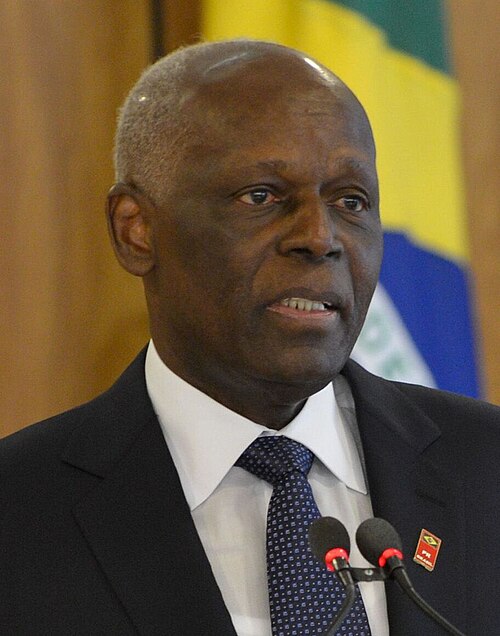
José Eduardo dos Santos† stands as one of the most pivotal and complex figures in modern African history. As the second President of the Republic of Angola, he governed the nation for an astonishing 38 years, from 1979 to 2017, making him one of Africa's longest-serving heads of state. His tenure, situated within the broader category of Politics & Government, was defined by the monumental task of navigating a country from the throes of a devastating civil war towards a fragile peace and an oil-fueled economic boom. José Eduardo dos Santos is notable for ending Angola's 27-year civil war in 2002, overseeing a period of significant infrastructure development funded by vast oil and diamond revenues, and consolidating the power of the ruling MPLA (People's Movement for the Liberation of Angola). However, his legacy is deeply contested, marked by stark contrasts between immense national wealth and pervasive public poverty, and between political stability and allegations of systemic corruption and authoritarianism.
Early Life & Education: The Making of a Revolutionary
José Eduardo dos Santos was born on August 28, 1942, in the Sambizanga district of Luanda, then part of Portuguese Angola. His early life in the capital exposed him to the inequalities of colonial rule. A bright student, he attended the Liceu Salvador Correia, a prestigious secondary school. His political consciousness awakened early, and by the age of 19, he had joined the clandestine struggle for independence. In 1961, he formally became a member of the MPLA, a decision that would chart the course of his life.
Seeking both education and military training, dos Santos left Angola. He first studied petroleum engineering in Baku, Azerbaijan (then part of the Soviet Union), graduating in 1969. This technical background would later prove crucial in managing Angola's most vital economic sector. Concurrently, he received military telecommunications training. His time in the USSR solidified his ideological grounding and connections within the socialist bloc. Upon returning to Africa, he served in key roles for the MPLA in Congo-Brazzaville, rising through the ranks due to his intelligence, loyalty, and diplomatic skills. By the time Angola achieved independence from Portugal in 1975, José Eduardo dos Santos was a well-prepared member of the party's inner circle, serving as the MPLA's Foreign Minister and later as First Deputy Prime Minister in the nascent government.
Career & Major Achievements: From Civil War to Petro-State
The sudden death of Angola's first president, Agostinho Neto, in September 1979 propelled José Eduardo dos Santos into the presidency. He inherited a nation already engulfed in a brutal civil war against UNITA (National Union for the Total Independence of Angola), a conflict that became a bloody proxy battleground of the Cold War.
Ending the Civil War and Consolidating Power
His most significant achievement came in 2002, following the death of UNITA leader Jonas Savimbi. José Eduardo dos Santos swiftly moved to sign the Luena Memorandum of Understanding, finally ending 27 years of conflict that had claimed over 500,000 lives. This monumental act ushered in a period of unprecedented peace and allowed the government to extend its authority over the entire national territory for the first time. He then transitioned the MPLA from a Marxist-Leninist party to a pragmatic, dominant political machine, winning multi-party elections in 2012 amidst opposition claims of irregularities.
Economic Transformation and the "Angolan Miracle"
Dos Santos presided over an era of spectacular economic growth fueled by oil and diamonds. From the early 2000s, Angola became one of the world's fastest-growing economies, often dubbed the "Angolan Miracle." His government used this wealth to:
- Rebuild critical national infrastructure, including roads, railways, and bridges destroyed by war.
- Launch massive urban housing and development projects, notably in Luanda.
- Fund large-scale national symbols like the new Dr. António Agostinho Neto Memorial and stadiums for the 2010 Africa Cup of Nations.
He strategically leveraged Chinese credit lines in exchange for oil, bypassing Western lenders and their conditions, to fund this reconstruction.
Foreign Policy and Regional Influence
On the international stage, José Eduardo dos Santos elevated Angola's profile. He served as a mediator in crises in the Great Lakes Region and was a key figure within regional bodies like SADC (Southern African Development Community). Under his leadership, Angola transformed from a war-torn recipient of aid into an influential regional power and a significant oil supplier to global markets, particularly China.
Personal Life, Legacy, and Controversies
José Eduardo dos Santos was known as a intensely private and calculating leader. He was married multiple times and had several children. Some of his children, notably Isabel dos Santos, became prominent business figures, which fueled allegations of nepotism. His legacy is a study in stark contradictions. He is credited with ending a generation of war and presiding over a period of economic growth and physical reconstruction. Major sources like the Encyclopædia Britannica acknowledge his central role in Angola's modern history.
Conversely, his critics condemn the establishment of a crony capitalist system where vast oil wealth was concentrated in the hands of a political and military elite connected to the presidency. Despite billions in oil revenue, Angola consistently ranked low on human development indices, with widespread poverty, high child mortality, and inadequate public services for most citizens. His government was criticized for human rights abuses, suppression of press freedom, and political repression. This duality ensures that José Eduardo dos Santos remains a deeply polarizing figure: the peacemaker and nation-builder versus the authoritarian ruler of a deeply unequal petro-state.
Net Worth, Business, and the Dos Santos Family Empire
While the official net worth of José Eduardo dos Santos was never publicly verified, his family's wealth became a central feature of his legacy and a source of immense controversy. During his presidency, his children, especially his eldest daughter Isabel dos Santos, amassed enormous fortunes, leading to her being dubbed "Africa's richest woman" by Forbes at one point. The family's investments spanned telecommunications (Unitel), media, banking (BIC), and oil and gas. Critics and international watchdogs alleged that this wealth was built through preferential access to state assets and contracts—a system often described as "state capture." Following his retirement and death, the Angolan state under his successor, João Lourenço, initiated a widespread anti-corruption drive, freezing assets and bringing lawsuits against Isabel dos Santos and other family members to recover state funds. This ongoing legal battle underscores the profound and contentious intersection of political power and business during the dos Santos era.
José Eduardo dos Santos passed away on July 8, 2022, in Barcelona, Spain. His death closed a definitive chapter in Angolan history, but the debate over his 38-year reign and its impact on the nation's Politics & Government continues to shape Angola's present and future.
Net Worth Analysis
Forbes estimated his family's fortune at $2 billion in 2013, primarily from his children's stakes in Angolan assets, though much was later frozen or contested.
Quick Stats
Related People
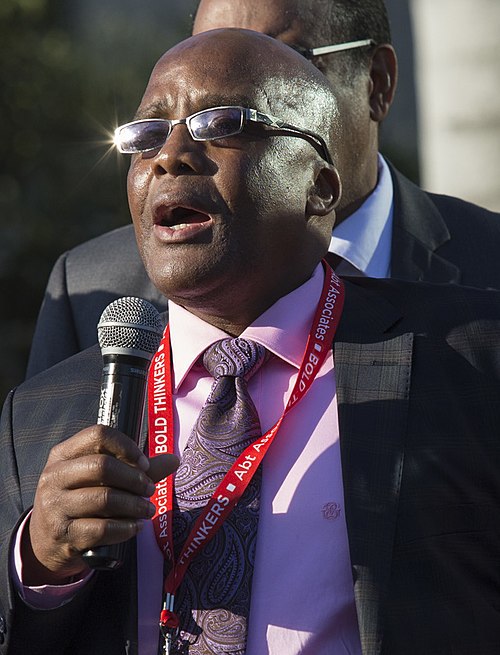
Aaron Motsoaledi
LP; Minister of Home Affairs
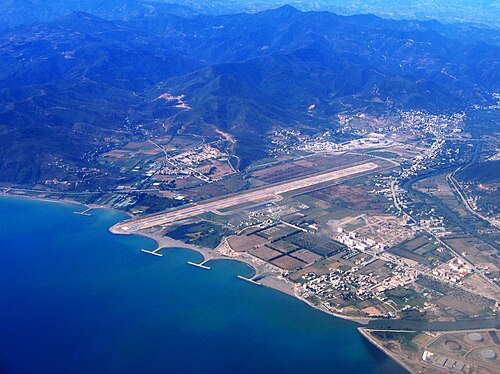
Abane Ramdane†
FLN Leader & Strategist
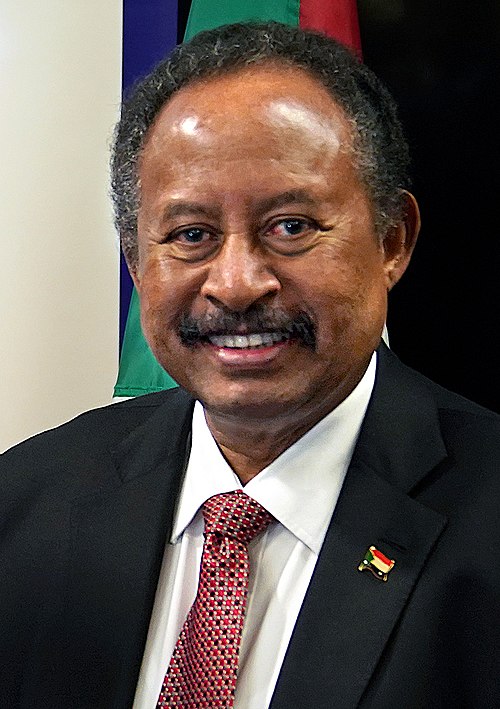
Abdalla Hamdok
Ex-Prime Minister
Abdallah Kigoda
Ex-Minister of Natural Resources