$100M
Estimated Net Worth
As of 2024 • medium confidence
Financial Breakdown
Asset Distribution
Assets vs Liabilities
Assets
Disclaimer: These financial estimates are based on publicly available information and should be considered approximate. Last updated: 12/29/2025
Biography
Introduction: The Steadfast Leader of a Nation in Transition
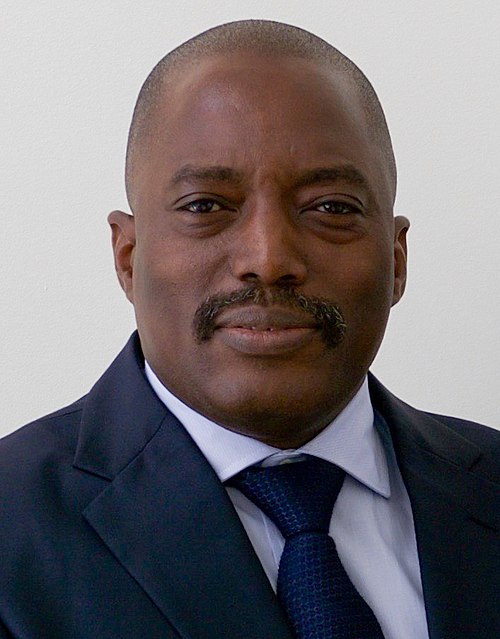
Joseph Kabila Kabange stands as a pivotal figure in the modern history of the Democratic Republic of the Congo (DRC). Serving as the nation's President from January 2001 to January 2019, his tenure represents the longest period of relative stability since the country's independence in 1960. Ascending to power in the tumultuous aftermath of his father's assassination, Joseph Kabila inherited a nation fractured by the Second Congo War, often termed "Africa's World War." His most notable achievement was overseeing the formal end to this devastating conflict and navigating the DRC through its first peaceful, democratic transition of power in 2019. This biography explores the life, career, and complex legacy of a leader who shaped the political landscape of Central Africa for nearly two decades.
Early Life & Education: From Rebel Bases to the Presidency
Born on June 4, 1971, in Hewa Bora, South Kivu, Joseph Kabila's upbringing was far from ordinary. He was the son of Laurent-Désiré Kabila, a lifelong rebel who would later become President. For much of his youth, Joseph Kabila lived in the shadow of his father's revolutionary activities, moving between rebel-held areas in eastern Congo and neighboring Tanzania. His early education was sporadic, taking place in Tanzania and later in other East African nations.
In a formative experience, he received military training in Rwanda and later served as a member of his father's rebel force, the Alliance of Democratic Forces for the Liberation of Congo (AFDL), during the campaign to oust dictator Mobutu Sese Seko in 1996-97. After his father assumed the presidency, a more formal education was pursued. Joseph Kabila studied at the Makerere University in Uganda and later attended the National Defence College in China, reflecting his father's intent to prepare him for a significant role in national security. Fluent in Swahili, French, and English, his reserved and taciturn demeanor often contrasted with the flamboyant style of many African leaders of the era.
Career & Major Achievements: Navigating War and Peace
The trajectory of Joseph Kabila's career changed irrevocably on January 16, 2001, when his father was assassinated. At just 29 years old, he was swiftly installed as President by the political and military establishment, becoming one of the world's youngest heads of state. He faced a nation split by war, with foreign armies occupying large swathes of Congolese territory.
Ending Africa's World War and Political Transition
One of his first major acts was to reignite the stalled peace process. Demonstrating a pragmatic approach distinct from his father's, he engaged with the UN, regional powers, and rebel groups. This led to the landmark Sun City Agreement in 2002 and the subsequent formation of a transitional government in 2003, which included former rebel leaders as vice-presidents. This process culminated in a historic constitutional referendum in 2005 and the DRC's first multi-party elections in over four decades in 2006. Joseph Kabila won the presidential runoff, securing a democratic mandate for his leadership.
Economic Reforms and Infrastructure Development
During his 18-year rule, Kabila's government focused on economic stabilization and rebuilding. Key achievements included:
- Securing debt relief from the IMF and World Bank through the Heavily Indebted Poor Countries (HIPC) initiative.
- Reforming the mining code in 2002 to attract foreign investment, leading to multi-billion dollar deals in the copper and cobalt sectors.
- Overseeing significant, though controversial, infrastructure projects like the rehabilitation of the Inga dams and major road networks, often financed through "infrastructure-for-minerals" deals with China.
Controversies and the Extended Tenure
His later years in power were marked by increasing controversy. The 2011 election, which he also won, was widely criticized by international observers for irregularities. The most significant political crisis emerged around the end of his constitutionally mandated second term in 2016. His decision to remain in office beyond this date sparked widespread protests and violence. After significant international and regional pressure, elections were finally held in December 2018 (delayed from 2016). In a historic move, Joseph Kabila accepted the victory of opposition candidate Félix Tshisekedi in January 2019, facilitating the DRC's first peaceful transfer of power since independence.
Personal Life, Legacy, and Lasting Impact
Joseph Kabila is known for being intensely private. He is married to Olive Lembe di Sita, and the couple has a daughter. He is said to enjoy reading and is a fan of football. Unlike many political dynasties, he has largely kept his family out of the public spotlight. His legacy in the Politics & Government of the DRC is profoundly complex and subject to ongoing debate.
On one hand, he is credited with ending a catastrophic war, restoring a semblance of state authority, and presiding over a period of significant economic growth driven by a mining boom. The peaceful transfer of power in 2019 is a cornerstone of his legacy. On the other hand, his rule was criticized for endemic corruption, human rights abuses, the failure to demilitarize eastern Congo—where numerous armed groups remain active—and the erosion of democratic norms in his final term. His lasting impact is that of a stabilizer who ended immediate conflict but left deep-seated governance and institutional challenges for his successors.
Net Worth & Business Ventures
The personal wealth of Joseph Kabila has been a persistent subject of speculation and investigation. While no official figure exists, numerous reports from organizations like the Congo Research Group and others allege that he and his family amassed considerable wealth through networks of companies involved in the DRC's mining, oil, timber, and telecommunications sectors during his presidency. These alleged business interests, often obscured through intermediaries, are said to have created a vast commercial empire. Kabila has consistently denied allegations of corruption or illicit enrichment. Since leaving office, he maintains significant political influence through his political party, the Common Front for Congo (FCC), and his reported business dealings continue to be a point of scrutiny in the Democratic Republic of the Congo's political economy.
Sources and Further Reading: For more information on Joseph Kabila and the political history of the DRC, credible sources include the United Nations reports on the Congo, publications by the International Crisis Group, the Congo Research Group at New York University, and biographical entries from reputable encyclopedias such as Britannica.
Net Worth Analysis
Estimates are speculative as his wealth is not officially declared; reports from organizations like Congo Research Group and media investigations suggest accumulation of significant assets and business interests during and after his presidency.
Quick Stats
Related People

Aaron Motsoaledi
LP; Minister of Home Affairs

Abane Ramdane†
FLN Leader & Strategist

Abdalla Hamdok
Ex-Prime Minister

Abdallah Kigoda
Ex-Minister of Natural Resources