Biography
Introduction: The Chosen Successor
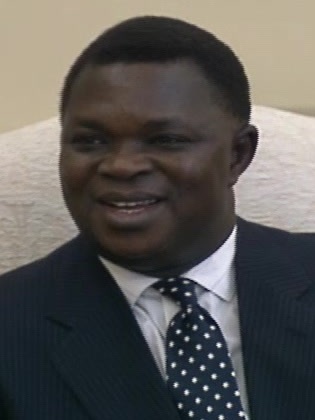
Major General Joseph Saidu Momoh† stands as a pivotal figure in the modern political history of Sierra Leone. He served as the nation's second President from November 1985 until his ousting in a military coup in April 1992. His ascent to the highest office was not through a fiercely contested election but as the handpicked successor of the nation's founding father, Siaka Stevens. Momoh's presidency is historically bookended by two eras: the waning days of the Stevens' one-party state and the catastrophic outbreak of the Sierra Leone Civil War. His tenure, often described as one of austerity and attempted reform, was ultimately overwhelmed by economic collapse, systemic corruption, and the descent into a brutal conflict that would define the nation for a decade. Understanding Joseph Saidu Momoh† is crucial to understanding Sierra Leone's turbulent transition from post-independence stability to devastating internal strife.
Early Life & Education: From Rural Beginnings to Military Service
Joseph Saidu Momoh† was born on January 26, 1937, in Binkolo, Bombali District, in the Northern Province of Sierra Leone. He hailed from the Limba ethnic group. His early education began at the Binkolo Primary School and the Magburaka Government Secondary School. Demonstrating academic promise, he later attended the prestigious Prince of Wales School in Freetown. Unlike many politicians of his era who studied law or economics abroad, Momoh's career path took a martial turn.
In 1958, he enlisted in the Sierra Leone Army. His potential was quickly recognized, leading to specialized training at several prestigious military institutions in the United Kingdom, including the Mons Officer Cadet School and the Royal Military Academy, Sandhurst. This British military education shaped his professional demeanor, which was often described as disciplined and formal. Momoh rose steadily through the ranks, earning a reputation as a competent and loyal officer. His military career provided the foundation for his later political role, as it was within this structure that he caught the eye of the then-Prime Minister, Siaka Stevens. Stevens appointed him as the Force Commander of the Sierra Leone Army, a position of immense trust that positioned Momoh as a key pillar of the state's security apparatus during the one-party rule of the All People's Congress (APC).
Career & Major Achievements: Presidency Amidst Decline
The political career of Joseph Saidu Momoh† is inextricably linked to his predecessor. In 1985, after 17 years in power, an aging Siaka Stevens orchestrated a constitutional transition. He retired and, under the one-party constitution of the APC, nominated Momoh as the sole candidate for the presidency. On November 28, 1985, Joseph Saidu Momoh† was inaugurated as President of the Republic of Sierra Leone.
Initial Reforms and the "New Order"
President Momoh entered office promising a "New Order" to combat the rampant corruption and economic mismanagement that had plagued the later Stevens years. He declared assets upon taking office—a symbolic gesture—and initiated an "Economic Emergency" in 1987. Key policy moves included:
- Launching an anti-corruption campaign, though its impact was limited by the entrenched system.
- Implementing austerity measures to address the massive national debt and inflation.
- Engaging with international financial institutions like the IMF and World Bank for structural adjustment programs.
His most significant political achievement was overseeing the return to a multi-party democratic system. Bowing to immense internal and international pressure, Momoh's government approved a new constitution in 1991 that legalized opposition parties, ending 24 years of one-party rule under the APC.
The Descent into Crisis and Civil War
Despite these reformist intentions, Momoh's presidency was quickly overwhelmed by insurmountable challenges. The Sierra Leone economy was in freefall, crippled by the collapse of state mining corporations, falling commodity prices, and a massive informal "shadow economy." Government salaries went unpaid for months, and public services deteriorated.
The defining event of his tenure occurred on March 23, 1991, when the Revolutionary United Front (RUF), led by Foday Sankoh and backed by Charles Taylor's NPFL in Liberia, invaded eastern Sierra Leone. This marked the beginning of an 11-year civil war notorious for its brutality. Momoh's army, underfunded and demoralized, struggled to contain the RUF advance. His government's effectiveness was further crippled by a military coup attempt in 1992. Just weeks later, on April 29, 1992, while he was visiting troops in the war zone, a group of young junior army officers led by Captain Valentine Strasser seized power in Freetown, ending Momoh's presidency. He fled into exile in Guinea.
Personal Life, Exile, and Legacy
Outside of politics, Joseph Saidu Momoh† was known as a devout Roman Catholic and a man of personal discipline, traits often attributed to his military background. He was married to Hannah Momoh. Following his overthrow, he lived in exile in Conakry, Guinea, for nearly a decade. The legacy of Joseph Saidu Momoh is complex and largely viewed through the lens of national tragedy.
Historians often characterize his administration as well-intentioned but profoundly ineffective. He inherited a "bankrupt" state, both financially and morally, from Siaka Stevens. While he recognized the need for reform—evidenced by the reintroduction of multi-party politics—he lacked the political will or power to dismantle the corrupt patronage network within his own APC party. His inability to revitalize the economy or effectively counter the initial RUF invasion directly led to the conditions for his overthrow and the subsequent escalation of the civil war. Joseph Saidu Momoh† returned to Sierra Leone in the early 2000s after the war had ended. He largely remained out of the political spotlight until his death on August 3, 2003, in Conakry, Guinea. He is remembered as a leader who presided over the catastrophic unraveling of the Sierra Leonean state, a cautionary tale of the challenges of governing a nation in deep systemic crisis.
Net Worth & Financial Context
Quantifying the net worth of Joseph Saidu Momoh† is challenging, as is the case with many leaders from that era in Sierra Leone. Unlike his predecessor, Momoh entered office with a public pledge against corruption and famously declared his assets—reportedly including a modest house and savings—in an attempt to set a new ethical standard. His declared wealth at the start of his presidency was not indicative of vast personal fortune. However, the economic context of his rule is critical. Sierra Leone's national treasury was virtually empty, with foreign reserves reported to be as low as $500,000 at one point and the country saddled with enormous debt. While Momoh's personal business ventures were not widely documented or prominent, his administration, like the one before it, operated within a system where state resources and private interests were often blurred. The financial legacy of his tenure is therefore less about personal accumulation and more about the near-total bankruptcy of the state he governed, which contributed directly to the social unrest that fueled the civil war.
Primary Source References: For further reading on the life and political context of Joseph Saidu Momoh, credible historical accounts can be found in academic works such as "The Sierra Leone Civil War (1991-2002)" by various historians, and reports from international bodies like the Truth and Reconciliation Commission of Sierra Leone. His role is also detailed in country profiles by Encyclopædia Britannica and historical analyses of West African politics.
Frequently Asked Questions
What is Joseph Saidu Momoh†'s estimated net worth?
Joseph Saidu Momoh† has an estimated net worth of $5.0 Million.
What is Joseph Saidu Momoh†'s role and nationality?
Joseph Saidu Momoh† is a Ex-President (1985-1992) from Sierra Leone.
How did Joseph Saidu Momoh† make their money?
Joseph Saidu Momoh† built their fortune primarily through As a former president of Sierra Leone who died in 2003, he did not amass significant personal wealth from his political career and is not a known billionaire or millionaire from business; estimate based on typical assets for a former head of state in a low-income country..
How old is Joseph Saidu Momoh†?
Joseph Saidu Momoh† was born in 1937 (89 years old).
Which category is Joseph Saidu Momoh† listed under?
Joseph Saidu Momoh† is featured under the Politics & Government category on NetWorth Africa.
How is Joseph Saidu Momoh†'s net worth calculated?
NetWorth Africa estimates financial valuations using publicly available stock equity holdings, company ownership records, real estate assets, and verified market data.
Net Worth Analysis
As a former president of Sierra Leone who died in 2003, he did not amass significant personal wealth from his political career and is not a known billionaire or millionaire from business; estimate based on typical assets for a former head of state in a low-income country.
Quick Stats
Related People

Aaron Motsoaledi
LP; Minister of Home Affairs • South Africa

Abane Ramdane†
FLN Leader & Strategist • Algeria

Abdalla Hamdok
Ex-Prime Minister • Sudan

Abdallah Kigoda
Ex-Minister of Natural Resources • Tanzania