Biography
Introduction
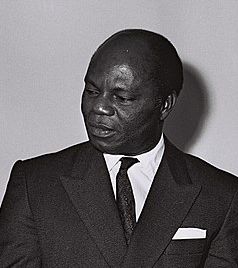
In the tumultuous and formative period of West African decolonization, few figures were as central to the political landscape of Dahomey (modern-day Benin) as Justin Ahomadégbé-Tomêtin†. Serving as the Third President of the Republic, Ahomadégbé-Tomêtin was a key architect of the nation's early post-independence journey. His career, spanning from the late colonial era through the first decades of sovereignty, was defined by fierce political competition, a deep commitment to his regional base, and the complex challenges of governing a young nation. A member of the famed "Three Glorious"—the trio of politicians who dominated Dahomey's Politics & Government in the 1960s and 70s—his legacy is inextricably linked to the political instability and democratic aspirations of the Independence Era. This biography delves into the life of a man whose leadership, though often contested, helped shape the constitutional foundations and political discourse of his country.
Early Life & Education
Justin Ahomadégbé-Tomêtin† was born in 1917 in Abomey, the historic capital of the Kingdom of Dahomey, located in the southern region of the French colony. Hailing from the Fon ethnic group, he was born into a period of entrenched colonial rule but also growing anti-colonial sentiment. His early education took place within the local colonial school system, where he demonstrated academic promise. Pursuing a career in healthcare, a common path for the educated elite of the time, Ahomadégbé-Tomêtin trained as a midwife and later as a surgeon's aide. This medical training was a formative experience, bringing him into direct contact with the broader population and their social realities under colonial administration.
His professional work in medicine provided him with a platform and a degree of respect that would later translate into political capital. Unlike some of his contemporaries who studied in France, Ahomadégbé-Tomêtin's education and career were largely rooted in Dahomey itself, shaping his perspectives and his connections. By the late 1940s, as France began experimenting with limited political representation for its colonies, Justin Ahomadégbé-Tomêtin† was well-positioned to transition into the burgeoning field of electoral Politics & Government. His base of support was firmly established in the Abomey region, a area with a powerful historical consciousness that would consistently back his political endeavors.
Career & Major Achievements
The political career of Justin Ahomadégbé-Tomêtin† accelerated in the 1950s. He was elected to the Territorial Assembly of Dahomey and later served as a representative to the French National Assembly in Paris. In these roles, he advocated for greater autonomy for Dahomey. Following independence on August 1, 1960, the political scene became dominated by a fierce rivalry between three regional leaders: Hubert Maga from the north, Sourou-Migan Apithy from the southeast Porto-Novo region, and Ahomadégbé-Tomêtin himself from the central Abomey area. This tripartite division paralyzed the young nation's politics.
Rise to the Presidency and the Presidential Council
After years of coups and instability, a unique solution was attempted in 1970. A presidential election had resulted in a crisis, with no clear winner among the three "glorious" leaders. To break the deadlock, a Presidential Council was established. This unprecedented arrangement in Benin's history stipulated a rotating presidency among Maga, Apithy, and Ahomadégbé-Tomêtin, each serving a two-year term. Justin Ahomadégbé-Tomêtin† ascended to the role of the Third President of this council on May 7, 1972, taking over from Hubert Maga.
A Short-Lived Tenure and Major Challenges
His presidency, however, was brief and fraught with the same difficulties that had plagued his predecessors. The council was deeply divided, and the administration struggled to address the country's severe economic problems. Key challenges during his short tenure included:
- Managing a stagnant economy with high unemployment, particularly among the youth and educated classes.
- Attempting to govern within the fragile and contentious framework of the tripartite council.
- Contending with rising social unrest and labor union demands.
- Navigating the lingering influence of the military in politics.
The experiment in rotational leadership ultimately proved unworkable. On October 26, 1972, just months into Ahomadégbé-Tomêtin's term, a military coup led by Major Mathieu Kérékou overthrew the Presidential Council. Justin Ahomadégbé-Tomêtin†, along with Maga and Apithy, was arrested and spent the next decade and a half in detention. This marked the abrupt end of the first republic and the multi-party Independence Era, ushering in Kérékou's Marxist-Leninist regime.
Personal Life & Legacy
Outside of the political arena, Justin Ahomadégbé-Tomêtin† was known as a charismatic and stubborn figure, deeply connected to his cultural roots in Abomey. His long detention from 1972 until 1981, when he was released under a general amnesty, was a defining personal experience. Following his release and the eventual move away from Marxism-Leninism in the late 1980s, he witnessed the transition of his country (renamed Benin in 1975) back towards a democratic system. He lived to see the National Conference of 1990, which paved the way for a new constitution and multi-party politics—a system whose early failures he had personally experienced.
The legacy of Justin Ahomadégbé-Tomêtin† is complex. He is remembered as a patriot and a formidable political force who represented a significant portion of the Beninese population during the critical first years of independence. His career highlights both the promises and perils of early post-colonial Politics & Government: the vibrant political competition but also the destabilizing effects of regionalism and personal rivalry. The very fact that he was part of the "Three Glorious" and the Presidential Council experiment ensures his permanent place in the historical narrative of Benin. His life story serves as a crucial chapter in understanding the nation's difficult search for stable governance and national unity after 1960.
Historical Significance & Remembrance
While not a businessman in the traditional sense, Justin Ahomadégbé-Tomêtin†'s "capital" was intensely political. His wealth and influence were derived from his position as a leading political figure and the support of his regional base. In the pre- and post-independence patronage systems, control of political office granted access to state resources and the ability to build clientelist networks. There are no precise public records of his personal net worth, as his life was centered on public service and political struggle rather than commercial enterprise. His financial circumstances, like those of his fellow detained presidents, undoubtedly suffered during his long imprisonment. Ultimately, his value to history is not quantifiable in monetary terms but in his enduring impact on the political structures and collective memory of Benin. He passed away in 2002, having witnessed the full, turbulent arc of his nation's 20th-century history.
For further reading on this period, credible sources include the Encyclopædia Britannica's entry on Benin and academic works on Dahomeyan political history.
Frequently Asked Questions
What is Justin Ahomadégbé-Tomêtin†'s estimated net worth?
Justin Ahomadégbé-Tomêtin† has an estimated net worth of $5.0 Million.
What is Justin Ahomadégbé-Tomêtin†'s role and nationality?
Justin Ahomadégbé-Tomêtin† is a Third President from Benin.
How did Justin Ahomadégbé-Tomêtin† make their money?
Justin Ahomadégbé-Tomêtin† built their fortune primarily through As a former President of Benin (1964) from a pre-modern economic era, his wealth was not comparable to contemporary business billionaires and no significant personal fortune is documented..
How old is Justin Ahomadégbé-Tomêtin†?
Justin Ahomadégbé-Tomêtin† was born in 1917 (109 years old).
Which category is Justin Ahomadégbé-Tomêtin† listed under?
Justin Ahomadégbé-Tomêtin† is featured under the Politics & Government category on NetWorth Africa.
How is Justin Ahomadégbé-Tomêtin†'s net worth calculated?
NetWorth Africa estimates financial valuations using publicly available stock equity holdings, company ownership records, real estate assets, and verified market data.
Net Worth Analysis
As a former President of Benin (1964) from a pre-modern economic era, his wealth was not comparable to contemporary business billionaires and no significant personal fortune is documented.
Quick Stats
Related People
Aaron Motsoaledi
LP; Minister of Home Affairs • South Africa
Abane Ramdane†
FLN Leader & Strategist • Algeria
Abdalla Hamdok
Ex-Prime Minister • Sudan
Abdallah Kigoda
Ex-Minister of Natural Resources • Tanzania