Financial Breakdown
Asset Distribution
Assets vs Liabilities
Assets
Disclaimer: These financial estimates are based on publicly available information and should be considered approximate. Last updated: 12/30/2025
Biography
Introduction: The Architect of African Cultural Renaissance
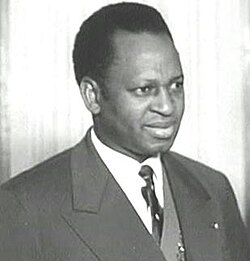
Keita Fodéba† (1921-1969) stands as a monumental figure in 20th-century Arts & Culture, a polymath whose creative genius reshaped the global perception of African artistic expression. A poet, musician, playwright, and political leader, he is most famously celebrated as the Founder of Les Ballets Africains, the groundbreaking national ballet company of Guinea. His key achievement was the creation of a sophisticated, theatrical platform that transformed traditional West African dance, music, and storytelling from folkloric presentations into a cohesive, powerful, and internationally acclaimed stage art. Keita Fodéba did not merely collect performances; he curated a dynamic, living narrative of African heritage, using the stage as a tool for cultural diplomacy and national pride during the pivotal era of African independence.
Early Life & Education: Forging a Pan-African Consciousness
Born in 1921 in Siguiri, in what was then French Guinea, Keita Fodéba was immersed from an early age in the rich Mandé cultural traditions of the region—a world of griots (storytellers), rhythmic drumming, and symbolic dance. His exceptional intellect earned him a place at the prestigious École Normale William Ponty in Senegal, the premier institute for the African elite in French West Africa. Here, his artistic talents flourished alongside a burgeoning political consciousness. He formed a student orchestra and began writing poetry, blending Western literary forms with African themes. After further studies in law and literature in Paris, Keita Fodéba found himself at the epicenter of the vibrant African diaspora intellectual community in post-war France. This unique position, straddling deep traditional roots and modern European education, equipped him with the vision to synthesize these worlds into a new artistic language.
Career & Major Achievements: From "African Ballet" to National Icon
The career of Keita Fodéba† is a testament to the power of art as a unifying national and continental force. His journey from artist to minister marks one of the most significant contributions to African cultural history.
The Birth of Les Ballets Africains
In the early 1950s in Paris, Keita Fodéba founded the theatrical company that would become his legacy. Initially named "Les Ballets Africains de Keita Fodéba," the ensemble was revolutionary. Moving beyond simplistic "folk" shows, Fodéba crafted full-scale theatrical productions. He wove together authentic traditional elements from across West Africa—including the vigorous doundoumba dance of the Malinké and the elegant movements of the Fulani—into coherent narratives with dramatic arcs, sophisticated choreography, and elaborate costumes. His 1955 poetry collection, Poèmes africains, and his musical play Aube Africaine, further established his reputation as a leading cultural voice.
Instrument of Independence and Diplomacy
When Guinea gained independence in 1958 under President Ahmed Sékou Touré, the new nation needed symbols of its identity and sovereignty. Keita Fodéba and his company were perfectly positioned. The ensemble was formalized as the Les Ballets Africains, the National Ballet of Guinea. As its director and later as Guinea's Minister of the Interior and then Minister of Defense, Fodéba deployed the ballet as a "cultural army." They toured the world extensively throughout the 1960s, performing on the world's most prestigious stages, including Carnegie Hall. Each performance was a declaration: Africa possessed complex, ancient, and vibrant civilizations. The ballet became Guinea's most effective ambassador, fostering pride at home and reshaping perceptions abroad.
A Multifaceted Artistic Legacy
Keita Fodéba's achievements were not limited to dance. He was a prolific recording artist, releasing albums that popularized traditional Mandé music in a modern format. His literary work, which often dealt with themes of colonialism, identity, and social justice, remains critically important. He essentially created a blueprint for how a modern African nation could leverage its cultural patrimony as a source of strength and international soft power, influencing countless other national ensembles across the continent.
Personal Life, Tragedy, and Enduring Legacy
Despite his public success, the life of Keita Fodéba† ended in profound tragedy, inextricably linked to the political turmoil of post-colonial Guinea. As a high-ranking minister in Sékou Touré's government, he was caught in the increasingly paranoid and repressive climate of the regime. In 1969, during the "Labé plot" purges, Keita Fodéba was arrested, accused of conspiracy. Without a fair trial, he was executed in the notorious Camp Boiro prison. This shocking demise silenced one of Africa's most brilliant cultural voices at the age of 48.
Yet, his legacy proved indestructible. Les Ballets Africains survived and continues to perform globally, a living monument to his vision. His work laid the foundational aesthetics for all subsequent African ballet companies. Today, scholars recognize Keita Fodéba as a pivotal figure in the Arts & Culture of the African diaspora, a man who demonstrated that traditional arts could be both preserved and dynamically evolved for a global audience. His story is a powerful, bittersweet reminder of the intricate and often dangerous relationship between art and politics in nation-building.
Net Worth, Business, and Cultural Capital
In a contemporary context, quantifying the net worth of a figure like Keita Fodéba† is challenging and goes beyond mere financial metrics. As a founder and state-appointed director, his work was not a commercial business venture in the traditional sense but a national cultural institution. His "wealth" was measured in cultural capital and diplomatic influence. He built an invaluable, globally recognized brand for Guinea. The economic impact of Les Ballets Africains has been substantial over decades, generating significant revenue through international tours, performances, and workshops, while employing hundreds of artists, musicians, and technicians. The intellectual property he helped codify—the specific choreographies, musical arrangements, and theatrical formats—constitutes a priceless national asset. While he did not amass personal fortune, Keita Fodéba engineered a sustainable cultural enterprise that has provided economic livelihood for generations of Guinean artists and continues to be a cornerstone of the country's cultural economy and heritage tourism.
Sources & Further Reading: For more information on Keita Fodéba† and Les Ballets Africains, credible resources can be found through academic databases focusing on African studies, historical archives of Guinean history, and cultural institutions like UNESCO. Specific references are made to his literary works (Poèmes africains) and the historical records of Guinea's First Republic.
Frequently Asked Questions
What is Keita Fodéba†'s estimated net worth?
Keita Fodéba† has an estimated net worth of $5.0 Million.
What is Keita Fodéba†'s role and nationality?
Keita Fodéba† is a Founder Les Ballets Africains from Guinea.
How did Keita Fodéba† make their money?
Keita Fodéba† built their fortune primarily through Keita Fodéba was a cultural figure and political prisoner, not a business magnate; his primary legacy is artistic, not financial, and he died in 1969..
How old is Keita Fodéba†?
Keita Fodéba† was born in 1921 (105 years old).
Which category is Keita Fodéba† listed under?
Keita Fodéba† is featured under the Arts & Culture category on NetWorth Africa.
How is Keita Fodéba†'s net worth calculated?
NetWorth Africa estimates financial valuations using publicly available stock equity holdings, company ownership records, real estate assets, and verified market data.
Net Worth Analysis
Keita Fodéba was a cultural figure and political prisoner, not a business magnate; his primary legacy is artistic, not financial, and he died in 1969.
Quick Stats

Related People
Abasse Ndione
Novelist & Playwright • Senegal
Abdel Rahman al-Abnudi†
Poet (Egypt-Sudan) • Sudan
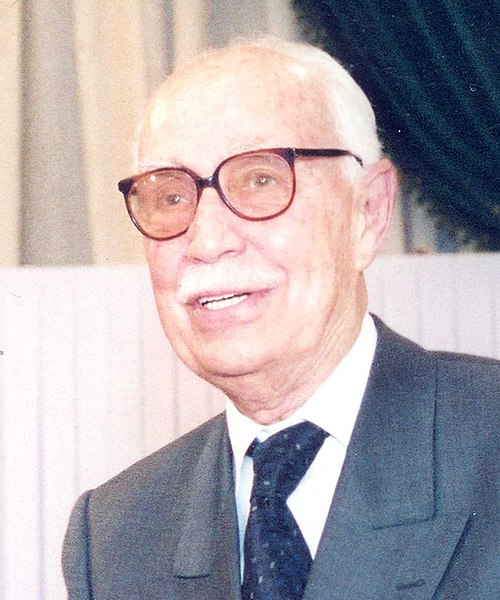
Abdelkrim Ghallab†
Novelist & Journalist • Morocco
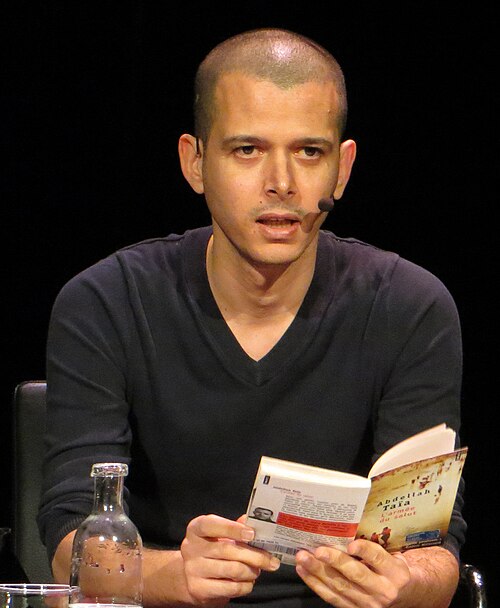
Abdellah Taïa
Novelist & Filmmaker • Morocco