Biography
Introduction: A Key Figure in Libya's Political Landscape
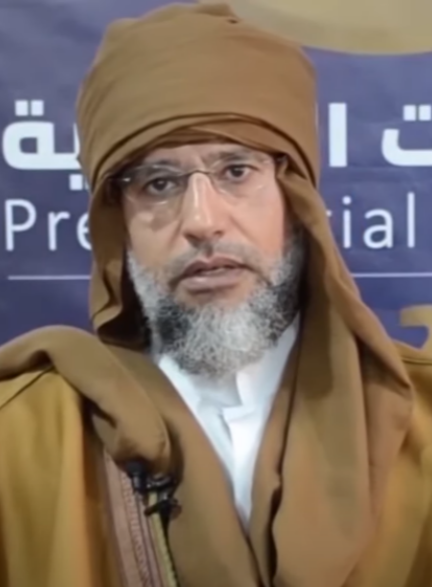
Khaled al-Mishri stands as a central and often pivotal figure in contemporary Libyan Politics & Government. As the President of the High Council of State (HCS), he wields significant influence in one of the nation's primary governing bodies, tasked with steering Libya through its complex and protracted post-revolution transition. Born in 1962, al-Mishri's journey from an Islamist-leaning activist to a top political negotiator encapsulates the turbulent evolution of Libyan governance since the fall of Muammar Gaddafi. His most notable achievement to date is his election to lead the HCS in 2018, a role that has positioned him as a chief advocate for a constitutional basis for elections and a key interlocutor in UN-sponsored dialogues. Operating within the fractured legislature of Libya's western-based administration, Khaled al-Mishri represents the powerful Islamist bloc and the city of Misrata, making him an indispensable, if sometimes controversial, player in the quest for national stability.
Early Life & Education: Formative Years and Ideological Foundations
Khaled al-Mishri was born in 1962, though specific details about his exact birthplace and early childhood remain less documented in public sources. He hails from the influential city of Misrata, a major commercial and political hub in northwestern Libya whose militias played a decisive role in the 2011 revolution. This origin is crucial to understanding his political base and support network. For his education, al-Mishri pursued a path in engineering, which provided him with a structured, analytical mindset that would later translate into his political strategizing.
His formative years were shaped under the oppressive regime of Colonel Muammar Gaddafi, an experience common to many Libyans of his generation. This environment fostered a deep-seated opposition to authoritarian rule. While not a frontline militant during the early days of dissent, al-Mishri's ideological leanings began to crystallize around political Islam. He became associated with the Libyan Muslim Brotherhood, one of the oldest organized opposition groups to Gaddafi, though he often positions himself as an independent Islamist. His activism, though necessarily subdued during the Gaddafi era, provided him with a network of contacts and a clear political identity that would surge to the forefront following the 2011 uprising. The revolution itself, in which Misrata suffered a brutal siege, undoubtedly hardened his resolve and connected him to the powerful armed groups that emerged from his hometown.
Career & Major Achievements: From Activist to Institutional Power Broker
Khaled al-Mishri's political career accelerated dramatically after the fall of Tripoli in 2011. He quickly emerged as a representative of Islamist and Misratan interests within the new, chaotic political arena.
Rise in the General National Congress (GNC)
In 2012, al-Mishri was elected as a member of the General National Congress (GNC), Libya's first post-Gaddafi parliamentary authority. His technical background saw him appointed as the head of the Legislature's Finance Committee, a role of immense responsibility given the need to rebuild state finances. In this capacity, he gained a reputation as a knowledgeable and sharp critic of government spending, often clashing with more secularist blocs. His tenure in the GNC was marked by the deep polarization between Islamist and nationalist factions, which ultimately led to the country's split into rival governments in 2014.
Election as President of the High Council of State
His most significant career milestone came on May 8, 2018, when he was elected as the President of the High Council of State. This body, created under the UN-brokered Libyan Political Agreement (LPA) of 2015, is designed to function as an advisory council with a mandate to approve key legislation and appointments. In practice, under al-Mishri's leadership, the HCS has become a powerful political counterweight to the House of Representatives (HoR) based in eastern Libya. As President, al-Mishri has been a steadfast participant in all major UN-led peace processes, including the dialogues in Tunis and Geneva.
Key Political Stances and Negotiations
Al-Mishri's impact on Libyan Politics & Government is defined by several consistent positions:
- Advocacy for a Constitutional Basis: He has repeatedly insisted that national elections must be predicated on a permanent constitution, a stance that has put him at odds with factions pushing for quicker polls.
- Representation of Western & Islamist Interests: As a Misratan and Islamist figure, he champions the political weight of western Libya and the inclusion of Islamist currents in the state structure.
- Strategic Negotiator: He is known as a tough and pragmatic negotiator. His engagement, or occasional boycott, of talks often signals the approval or discontent of the powerful western Libyan armed groups aligned with him.
His career achievements are thus not measured in traditional legislation passed, but in his ability to maintain the relevance of the HCS, block initiatives he deems unconstitutional or unfavorable to his bloc, and ensure that the political Islamist voice remains at the highest tables of negotiation in Libya.
Personal Life & Legacy: The Man Behind the Politics
Unlike many global politicians, Khaled al-Mishri maintains a notably private personal life. Details about his family, spouse, and children are kept out of the media spotlight, a common practice for Libyan figures concerned with security in a volatile environment. What is publicly known is shaped by his professional demeanor: he is often described as reserved, intellectually sharp, and fiercely loyal to his political constituency in Misrata. His interests appear deeply intertwined with his work, focusing on Islamic jurisprudence as it relates to modern governance and state-building.
In terms of philanthropy or community work, his role is inherently political. His legacy is being forged in real-time and is inextricably linked to the outcome of Libya's transition. If a stable, unified government emerges with a constitution he endorses, Khaled al-Mishri will be remembered as a principled institutionalist who helped steer the country toward legitimacy. Conversely, if fragmentation continues, critics may label him as an obstructionist who prioritized factional interests over national compromise. Regardless, his lasting impact is already clear: he has institutionalized the political influence of post-revolution Islamist and Misratan forces within a state body, ensuring they cannot be easily marginalized in any future political settlement for Libya.
Net Worth & Business Ventures
There is no verifiable or publicly disclosed information regarding Khaled al-Mishri's personal net worth, business holdings, or private financial dealings. His career has been almost entirely within the realm of public service and political activism, first in opposition and then within state institutions. In the context of Libyan Politics & Government, where transparency is limited and the lines between militia financing, state resources, and personal wealth are often blurred, such financial details are rarely accessible. It is known that as a senior political figure, he derives his income from his official state position. Any assessment of his financial status would be speculative. His power base stems not from personal business empire but from political and communal support, primarily from Misrata and its associated armed groups, and his leadership within the High Council of State apparatus.
Frequently Asked Questions
What is Khaled al-Mishri's estimated net worth?
Khaled al-Mishri has an estimated net worth of $10.0 Million.
What is Khaled al-Mishri's role and nationality?
Khaled al-Mishri is a President High Council of State from Libya.
How did Khaled al-Mishri make their money?
Khaled al-Mishri built their fortune primarily through Khaled al-Mishri is a political figure in Libya, not a business leader, and there are no credible public reports of significant personal wealth from business or inheritance..
How old is Khaled al-Mishri?
Khaled al-Mishri was born in 1962 (64 years old).
Which category is Khaled al-Mishri listed under?
Khaled al-Mishri is featured under the Politics & Government category on NetWorth Africa.
How is Khaled al-Mishri's net worth calculated?
NetWorth Africa estimates financial valuations using publicly available stock equity holdings, company ownership records, real estate assets, and verified market data.
Net Worth Analysis
Khaled al-Mishri is a political figure in Libya, not a business leader, and there are no credible public reports of significant personal wealth from business or inheritance.
Quick Stats
Related People

Aaron Motsoaledi
LP; Minister of Home Affairs • South Africa

Abane Ramdane†
FLN Leader & Strategist • Algeria

Abdalla Hamdok
Ex-Prime Minister • Sudan

Abdallah Kigoda
Ex-Minister of Natural Resources • Tanzania