$1.5B
Estimated Net Worth
As of 2024 • low confidence
Financial Breakdown
Asset Distribution
Assets vs Liabilities
Assets
Liabilities
Disclaimer: These financial estimates are based on publicly available information and should be considered approximate. Last updated: 12/31/2025
Biography
Introduction: A Defining Figure in Libya's Modern Conflict
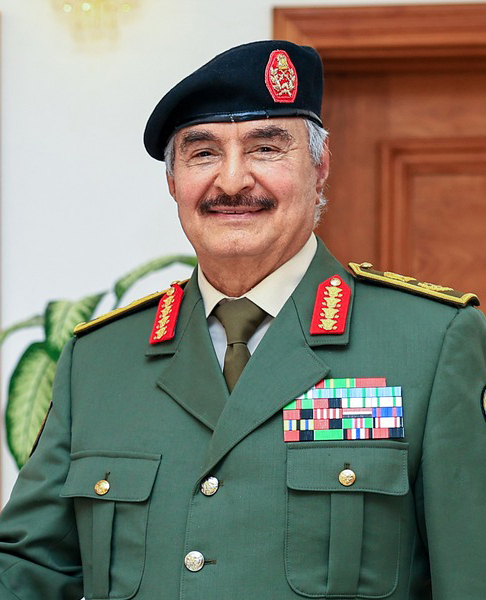
Khalifa Haftar stands as one of the most pivotal and polarizing figures in contemporary Libyan history. As the Commander of the Libyan National Army (LNA), Haftar has been a central actor in the nation's turbulent trajectory following the 2011 fall of Muammar Gaddafi. A career military officer with a history stretching back decades, Haftar's quest for power has shaped Libya's post-revolution landscape, dividing the country between rival administrations in the east and west. His most notable military campaign, the 2019-2020 offensive to capture the capital, Tripoli, underscored his ambition to unify Libya under his command, drawing in international patrons and exacerbating a complex civil war. Understanding Khalifa Haftar is essential to understanding the ongoing struggle for Libya's future.
Early Life and Formative Military Education
Khalifa Belqasim Haftar was born in 1943 in the city of Ajdabiya, in eastern Libya. Details of his early family life are sparse, but his path was decisively shaped by his entry into the military. Haftar graduated from the Royal Military Academy in Benghazi, laying the groundwork for his lifelong career in the armed forces. His early professional development was further advanced by overseas training, a common path for promising officers of his generation. Notably, Khalifa Haftar underwent training in the Soviet Union, attending military academies there in the 1970s. This education exposed him to Soviet military doctrine and tactics, which would later influence his command style.
These formative years were crucial, coinciding with the rise of Muammar Gaddafi. Haftar played a role in Gaddafi's 1969 coup that overthrew the Libyan monarchy, initially aligning himself with the new revolutionary government. His early loyalty to Gaddafi and his military competence led to rapid promotions. By the 1970s, he had risen to a significant position, eventually commanding Libyan forces during the Chadian–Libyan conflict. This experience, however, would become a turning point that set the stage for his decades-long rift with the Gaddafi regime.
Career and Major Achievements: From Exile to Power Broker
The military career of Khalifa Haftar is a saga of dramatic shifts, exile, and a formidable return. It can be segmented into several key phases:
Service Under Gaddafi and the Chad Debacle
In the 1980s, Haftar commanded Libyan troops in the protracted war in Chad. In 1987, following a major defeat at the Battle of Wadi Doum, Haftar and hundreds of his soldiers were captured by Chadian forces. In a stunning betrayal, the Gaddafi regime disavowed the captured troops, claiming they were not regular Libyan army personnel. This abandonment forged Haftar's enduring hatred for Gaddafi. After his release, he refused to return to Libya and instead went into exile in the United States, settling in the Vienna, Virginia area for nearly two decades.
Exile and Return with the 2011 Revolution
During his American exile, Khalifa Haftar became a prominent figure in the opposition. He was a leading member of the Libyan National Salvation Front and later a founding member of the anti-Gaddafi National Front for the Salvation of Libya. He maintained connections with U.S. intelligence agencies, though the exact nature of these ties remains a subject of speculation. When the Arab Spring ignited the 2011 Libyan revolution, Haftar returned to join the fray. He initially took a subordinate role within the anti-Gaddafi rebel forces, the National Transitional Council (NTC), but his ambitions soon surfaced.
Rise as Commander of the Libyan National Army (LNA)
In the chaotic aftermath of Gaddafi's fall, Libya descended into factional fighting. In 2014, Haftar launched "Operation Dignity," a military campaign ostensibly aimed at purging Islamist militias from eastern Libya. This move, condemned by the internationally recognized government in Tripoli as an attempted coup, marked his definitive power play. He consolidated control over much of eastern and southern Libya, building the Libyan National Army (LNA) as his personal power base. His major achievements in this period include:
- Securing key oil infrastructure in the "Oil Crescent" region, giving him control over Libya's primary economic resource.
- Liberating the city of Benghazi from Islamist militias after a brutal three-year campaign (2014-2017).
- Expanding LNA influence across the vast Libyan desert and southern Fezzan region through tribal alliances and military offensives.
The War for Tripoli and Stalemate
In April 2019, in a bold move to seize national power, Khalifa Haftar ordered the LNA to advance on Tripoli, the seat of the U.N.-backed Government of National Accord (GNA). This 14-month offensive became the most intense period of conflict since 2011, drawing in foreign mercenaries and direct military support from regional powers like the United Arab Emirates, Egypt, and Russia (via the Wagner Group) for Haftar, and Turkey for the GNA. The offensive ultimately failed, stalling on the outskirts of the capital. This failure led to a ceasefire in October 2020 and the establishment of a new transitional government, but Haftar remained a kingmaker, controlling eastern Libya and a significant portion of the national military apparatus.
Personal Life, Legacy, and Lasting Impact
Outside of his military persona, Khalifa Haftar maintains a relatively private personal life. He is married and has several sons, some of whom hold command positions within the LNA structure, a factor that leads critics to accuse him of building a familial dictatorship. His health has been a subject of periodic rumor, with unconfirmed reports of strokes or other ailments, though he has consistently reappeared in public to dispel such talk.
The legacy of Khalifa Haftar is deeply contested. To his supporters, primarily in eastern Libya, he is a strongman who brought a measure of stability and fought against extremist Islamist groups. They view him as the only leader capable of unifying a fractured nation. To his detractors, he is a would-be dictator, a warlord whose ambitions have perpetuated civil war, undermined democratic transitions, and relied on foreign backing and mercenaries. His impact on Libya is undeniable: he has ensured that any political solution must account for the military power he commands. The country remains effectively partitioned, with Haftar controlling the east from his de facto capital in Benghazi and the crucial oil terminals, a reality that continues to define Libya's geopolitical and economic landscape.
Financial Standing and Business Interests
While the exact net worth of Khalifa Haftar is not publicly verifiable, his financial and business ecosystem is a critical component of his power. Control over Libya's oil resources provides the LNA with a massive, if unofficial, revenue stream. Reports from U.N. experts and international analysts suggest a complex network of financing that supports the LNA's operations. This includes:
- Control over key oil export terminals, allowing for the diversion of state oil revenues.
- Financial support from foreign allies, notably the United Arab Emirates and Egypt, in the form of military equipment, fuel, and direct funding.
- Alleged involvement in illicit economic activities, including smuggling and trafficking, though these claims are difficult to substantiate conclusively.
Haftar's family is also reported to have significant business interests in eastern Libya, benefiting from the security and monopolies his control affords. Ultimately, Khalifa Haftar's "business" is the projection of military power, funded through a blend of captured national resources and foreign patronage, making his financial and military fortunes inextricably linked.
Net Worth Analysis
Estimates are speculative as his wealth is not publicly verified; reports and analysts suggest he controls significant financial resources and assets through his military and political position in Libya's oil-rich region.
Quick Stats
Related People

Abdel Hakim Belhaj
Ex-Tripoli Military Commander
Abdul Raziq al-Nazhuri
LNA Chief of Staff
Abdussalam al-Hassi
LNA General

Adel Abdel Ghaffar
EAF; EAF Spokesman; Spokesman