Biography
Introduction: The Visionary Monarch
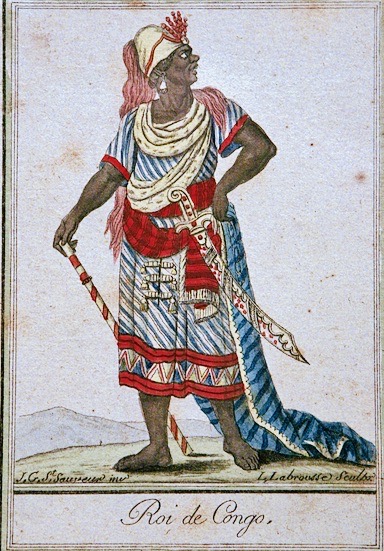
In the annals of African history, few figures stand as prominently as King Alfonso I of Kongo, a ruler whose life and reign fundamentally shaped the destiny of Central Africa. Born Nzinga a Nkuwu around 1456, he ascended to the throne of the prosperous Kongo Kingdom, a realm encompassing parts of modern-day Angola, the Democratic Republic of Congo, and the Republic of Congo. His significance transcends the typical narrative of a monarch; King Alfonso I is renowned as a strategic diplomat, a fervent convert to Christianity, and a reformer who sought to modernize his kingdom through controlled engagement with Europe. His most notable achievement was navigating the complex and often perilous early relationship with Portugal, aiming to harness European knowledge and trade while fiercely protecting his kingdom's sovereignty and resisting the encroaching slave trade. This biography explores the life, reign, and enduring legacy of this pivotal figure in Angolan and Central African heritage.
Early Life & Education: Prince of the Kongo
The early life of the future King Alfonso I of Kongo was spent in the sophisticated court of his father, Nzinga a Nkuwu, the king who first encountered Portuguese explorers in 1483. As a prince, named Mvemba a Nzinga, he was immersed in the traditions and governance structures of the Kongo Kingdom, a centralized state with a complex bureaucracy, a currency system (nzimbu shells), and a thriving agricultural and artisan economy. His formative education was that of a Kongo nobleman, involving statecraft, military strategy, and the spiritual traditions of his people.
The pivotal formative experience for the young prince was the arrival of Portuguese missionaries and traders. While his father initially showed interest, it was Prince Mvemba a Nzinga who became deeply fascinated by Christianity and Portuguese literacy. He converted and was baptized, taking the name Afonso, a namesake of the Portuguese royal family. This education was not one-sided; he was a keen student who saw in Portuguese literacy, law, and technology tools for strengthening the Kongo state. His understanding was that of a pragmatic ruler-in-waiting, viewing European contact as a potential source of innovation rather than subjugation, setting the stage for his revolutionary policies upon taking power in 1506 after a succession struggle.
Career & Major Achievements: Reign of Reform and Resistance
The reign of King Alfonso I of Kongo, from 1506 until his death in 1542 or 1543, was a period of intense transformation and diplomatic mastery. He embarked on an ambitious project to remake the Kongo Kingdom into a Christian, literate, and modern African state recognized as an equal by European powers.
State-Building and Christianization
Alfonso I instituted sweeping reforms. He established a European-style legal code, built churches and schools, and made literacy in Portuguese and the Kikongo language a requirement for members of his court and bureaucracy. He sent dozens of his relatives and nobles to Lisbon for education, creating a class of literate Kongo elites. In 1512, he even requested that his son, Henrique, be consecrated as a bishop; Henrique was ordained in 1518, becoming the first native bishop of sub-Saharan Africa. Alfonso envisioned a symbiotic partnership where the Kongo would export natural resources like copper, ivory, and raffia cloth in exchange for European goods, missionaries, and craftsmen.
Diplomacy and the Fight Against the Slave Trade
King Alfonso I's most critical and challenging achievement was his decades-long diplomatic campaign to control Portuguese activities in his kingdom. His famous letters to Kings Manuel I and João III of Portugal, written between 1506 and 1540, are extraordinary historical documents. They reveal a ruler increasingly alarmed by the rapacious behavior of Portuguese settlers and traders who were instigating wars and kidnapping his subjects for the transatlantic slave trade. In a poignant 1526 letter, he wrote: "We cannot reckon how great the damage is, since the mentioned merchants are taking every day our natives, sons of the land and the sons of our noblemen and vassals and our relatives... so great is the corruption and licentiousness that our country is being completely depopulated." He pleaded for the Portuguese crown to send only "priests and people to teach in schools," and not traders. This struggle defines his legacy as a ruler who, while embracing certain foreign ideas, fought tirelessly to protect his people from exploitation.
Military and Economic Consolidation
Despite the pressures, Alfonso I skillfully used Portuguese military aid to consolidate his power, defeating internal rivals and expanding the kingdom's centralized authority. He managed to maintain the Kongo as a powerful, independent state during his lifetime, a significant achievement in an era of increasing European encroachment. The kingdom's capital, Mbanza Kongo (renamed São Salvador), flourished under his rule as a major political and spiritual center.
Personal Life & Legacy: The Enduring Impact
Beyond state affairs, King Alfonso I of Kongo was a deeply religious man who integrated his Christian faith with his identity as a Kongo ruler. He was known to personally involve himself in theological instruction and the administration of justice. His personal life was dedicated to his vision of a reformed kingdom; his family became the core of the new Christian Kongo aristocracy. His legacy is profound and multifaceted. He is a foundational figure in the history of Christianity in Africa, a symbol of early African diplomacy and literacy, and a tragic prophet who foresaw the devastating impact of the slave trade. In Angola and across the African diaspora, he is remembered as a king of immense intellect and resolve.
The modern legacy of King Alfonso I is visible in several ways:
- Cultural Symbol: He remains a powerful national symbol in Angola, representing early statehood, resistance, and cultural synthesis.
- Historic Sites: The ruins of his capital, Mbanza Kongo, are a UNESCO World Heritage Site, recognized for its historical significance.
- Diasporic Memory: His name and story are invoked in studies of the African diaspora and the roots of African resistance to colonialism.
- Literary Heritage: His letters are studied as some of the earliest written documents by an African ruler, providing an invaluable African perspective on the dawn of the Atlantic world.
Net Worth & Historical Economic Influence
While anachronistic to measure in modern currency, the economic power and "net worth" of King Alfonso I of Kongo was immense in the context of 16th-century Central Africa. He controlled the wealth of the entire Kongo Kingdom, one of the region's most powerful states. His treasury was filled with:
- Nzimbu Shells: The official currency mined from the island of Luanda, which he monopolized.
- Natural Resources: Profits from the kingdom's vast output of ivory, copper, and finely woven raffia cloth.
- Trade Monopolies: As king, he controlled all external trade, negotiating directly with Portuguese representatives for luxury goods, firearms, and ships.
- Land and Labor: He commanded the output of a vast agricultural system and a complex tribute network from provincial nobles.
† The dagger (†) symbol is often used to denote that the individual is deceased.
Net Worth Analysis
King Alfonso I of Kongo was a historical ruler from the 15th-16th century, not a contemporary individual with a measurable financial net worth.
Quick Stats
Related People

2Baba (Innocent Idibia)
Veteran Artist & Activist
Aar Maanta
Singer & Composer
Abdel Aziz al-Mubarak
Oud Master
Abdel Halim Hafez†
Legend; “Nightingale”; “The Dark-Skinned Nightingale”