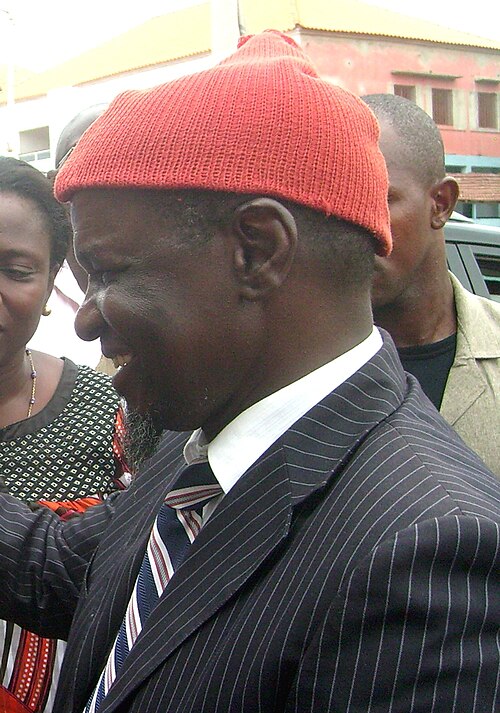
Biography
Introduction: The Philosopher-President of Guinea-Bissau
Kumba Ialá†, born Kumba Ialá Embaló, stands as one of the most charismatic and controversial figures in the modern Politics & Government landscape of West Africa. Serving as the Ex-President of the Republic of Guinea-Bissau from 2000 to 2003, his tenure was a pivotal, turbulent chapter in the nation's post-independence history. A former philosophy and theology student turned fiery political leader, Ialá rose to power on a wave of popular support, promising reform and stability. His key achievement was his electoral victory in 2000, which marked the first democratic transfer of power to an opposition party in Guinea-Bissau. However, his presidency was ultimately cut short by a military coup, cementing his legacy as a symbol of both democratic promise and the profound challenges of Executive Leadership in a nation plagued by instability.
Early Life & Education: From Bafatá to Lisbon
Kumba Ialá was born on March 15, 1953, in the town of Bafatá, a historical center in central Guinea-Bissau. He was raised in a Muslim family of the Balanta ethnic group, the country's largest, which would later form a significant part of his political base. His early life unfolded against the backdrop of the protracted guerrilla war for independence from Portugal, led by the African Party for the Independence of Guinea and Cape Verde (PAIGC).
His intellectual journey began in Bissau and later took him to Portugal. Demonstrating academic prowess, Ialá initially pursued religious studies in a seminary, which influenced his later oratorical style, often imbued with moral and philosophical references. He went on to study Theology at the Catholic University of Portugal and later Philosophy at the prestigious University of Lisbon. This unique educational background earned him the nickname "the Philosopher" and set him apart from many of his political contemporaries. His formative years in Portugal during the 1970s and 80s exposed him to democratic ideals and political theory, which he sought to apply upon his return to a newly independent but politically monolithic Guinea-Bissau under the PAIGC.
Career & Major Achievements: The Ascent and Tumultuous Presidency
Kumba Ialá's political career began in the single-party system of the PAIGC, but he quickly grew disillusioned. Following the introduction of multi-party politics in 1991, he became a founding member and the first Secretary-General of the Party for Social Renewal (PRS) in 1992. The PRS positioned itself as a major opposition force, drawing strong support from the Balanta and other rural communities.
Road to the Presidency
Ialá first contested the presidency in 1994, losing to João Bernardo Vieira but securing a respectable 46% of the vote in the second round. This established him as the principal opposition leader. His moment of triumph came in the 1999-2000 presidential election, held after a brutal civil war in 1998-99. Capitalizing on public discontent, Ialá won a decisive victory in the second round on January 16, 2000, with nearly 72% of the vote, defeating interim President Malam Bacai Sanhá. This election was a landmark event, celebrated as a peaceful democratic transition.
Presidency and Political Challenges
As President, Kumba Ialá faced immense challenges: a shattered economy, a politicized and powerful military, and deep-seated institutional fragility. His early months were marked by attempts at national reconciliation. However, his administration soon became characterized by political volatility, frequent cabinet reshuffles (appointing 15 Prime Ministers in under four years), and worsening economic conditions. His governance style, often seen as erratic and confrontational, led to a breakdown in relations with the legislature, the judiciary, and international donors. Key institutions were paralyzed, and civil servants went unpaid for months. Despite these crises, Ialá maintained a direct, populist connection with his rural base, often speaking in Creole and local languages.
The 2003 Coup and Aftermath
The mounting instability culminated on September 14, 2003. While Ialá was out of the capital, the military, led by General Veríssimo Correia Seabra, seized power in a bloodless coup. Ialá was arrested and forced to resign. This event underscored the persistent threat of military intervention in Guinea-Bissau's Politics & Government. After a period of house arrest and political transition, he was allowed to return to politics. He contested the 2005 presidential election but finished a distant third. Kumba Ialá remained the president of the PRS and a significant, if diminished, political figure until his sudden death.
Personal Life, Philanthropy & Legacy
Kumba Ialá was a deeply religious man, having converted from Islam to Catholicism during his studies, and later reportedly practicing both faiths. This spiritual syncretism fascinated many. Known for his eloquent, long, and sometimes esoteric speeches, he was a captivating orator who could command the attention of crowds. Personally, he was described as warm and charismatic in direct interaction.
His philanthropic efforts were largely channeled through his political role and ethnic community ties, though his administration's economic struggles limited large-scale formal programs. The legacy of Kumba Ialá is profoundly complex. He is remembered as the leader who embodied the hope for democratic change in 2000, yet his Executive Leadership is also cited as a period of missed opportunity and deepened crisis. He demonstrated that electoral victory is not synonymous with effective governance in a fragile state. His career highlights the extreme difficulties of managing civil-military relations and building state institutions in post-conflict Guinea-Bissau. He passed away on April 4, 2014, from a cardiac arrest, but the political party he helped found, the PRS, remains a major force in the nation's ongoing turbulent politics.
Net Worth & Business Ventures
Details regarding the precise net worth of Kumba Ialá are not publicly documented, as is common with many political figures from Guinea-Bissau, one of the world's least developed nations. Unlike some African leaders, there is no widespread evidence of Ialá amassing significant personal wealth through large-scale private business ventures or alleged corruption on a grand scale. His primary livelihood was derived from his political career. His financial situation, like the country's, appeared strained during his post-presidency years. Any personal assets were likely tied to family holdings or modest investments. The focus on Ialá's legacy remains squarely on his political impact rather than financial success, reflecting the subsistence-level economy and the political instability that defines Guinea-Bissau's context. His life underscores that power in such environments is more often measured in political influence and security than in visible personal fortune.
Sources and Further Reading: For verified information on Kumba Ialá and the political history of Guinea-Bissau, credible sources include the Encyclopædia Britannica, reports from BBC News, and comprehensive archives from The World Factbook. Academic journals focusing on African politics also provide in-depth analysis of his presidency and the era's political dynamics.
Financial Breakdown
Net Worth Analysis
Kumba Ialá was a politician in Guinea-Bissau, a low-income country, with no known significant business interests or inclusion on wealth lists, suggesting a modest net worth from his public service career.
Frequently Asked Questions
What is Kumba Ialá†'s estimated net worth?
Kumba Ialᆠhas an estimated net worth of $1.0 Million.
What is Kumba Ialá†'s role and nationality?
Kumba Ialᆠis a Ex-President from Guinea-Bissau.
How did Kumba Ialᆠmake their money?
Kumba Ialᆠbuilt their fortune primarily through Kumba Ialá was a politician in Guinea-Bissau, a low-income country, with no known significant business interests or inclusion on wealth lists, suggesting a modest net worth from his public service career..
How old is Kumba Ial�
Kumba Ialᆠwas born in 1953 (73 years old).
Related Personalities
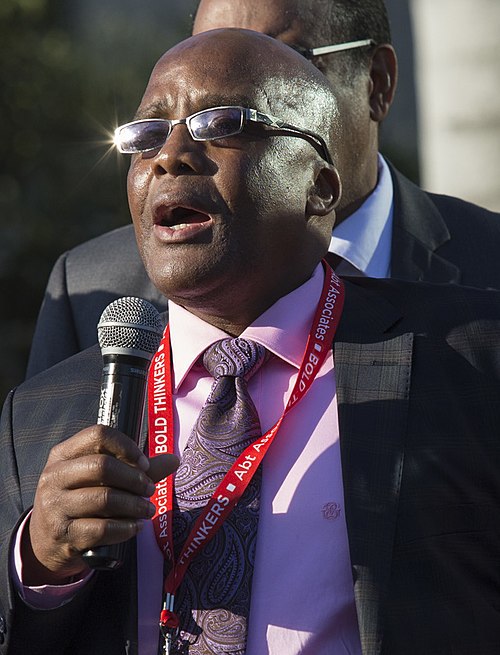
Aaron Motsoaledi
LP; Minister of Home Affairs • South Africa
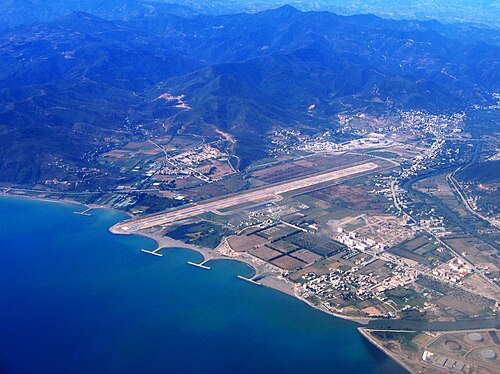
Abane Ramdane†
FLN Leader & Strategist • Algeria
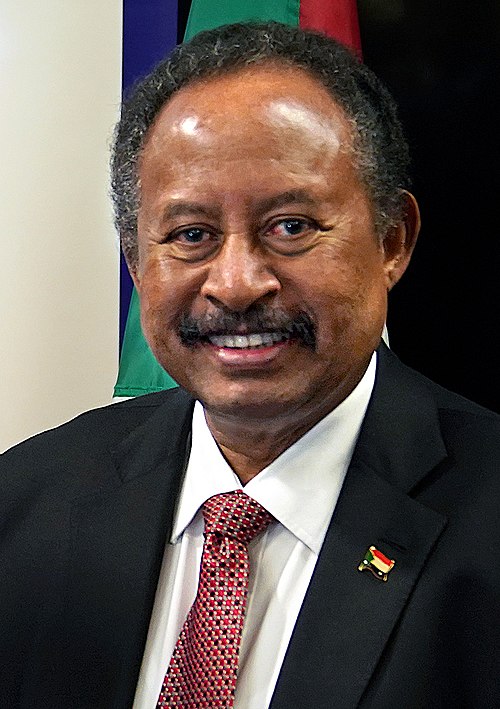
Abdalla Hamdok
Ex-Prime Minister • Sudan
Abdallah Kigoda
Ex-Minister of Natural Resources • Tanzania