
Financial Breakdown
Asset Distribution
Assets vs Liabilities
Assets
Disclaimer: These financial estimates are based on publicly available information and should be considered approximate. Last updated: 12/31/2025
Biography
In the vibrant landscape of contemporary Arts & Culture, few figures have challenged conventions and captured the complexities of modern Morocco as boldly as Laila Marrakchi. As a Director & Screenwriter born in 1975, Marrakchi has carved a unique niche, using the lens of cinema to explore themes of female agency, generational conflict, and societal taboos. Her work, often set against the backdrop of Morocco's cosmopolitan elite, bridges the intimate world of family drama with broader national conversations. Achieving international acclaim with her debut feature Marock in 2005, Laila Marrakchi ignited fierce debate and became a symbol of a new, audacious generation of Moroccan filmmakers. Her career is a testament to the power of film to provoke, entertain, and reflect a society in transition.
Early Life & Education: Forging a Cinematic Perspective
Laila Marrakchi was born in 1975 in Casablanca, Morocco, into a well-to-do family. Growing up in this bustling economic capital exposed her to the contrasts and contradictions that would later define her filmography—the interplay between tradition and modernity, local customs and global influences. From a young age, she was drawn to visual storytelling, a passion that her family supported.
Her formal education in film began in Paris, the historic crossroads for many Maghrebi artists. She first attended the prestigious École nationale supérieure des arts décoratifs (ENSAD), honing her visual and aesthetic sensibilities. However, her desire to pursue narrative filmmaking led her to the renowned Fémis, France's national film school, where she specialized in editing. This technical training proved invaluable, giving her a meticulous understanding of rhythm, pacing, and the construction of narrative tension. Her early short films, such as Lost Horizon (1999) and Partir (2001), served as testing grounds for her themes and style, showcasing her keen eye for character and her willingness to tackle sensitive subjects. These formative years in Paris equipped Laila Marrakchi with both the technical skills and the creative confidence to return to Morocco and tell stories that were personal, provocative, and uniquely hers.
Career & Major Achievements: Provocation and Mainstream Success
Breakthrough with "Marock" (2005)
Laila Marrakchi announced herself on the world stage with her explosive debut feature, Marock (2005). The film, set in Casablanca, follows Rita, a young Muslim woman from a wealthy family, who falls in love with a Jewish classmate in the period following King Hassan II's death. Marock was a cultural earthquake. It openly depicted teenage sexuality, interfaith romance, drug use, and the casual liberties of the Moroccan upper class—subjects rarely addressed in national cinema. The film sparked intense controversy at home, with protests and heated public debate, while simultaneously winning the International Federation of Film Critics (FIPRESCI) Prize at the 2005 Cannes Film Festival. This dichotomy cemented Marrakchi's reputation as a fearless provocateur and a vital new voice. The success of Marock demonstrated there was a hungry audience for contemporary Moroccan stories told with honesty and stylistic flair.
Navigating Television and Return to Film
Following her impactful debut, Marrakchi explored other formats. She directed episodes for the French television crime series Suite noire and Le temps des secrets, further developing her directorial craft. In 2013, she returned to feature films with Rock the Casbah, a film that premiered at the Toronto International Film Festival (TIFF). This ensemble drama, starring prominent Moroccan actress Lubna Azabal and French star Omar Sharif in his final film role, explores the dynamics of a wealthy Moroccan family gathered for a funeral in Tangier. While less scandalous than Marock, it continued her nuanced examination of family, grief, and hidden secrets within a specific social milieu, showcasing her growth as a director handling complex ensemble casts.
Mainstream Recognition and Continued Impact
Laila Marrakchi achieved her broadest commercial success by masterfully adapting the beloved French comic series Moka for television. She directed the 2018 TV film Moka, and more significantly, served as the lead director and co-writer for the popular series Mytho (2019-2022), starring Marina Foïs. This witty, sharp-tongued comedy about a woman who feigns cancer to get attention was a major hit in France, proving Marrakchi's versatility and ability to excel in mainstream, character-driven comedy. Her work continues to pave the way for other Arab and North African women in film and television, demonstrating that their stories can resonate on both arthouse and commercial platforms.
Personal Life, Legacy, and Cultural Impact
Laila Marrakchi maintains a relatively private personal life, dividing her time between Morocco and France. She is married and is a mother, a facet of her identity that subtly informs her deep interest in family structures and relationships. Her legacy within Morocco and Arab cinema is significant. She is widely regarded as a key figure in the early 21st-century wave of Moroccan cinema that moved beyond social realism and folkloric tales to engage directly with the present.
By focusing on the lives of young people and women, Laila Marrakchi gave voice to a generation navigating a rapidly changing society. Her films ask uncomfortable questions about freedom, identity, and hypocrisy, forcing public dialogue. While sometimes criticized for focusing on privileged settings, her work undeniably opened doors for more candid storytelling. She inspired a cohort of filmmakers to tackle subjects once considered off-limits. Her career trajectory—from Cannes-laureled auteur to successful TV director—also models a pragmatic and sustainable path in the competitive film industry. Laila Marrakchi's lasting impact lies in her courage to frame Morocco not as an exotic backdrop, but as a dynamic, complex setting for universal human dramas.
Net Worth and Professional Ventures
While the exact net worth of Laila Marrakchi is not publicly disclosed, her successful career across film and television indicates significant professional and financial achievement. Her income streams are derived from multiple sources within the Arts & Culture sector:
- Film Directing & Screenwriting: Revenue from her feature films (Marock, Rock the Casbah), including theatrical releases, international sales, and streaming rights.
- Television Production: As the lead director and co-writer of the hit series Mytho, she would command substantial fees per episode, along with potential residuals and syndication earnings.
- Film Festival Prizes & Grants: Early in her career, prizes like the FIPRESCI award at Cannes provided both funding and invaluable prestige.
- Commercial Work: She has also directed high-profile commercials, adding another dimension to her professional portfolio.
Rather than traditional business ventures, Laila Marrakchi's primary enterprise is her creative output. Her ability to navigate between francophone and Moroccan production circles, and between cinema and television, has established her as a resilient and adaptable force in the industry, ensuring her continued relevance and commercial viability.
Frequently Asked Questions
What is Laila Marrakchi's estimated net worth?
Laila Marrakchi has an estimated net worth of $5.0 Million.
What is Laila Marrakchi's role and nationality?
Laila Marrakchi is a Director & Screenwriter from Morocco.
How did Laila Marrakchi make their money?
Laila Marrakchi built their fortune primarily through Laila Marrakchi is a successful film director and screenwriter, but she is not a business magnate or on any billionaire list; her wealth is estimated based on her career in the arts..
How old is Laila Marrakchi?
Laila Marrakchi was born in 1975 (51 years old).
Which category is Laila Marrakchi listed under?
Laila Marrakchi is featured under the Arts & Culture category on NetWorth Africa.
How is Laila Marrakchi's net worth calculated?
NetWorth Africa estimates financial valuations using publicly available stock equity holdings, company ownership records, real estate assets, and verified market data.
Net Worth Analysis
Laila Marrakchi is a successful film director and screenwriter, but she is not a business magnate or on any billionaire list; her wealth is estimated based on her career in the arts.
Quick Stats
Related People
Abasse Ndione
Novelist & Playwright • Senegal

Abdel Rahman al-Abnudi†
Poet (Egypt-Sudan) • Sudan
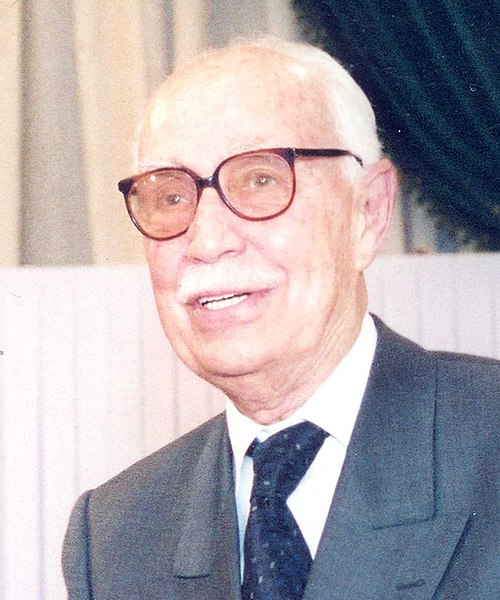
Abdelkrim Ghallab†
Novelist & Journalist • Morocco
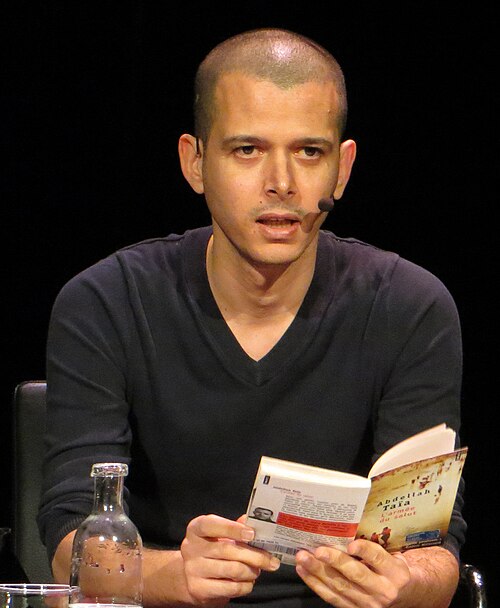
Abdellah Taïa
Novelist & Filmmaker • Morocco