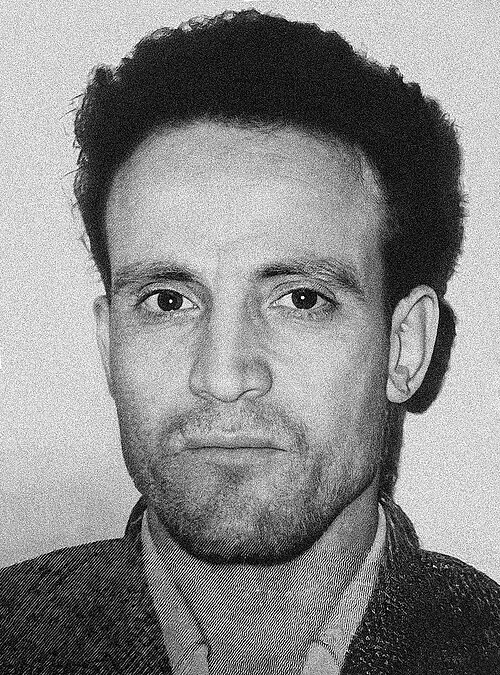
Biography
Introduction: The Unyielding Pillar of Algerian Independence
In the annals of Algeria's struggle for freedom, few names resonate with the profound reverence accorded to Larbi Ben M'hidi†. A foundational leader of the Front de Libération Nationale (FLN) and a principal architect of the Algerian Revolution (1954-1962), Ben M'hidi's strategic brilliance and unwavering commitment to liberation cemented his status as a national hero. His most notable achievement was his pivotal role in organizing and launching the armed insurrection on November 1, 1954, a date celebrated as the outbreak of the war. As a key member of the historic "Group of Nine," his leadership extended to both political mobilization and military strategy, notably in the pivotal Battle of Algiers. His tragic death in 1957 transformed him into an immortal martyr, a symbol of sacrifice that galvanized the Algerian people and drew international attention to their cause. The legacy of Larbi Ben M'hidi† remains a cornerstone of modern Algerian identity within the Politics & Government narrative of the Liberation Era.
Early Life & Education: Forging a Conscience in Colonial Algeria
Mohammed Larbi Ben M'hidi was born in 1923 in the village of El Kouahi, near Aïn M'lila in the Constantine region of eastern Algeria. Growing up under the oppressive structures of French colonial rule, his formative years were shaped by the stark inequalities and systemic discrimination faced by the indigenous population. He received his primary education in his hometown, demonstrating early intellectual promise. For his secondary studies, he attended the Institut Ben Badis in Constantine, an establishment that was becoming a crucible for nascent Algerian nationalist thought.
It was during this period that the young Larbi Ben M'hidi† began to develop a keen political consciousness. He was influenced by the activities of the Algerian People's Party (PPA) and the Movement for the Triumph of Democratic Liberties (MTLD), the forebears of the revolutionary movement. After completing his studies, he moved to Biskra, where he worked as an accountant. This professional facade, however, belied his deepening involvement in underground political activism. He quickly rose through the ranks of the MTLD's paramilitary wing, the Organisation Spéciale (OS), where he honed his organizational skills and connected with other future revolutionaries like Ahmed Ben Bella and Hocine Aït Ahmed. These formative experiences in the clandestine networks of anti-colonial resistance were the essential training ground for the monumental role he would soon play in Algeria's history.
Career & Major Achievements: Strategist of the Revolution
The career of Larbi Ben M'hidi† is synonymous with the birth and early trajectory of the Algerian War of Independence. His contributions were multifaceted, spanning military command, political leadership, and ideological articulation.
Architect of November 1, 1954
As colonial tensions reached a boiling point, Ben M'hidi was a central figure in the secret meetings that led to the formation of the Revolutionary Committee for Unity and Action (CRUA). This group evolved into the Front de Libération Nationale (FLN). He was one of the nine historic leaders—the "Group of Nine"—who planned and executed the coordinated attacks across Algeria on November 1, 1954, marking the official start of the war. Ben M'hidi was appointed as the political and military chief of Wilaya V (the Oran region), a zone of critical importance.
Leadership in the Battle of Algiers
In 1956, his strategic acumen led to his promotion to the FLN's supreme body, the Comité de Coordination et d'Exécution (CCE). He was subsequently transferred to Algiers to assume command of the Autonomous Zone of Algiers (ZAA) during the height of the urban guerrilla conflict known as the Battle of Algiers (1956-1957). His leadership here was characterized by remarkable organizational skill and a deep connection to the civilian population. A famous, though possibly apocryphal, quote attributed to him encapsulates his conviction: "Throw the revolution into the street, and the people will embrace it."
Capture and Martyrdom
The French military's 10th Parachute Division, under General Jacques Massu, intensified its efforts to break the FLN network. Larbi Ben M'hidi† was captured by French paratroopers on February 23, 1957, in Algiers. His arrest was a significant blow to the FLN's command structure. While in custody, he was subjected to torture but remained defiant. The official French military report claimed he died by suicide on March 4, 1957, while in his cell. This account has been universally rejected by Algerians and many historians, who believe he was executed extrajudicially. His dignified demeanor during a staged press conference with French journalists, where he calmly defended the righteousness of the Algerian cause, became an iconic image of resistance. His death transformed him into the ultimate martyr, fueling the revolution's resolve.
Personal Life & Legacy: The Enduring Symbol
Deliberately eschewing personal life for the clandestine demands of revolution, Larbi Ben M'hidi† remained unmarried and left behind no direct descendants. His life was wholly dedicated to the cause of national liberation. He was known among his comrades for his modesty, intellectual depth, strategic patience, and unshakeable moral integrity. Unlike some of his peers, he was seen as a unifying figure, capable of bridging internal divides within the nationalist movement.
The legacy of Larbi Ben M'hidi† is monumental. In independent Algeria, he is celebrated as one of the most revered martyrs of the Liberation Era. His name adorns countless streets, schools, stadiums, and public institutions across the nation. The main football stadium in Algiers, the Stade du 5 Juillet, was renamed Stade Larbi Ben M'hidi in his honor. His story is a central pillar of the national curriculum, taught to every Algerian student as a paragon of sacrifice and patriotism. Beyond Algeria, his life and death became a powerful symbol for anti-colonial movements worldwide. The circumstances of his demise exposed the brutal methods of the French military and contributed to shifting international public opinion. Today, Larbi Ben M'hidi† stands not just as a historical figure, but as a perpetual embodiment of the price of freedom and the dignity of resistance in the face of oppression.
Historical Significance & Commemoration
While concepts of personal net worth or business ventures are entirely inapplicable to a revolutionary martyr like Larbi Ben M'hidi†, his value and "wealth" to the Algerian nation are immeasurable. He invested his life, not in financial capital, but in the social and political capital of a free people. His "venture" was the revolution itself, and its "success" was the independence of Algeria in 1962. The nation's commemoration of him is a form of perpetual dividend on that sacrifice.
His legacy is preserved and promoted through:
- National Monuments: Statues, memorials, and dedicated museums across Algeria.
- Academic & Cultural Works: He is the subject of numerous historical studies, biographies, films, and literary works.
- Political Symbolism: His image and words are frequently invoked in Algerian political discourse as a benchmark of integrity and national commitment.
- International Recognition: Historians of colonialism and revolution globally acknowledge his strategic role in 20th-century independence movements.
The story of Larbi Ben M'hidi† transcends the individual; it is a foundational narrative for a nation. From his birth in 1923 to his martyrdom in 1957, his life trajectory mapped the arduous path from colonial subjugation to the threshold of sovereignty. As an FLN leader, he provided the strategic genius necessary to launch a war; as a martyr, he provided the symbolic power necessary to sustain it. In the category of Politics & Government, particularly the Liberation Era subcategory, he remains an indispensable figure—the thoughtful strategist whose ultimate sacrifice sealed his commitment to a free Algeria.
Frequently Asked Questions
What is Larbi Ben M'hidi†'s estimated net worth?
Net worth details for Larbi Ben M'hidi† are currently being updated.
What is Larbi Ben M'hidi†'s role and nationality?
Larbi Ben M'hidi† is a FLN Leader & Martyr from Algeria.
How did Larbi Ben M'hidi† make their money?
Larbi Ben M'hidi† built their fortune primarily through Larbi Ben M'hidi was a revolutionary leader who died in 1957 and did not accumulate personal wealth; his value is historical, not financial..
How old is Larbi Ben M'hidi†?
Larbi Ben M'hidi† was born in 1923 (103 years old).
Which category is Larbi Ben M'hidi† listed under?
Larbi Ben M'hidi† is featured under the Politics & Government category on NetWorth Africa.
How is Larbi Ben M'hidi†'s net worth calculated?
NetWorth Africa estimates financial valuations using publicly available stock equity holdings, company ownership records, real estate assets, and verified market data.
Net Worth Analysis
Larbi Ben M'hidi was a revolutionary leader who died in 1957 and did not accumulate personal wealth; his value is historical, not financial.
Quick Stats
Related People
Aaron Motsoaledi
LP; Minister of Home Affairs • South Africa
Abane Ramdane†
FLN Leader & Strategist • Algeria
Abdalla Hamdok
Ex-Prime Minister • Sudan
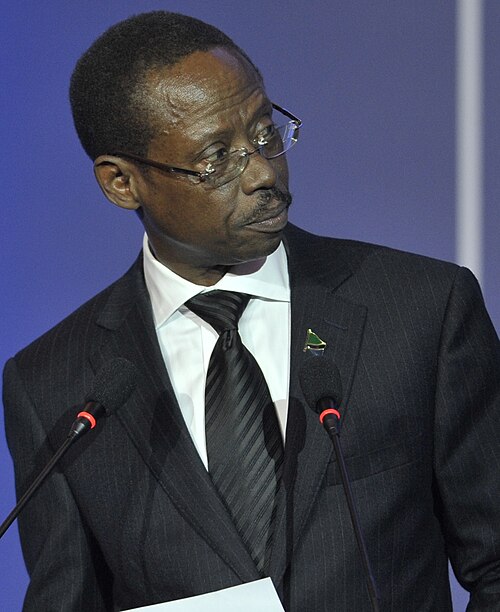
Abdallah Kigoda
Ex-Minister of Natural Resources • Tanzania