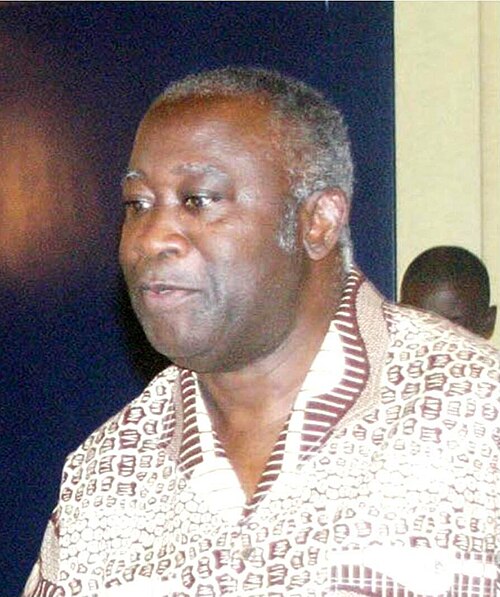
Biography
Introduction: The Controversial Patriarch of Ivorian Politics
Laurent Gbagbo stands as one of the most pivotal and controversial figures in the modern political history of Côte d'Ivoire. Serving as the fourth President of the Republic from 2000 to 2011, his tenure was marked by profound political upheaval, civil conflict, and a dramatic international legal saga. A historian and long-time opposition leader, Gbagbo's rise to the Executive Presidency broke the decades-long dominance of the party founded by the nation's first president, Félix Houphouët-Boigny. His key achievement, from his supporters' perspective, was becoming the first elected president to challenge the post-colonial political order, giving a voice to southern populations who felt marginalized. However, his presidency is inextricably linked to a decade of crisis, culminating in a bitter post-election conflict in 2010-2011 that brought the nation to the brink and led to his arrest and transfer to the International Criminal Court.
Early Life and Education: The Making of a Dissident
Laurent Koudou Gbagbo was born on May 31, 1945, in Gagnoa, a town in the central-western region of what was then French West Africa. He was born into the Bété ethnic group, a detail that would later play a significant role in the nation's ethnically charged politics. His early life was steeped in academia; he pursued studies in history, earning a Bachelor's degree from the University of Abidjan in 1969. He later obtained a Doctorate in History from the University of Paris Diderot (Paris VII) in 1979. His doctoral thesis, later published as "Côte d'Ivoire: For a New Democracy," already hinted at his political leanings, critiquing the single-party rule of President Houphouët-Boigny.
His formative experiences were shaped during his time as a university professor and researcher at the Institut d'Histoire, d'Art et d'Archéologie Africains (IHAAA) in Abidjan. It was here that his dissent crystallized. In the 1970s, he became involved with a clandestine teachers' union and was influenced by socialist and Marxist ideologies. His opposition activities led to significant consequences; in 1971, he was detained for nearly two years for "subversive teaching." This period of incarceration solidified his resolve to challenge the status quo, and upon his release, he continued his activism, eventually going into voluntary exile in France from 1982 to 1988 to escape further political pressure.
Career and Major Achievements: The Path to Power and Crisis
Laurent Gbagbo's political career is a chronicle of persistent opposition, a hard-fought ascent to power, and a presidency defined by conflict.
Building the Opposition: The FPI
In 1988, after returning from exile, Gbagbo officially founded the Ivorian Popular Front (FPI), establishing the first major formal opposition party in Côte d'Ivoire since independence. For years, he and the FPI campaigned for multi-party democracy, a goal realized in 1990 when President Houphouët-Boigny, under domestic and international pressure, allowed competitive elections. That same year, Laurent Gbagbo ran for president, losing to Houphouët-Boigny but securing a seat in the National Assembly. He positioned himself as the primary opponent to Houphouët-Boigny's successor, Henri Konan Bédié.
The Tumultuous Rise to the Presidency
The political landscape shifted dramatically with a military coup in 1999 led by General Robert Guéï. In the chaotic 2000 presidential election that followed, Guéï excluded major candidates Alassane Ouattara and Bédié. Laurent Gbagbo emerged as the main contender. After Guéï claimed victory amid widespread allegations of fraud, mass protests erupted—the "Ivorian October"—forcing Guéï to flee. Gbagbo declared himself president on October 26, 2000. While his supporters hailed this as a victory for popular democracy, the election was marred by violence and boycotts, setting a troubled precedent.
A Presidency Divided: Civil War and "Ivoirité"
Gbagbo's tenure was immediately challenged. A failed coup attempt in September 2002 escalated into a full-scale civil war, dividing the country into a rebel-held north and a government-controlled south for nearly eight years. The conflict was fueled by the toxic politics of "Ivoirité" (Ivorian identity), which Gbagbo's predecessors had used to marginalize northern populations and his rival, Alassane Ouattara. While Gbagbo did not create this concept, his administration was accused of exacerbating these divisions. A major achievement during this period was the signing of the Ouagadougou Political Agreement in 2007 with rebel leader Guillaume Soro, which led to a fragile reunification and the scheduling of long-delayed elections.
The 2010-2011 Crisis and International Trial
The long-awaited presidential election in 2010 proved to be the climax of Gbagbo's career. The second round pitted him against Alassane Ouattara. The Independent Electoral Commission (IEC) declared Ouattara the winner, a result certified by the United Nations. However, the Constitutional Council, led by a Gbagbo ally, invalidated results from northern regions and declared Gbagbo the winner. Both men were sworn in, leading to a violent five-month standoff. The conflict resulted in an estimated 3,000 deaths. Forces loyal to Ouattara, with critical international military support, eventually captured Gbagbo from the presidential bunker on April 11, 2011. In November 2011, he was transferred to the International Criminal Court (ICC) to face charges of crimes against humanity. After a lengthy trial, he was acquitted in 2019, a verdict finally upheld in 2021, allowing his return to Côte d'Ivoire in June of that year.
Personal Life, Legacy, and Lasting Impact
Laurent Gbagbo is married to Simone Ehivet Gbagbo, a formidable political figure in her own right who served as Deputy Secretary-General of the FPI. The couple has children together. Known for his oratorical skills and background as a historian, Gbagbo authored several books on Ivorian politics and history. His personal resilience was tested through imprisonment, exile, war, and international prosecution.
His legacy is profoundly dualistic. To his supporters, primarily from the south and west of the country, he remains a symbol of resistance, a democrat who stood against northern and foreign (particularly French) domination. They view his ICC trial as victor's justice. To his detractors, he is a figure who clung to power at any cost, plunging his country into a devastating civil war and post-election violence fueled by nationalist and xenophobic rhetoric. His presidency irrevocably shaped the nation's trajectory, highlighting the deep-seated issues of identity, citizenship, and governance in post-colonial Africa. His return to Côte d'Ivoire in 2021, while legally absolved, ensures that his influence and the divisions he both represented and manipulated continue to be a potent force in Ivory Coast politics.
Net Worth and Business Ventures
Unlike many long-serving African leaders, Laurent Gbagbo's net worth has not been associated with vast business empires or overt personal wealth accumulation. His financial profile is largely tied to his career as a public servant, academic, and political leader. During his presidency, he and his family were subject to international sanctions and asset freezes by the United Nations and other bodies following the 2010-2011 crisis, which would have restricted access to any significant holdings. The primary source of wealth attributed to him and his wife, Simone, is typically linked to their political positions and associated benefits rather than independent commercial ventures. Since his return to Côte d'Ivoire, his financial situation remains private, with his focus appearing to be on political rehabilitation within the FPI and the Ivorian political landscape rather than on business activities. His legacy is firmly rooted in political, not financial, capital.
Frequently Asked Questions
What is Laurent Gbagbo's estimated net worth?
Laurent Gbagbo has an estimated net worth of $10.0 Million.
What is Laurent Gbagbo's role and nationality?
Laurent Gbagbo is a Ex-President of Côte d'Ivoire from Ivory Coast.
How did Laurent Gbagbo make their money?
Laurent Gbagbo built their fortune primarily through As a former politician with no known major business interests or inclusion on any billionaire list, his wealth is estimated based on his public salary, pensions, and assets typical for a former head of state in the region..
How old is Laurent Gbagbo?
Laurent Gbagbo was born in 1945 (81 years old).
Which category is Laurent Gbagbo listed under?
Laurent Gbagbo is featured under the Politics & Government category on NetWorth Africa.
How is Laurent Gbagbo's net worth calculated?
NetWorth Africa estimates financial valuations using publicly available stock equity holdings, company ownership records, real estate assets, and verified market data.
Net Worth Analysis
As a former politician with no known major business interests or inclusion on any billionaire list, his wealth is estimated based on his public salary, pensions, and assets typical for a former head of state in the region.
Quick Stats
Related People
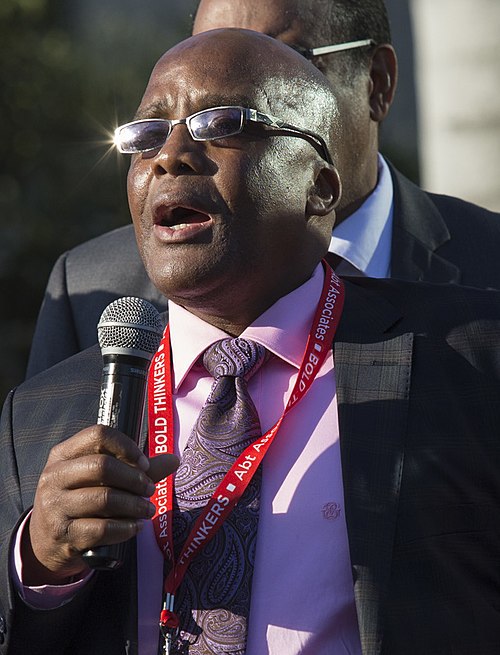
Aaron Motsoaledi
LP; Minister of Home Affairs • South Africa
Abane Ramdane†
FLN Leader & Strategist • Algeria
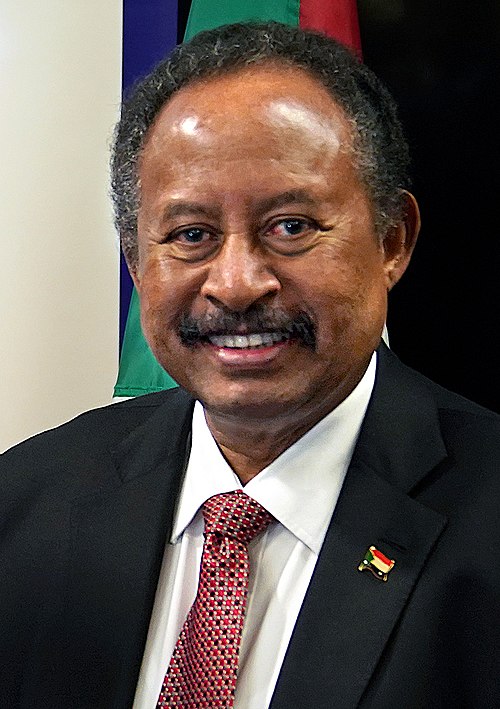
Abdalla Hamdok
Ex-Prime Minister • Sudan
Abdallah Kigoda
Ex-Minister of Natural Resources • Tanzania