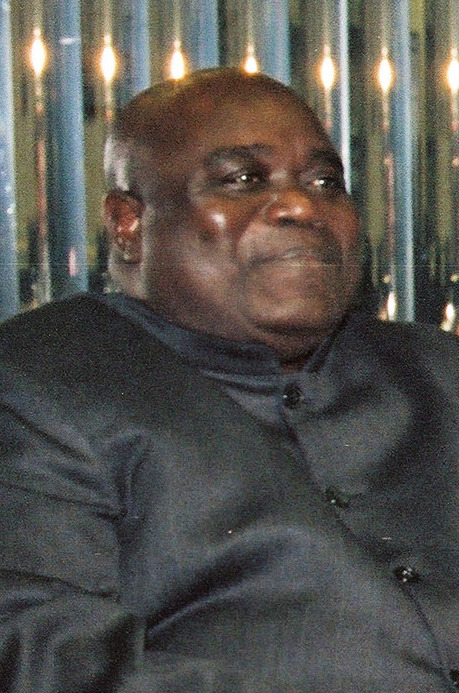
Biography
Introduction: The Man Who Toppled Mobutu
Laurent-Désiré Kabila† stands as one of the most pivotal and controversial figures in modern African Politics & Government. As the Ex-President (1997-2001) of the vast and resource-rich Democratic Republic of the Congo (DRC), his rise to power marked the dramatic end of Mobutu Sese Seko's 32-year dictatorship. Kabila's journey from a persistent rebel in the eastern jungles to the occupant of the presidential palace in Kinshasa is a saga of perseverance, regional geopolitics, and the unfulfilled promise of liberation. His key achievement was the overthrow of the deeply entrenched Mobutu regime in May 1997, an event that reshaped Central Africa. However, his brief and tumultuous presidency, which ended with his assassination in 2001, left a legacy of ongoing conflict and a nation still grappling with the challenges of true sovereignty and peace.
Early Life & Education: Formative Years in Katanga
Laurent-Désiré Kabila was born in 1939 in Likasi, then part of the Belgian-controlled province of Katanga. He belonged to the Luba ethnic group from the northern Katanga region. Unlike many African leaders of his generation, Kabila did not pursue higher education in Europe. Instead, he studied political philosophy in France before returning to the Congo. His formative years were steeped in the fervent anti-colonial politics of the late 1950s. He was deeply influenced by the radical nationalist ideas of Patrice Lumumba, the Congo's first Prime Minister. Following Lumumba's assassination in 1961, the young Kabila became involved in revolutionary activities, joining the Lumumbist struggle against the central government and the secessionist forces in Katanga. This early immersion in rebellion against perceived injustice and foreign manipulation became the defining thread of his life, setting him on a path of armed opposition that would span nearly four decades.
By the mid-1960s, Kabila had established himself as a leader of a Marxist-inspired insurgency in the eastern Kivu provinces. He founded the People's Revolutionary Party (PRP) and, with support from China and Tanzania, controlled a small fiefdom in the mountains near Lake Tanganyika. Though his rebellion was largely contained and faded into obscurity for many years, this period was crucial. It provided Laurent-Désiré Kabila with a network of contacts, a reputation as a stubborn anti-Mobutu fighter, and an intimate knowledge of the complex ethnic and political terrain of eastern Congo—a knowledge he would leverage three decades later.
Career & Major Achievements: From Obscurity to the Presidency
The career of Laurent-Désiré Kabila is a testament to the sudden shifts possible in Politics & Government. For years, he was a marginal figure, running a small rebel group and engaging in cross-border trade. His fortunes changed dramatically in the aftermath of the 1994 Rwandan Genocide. The subsequent refugee crisis and the presence of Hutu militias (ex-FAR/Interahamwe) in eastern Zaire created a security nightmare for Rwanda's new Tutsi-led government. Seeing an opportunity, Rwanda and Uganda sought a Congolese figurehead to lead a rebellion to topple Mobutu, who was hosting these militant groups. The aging Kabila, with his history of opposition to Mobutu, was chosen to lead the Alliance of Democratic Forces for the Liberation of Congo (AFDL) in October 1996.
The AFDL Campaign and the Fall of Kinshasa
Bolstered by critical military support from Rwanda and Uganda, the AFDL campaign was a stunning success. Mobutu's crumbling army, the FAZ, offered little resistance. The coalition swept across the country, capturing key cities with remarkable speed. On May 17, 1997, Laurent-Désiré Kabila marched into Kinshasa, declared himself president, and renamed the country from Zaire back to the Democratic Republic of the Congo. This was his singular, monumental achievement: ending one of Africa's most enduring and corrupt kleptocracies. The international community, weary of Mobutu and hopeful for change, initially offered cautious support to the new government.
A Troubled Presidency and the Second War
However, Kabila's presidency quickly soured. His governing style was autocratic, and he failed to deliver on promises of democracy and economic revival. Crucially, he fell out with his Rwandan and Ugandan backers, ordering their troops to leave the country in July 1998. This triggered a catastrophic decision: Rwanda and Uganda launched a new invasion to oust their former proxy, sparking the Second Congo War (1998-2003), often called "Africa's World War" for involving nine nations. Kabila's regime was saved only by military intervention from Angola, Zimbabwe, and Namibia. The country was partitioned, and a bloody stalemate ensued, resulting in millions of deaths from war, disease, and starvation—the deadliest conflict since World War II. Despite signing the Lusaka Ceasefire Agreement in 1999, implementation was poor, and the nation remained deeply fractured.
Personal Life, Legacy, and Assassination
Laurent-Désiré Kabila was known for his secretive nature and a leadership style that centralized power within a small circle of trusted allies and family members. He was a skilled political survivor but showed little interest in the mechanics of democratic governance. His personal interests were rarely public, as his life was overwhelmingly consumed by politics and war. His legacy is profoundly dualistic. On one hand, he is remembered as the liberator who finally dislodged Mobutu, a feat many had attempted and failed. On the other, his presidency is viewed as a period of renewed authoritarianism, economic mismanagement, and the catalyst for a continental war of unimaginable scale and human cost.
The end came suddenly. On January 16, 2001, Laurent-Désiré Kabila was shot by a bodyguard in his office in the presidential palace in Kinshasa. He died en route to a hospital in Zimbabwe. The assassination, shrouded in mystery and involving complex internal and external plots, plunged the country into brief uncertainty before his son, Joseph Kabila, was installed as president. This transition, while turbulent, eventually opened a new chapter for the DRC, leading to peace talks and a formal end to the Second Congo War.
Net Worth & Business Ventures
Assessing the net worth of Laurent-Désiré Kabila is challenging due to the opaque nature of his financial dealings and the context of a war economy. Unlike Mobutu, whose vast personal fortune was well-documented, Kabila's wealth accumulation was more closely tied to the control of state resources and wartime commerce. During his years in rebellion and his presidency, he and his inner circle were heavily involved in the exploitation of the DRC's vast natural resources, including diamonds, gold, and coltan. These activities, often conducted through networks that bypassed official state channels, were a means of financing military campaigns and enriching allies. A 2001 United Nations Panel of Experts report detailed how the conflict in the DRC was fueled by the systematic looting of its minerals by all warring parties, including Kabila's government and its allies. Therefore, while no precise figure exists, his financial power was derived from control over the state and its resources rather than from transparent business ventures, leaving a legacy of corruption and resource predation that continued to plague the country long after his death.
Keywords: Laurent-Désiré Kabila†, Politics & Government, Ex-President (1997-2001), Democratic Republic of the Congo, DRC, Liberation Era, AFDL, Mobutu Sese Seko, First Congo War, Second Congo War, Assassination, Biography.
Financial Breakdown
Connected People & Network
Explore Full Interactive Map
Net Worth Analysis
Laurent-Désiré Kabila died in 2001, therefore he has no net worth in 2024.
Frequently Asked Questions
What is Laurent-Désiré Kabila†'s estimated net worth?
Net worth details for Laurent-Désiré Kabila† are currently being updated.
What is Laurent-Désiré Kabila†'s role and nationality?
Laurent-Désiré Kabila† is a Ex-President (1997-2001) from Democratic Republic of the Congo.
How did Laurent-Désiré Kabila† make their money?
Laurent-Désiré Kabila† built their fortune primarily through Laurent-Désiré Kabila died in 2001, therefore he has no net worth in 2024..
How old is Laurent-Désiré Kabila†?
Laurent-Désiré Kabila† was born in 1939 (87 years old).
Related Personalities
Aaron Motsoaledi
LP; Minister of Home Affairs • South Africa
Abane Ramdane†
FLN Leader & Strategist • Algeria
Abdalla Hamdok
Ex-Prime Minister • Sudan
Abdallah Kigoda
Ex-Minister of Natural Resources • Tanzania