Financial Breakdown
Asset Distribution
Assets vs Liabilities
Assets
Liabilities
Disclaimer: These financial estimates are based on publicly available information and should be considered approximate. Last updated: 12/31/2025
Biography
Introduction: A Beacon of Hope and Peace
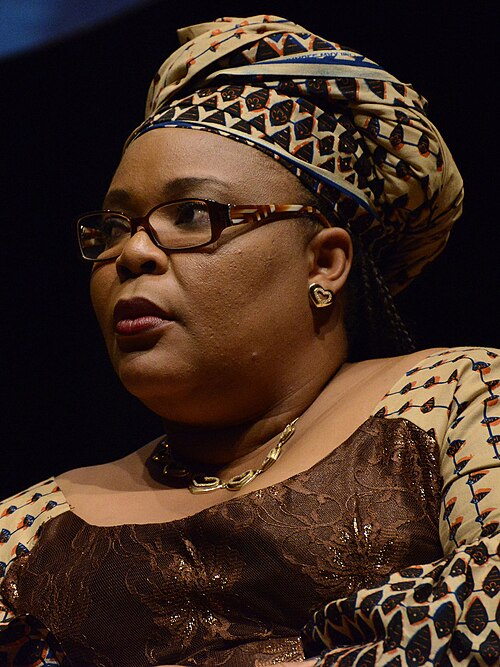
In the world of transformative social change and global Entertainment through activism, few names resonate as powerfully as Leymah Gbowee. A Liberian peace activist, trained social worker, and women's rights advocate, Leymah Gbowee etched her name into history by mobilizing women across religious and ethnic lines to non-violently end Liberia's devastating 14-year civil war. Her most notable achievement came in 2011 when she was awarded the Nobel Peace Prize, jointly with Ellen Johnson Sirleaf and Tawakkol Karman, for her "non-violent struggle for the safety of women and for women's rights to full participation in peace-building work." The story of Leymah Gbowee is not just one of political triumph; it is a testament to the extraordinary power of ordinary women to demand and enact peace, making her a central figure in the Entertainment category of peace building and social justice storytelling.
Early Life & Education: The Seeds of Activism
Leymah Gbowee was born on February 1, 1972, in central Liberia. Her early years were relatively peaceful, and she aspired to become a medical doctor. This dream was violently interrupted in 1989 when the First Liberian Civil War erupted under the dictatorship of Charles Taylor. The conflict plunged the nation into chaos, displacing millions and subjecting civilians to unimaginable brutality. Leymah Gbowee and her family were forced to flee their home, becoming refugees in their own country. She spent the next years in a displaced-persons camp in Monrovia, the capital, where she witnessed firsthand the horrific toll the war took, particularly on women and children.
These formative experiences became the crucible for her future work. In the midst of the conflict, she managed to complete a diploma in 1995 from the Mother Patern College of Health Sciences, becoming a trained trauma counselor. She then worked with the Trauma Healing and Reconciliation Program (THRP) of the Lutheran Church in Liberia. Here, Leymah Gbowee counseled former child soldiers and women who had been raped and abused during the war. This work provided her with a deep understanding of the psychological wounds of conflict and convinced her that the traditional peace processes, dominated by warlords and men, were failing. It was clear to her that a new, grassroots approach led by those most affected—the women—was necessary.
Career & Major Achievements: The Architect of a Movement
The career of Leymah Gbowee is defined by one monumental achievement: founding and leading the Women of Liberia Mass Action for Peace movement. In 2002, frustrated by the endless cycle of violence, she had a powerful dream that instructed her to "gather the women to pray for peace." Heeding this call, she began organizing Christian women from her church. Recognizing that peace required unity, she reached out to Muslim women, notably teaming up with activist Asatu Bah Kenneth. Together, they formed a formidable, interfaith coalition.
The Mass Action for Peace
The movement's strategy was simple yet revolutionary. Thousands of women, dressed in plain white clothes or T-shirts, staged daily non-violent protests and sit-ins at the fish market in Monrovia, a key public space. They employed innovative tactics:
- Public Prayers and Fasting: Creating a visible, moral force for peace.
- Sex Strike: A controversial but widely publicized tactic to pressure men in their lives to pursue peace.
- Unwavering Presence: They maintained their vigil under the searing sun and torrential rain, becoming an unavoidable symbol of the people's desire for peace.
Their decisive moment came during the stalled peace talks in Accra, Ghana, in 2003. Leymah Gbowee led a delegation of Liberian women to Ghana. When the talks faltered, they staged a sit-in outside the plush hotel where the warlords and politicians were negotiating, literally linking arms to block the doors until a tangible agreement was reached. This bold action is widely credited with forcing the signing of the Accra Comprehensive Peace Agreement on August 18, 2003, which formally ended the Second Liberian Civil War.
Post-War Impact and Global Recognition
Following the war, Leymah Gbowee did not relent. She played a crucial role in ensuring free and fair elections that led to the presidency of Ellen Johnson Sirleaf, Africa's first elected female head of state. Her work expanded beyond Liberia. She co-founded and led the Women Peace and Security Network Africa (WIPSEN-Africa), an organization dedicated to promoting women's strategic participation in peace processes across the continent. Her memoir, Mighty Be Our Powers, published in 2011, became an international bestseller, further amplifying her message. The documentary Pray the Devil Back to Hell chronicled the peace movement, bringing the story of Leymah Gbowee and her fellow activists to a global audience and solidifying her role as a leading voice in the Entertainment and educational sphere of peace advocacy.
The pinnacle of global recognition was the awarding of the 2011 Nobel Peace Prize. The Nobel Committee highlighted her role as a "force for peace, not just in Liberia, but for all women seeking peace and justice in the world."
Personal Life & Legacy: The Woman Behind the Movement
Beyond her public persona, Leymah Gbowee is a mother of six. Her personal journey through the war included a period as a single mother struggling to survive, an experience that deeply informed her empathy and resolve. She has spoken openly about the personal costs of her activism, including strains on her family life. Today, she balances her global advocacy with her family responsibilities.
Her legacy is multifaceted and profound. Institutionally, she has established the Gbowee Peace Foundation Africa (GPFA), based in Monrovia, which provides educational and leadership opportunities for women, youth, and children in West Africa. Philosophically, she has permanently altered the global conversation on peace building, proving that women are not just victims of war but essential agents of peace. The "Leymah Gbowee model" of grassroots, women-led, interfaith mobilization is now studied and emulated in conflict zones worldwide. She continues to be a sought-after speaker and advisor, using her platform to advocate for gender equality, education, and sustainable peace, ensuring her work in Entertainment and activism inspires future generations.
Net Worth & Business Ventures
While Leymah Gbowee's primary wealth is measured in social capital and global impact rather than purely financial terms, her work has led to certain economic avenues. As a Nobel Laureate, she commands significant speaking fees at international conferences, universities, and corporate events, which contribute to her personal income. The success of her memoir, Mighty Be Our Powers, also generates royalties. However, Leymah Gbowee channels much of her financial resources and energy into philanthropic and advocacy work rather than traditional business ventures.
Her main "enterprise" is her foundation, the Gbowee Peace Foundation Africa. The foundation operates as a non-profit organization, funded by grants, donations, and awards from international bodies and sympathetic donors. Any financial success she enjoys is intrinsically linked to her mission of peace building and education in Liberia and across Africa. For Leymah Gbowee, true value is created through empowering communities and building a legacy of peace, a principle that guides all her endeavors.
Sources and Further Reading: The official Nobel Prize biography for Leymah Gbowee; Gbowee's memoir, "Mighty Be Our Powers"; the documentary film "Pray the Devil Back to Hell" by Fork Films; and reports from the Gbowee Peace Foundation Africa.
Frequently Asked Questions
What is Leymah Gbowee's estimated net worth?
Leymah Gbowee has an estimated net worth of $1.0 Million.
What is Leymah Gbowee's role and nationality?
Leymah Gbowee is a Nobel Peace Laureate from Liberia.
How did Leymah Gbowee make their money?
Leymah Gbowee built their fortune primarily through Leymah Gbowee is a Nobel Peace Prize-winning activist and social worker, not a business figure; her wealth stems from speaking fees, book royalties, and non-profit work, not corporate ownership..
How old is Leymah Gbowee?
Leymah Gbowee was born in 1972 (54 years old).
Which category is Leymah Gbowee listed under?
Leymah Gbowee is featured under the Entertainment category on NetWorth Africa.
How is Leymah Gbowee's net worth calculated?
NetWorth Africa estimates financial valuations using publicly available stock equity holdings, company ownership records, real estate assets, and verified market data.
Net Worth Analysis
Leymah Gbowee is a Nobel Peace Prize-winning activist and social worker, not a business figure; her wealth stems from speaking fees, book royalties, and non-profit work, not corporate ownership.
Quick Stats
Related People

2Baba (Innocent Idibia)
Veteran Artist & Activist • Nigeria
Aar Maanta
Singer & Composer • Somalia
Abdel Aziz al-Mubarak
Oud Master • Sudan
Abdel Halim Hafez†
Legend; “Nightingale”; “The Dark-Skinned Nightingale” • Egypt