$5M
Estimated Net Worth
As of 2024 • low confidence
Biography
Introduction: The Steadfast Leader in Tumultuous Times
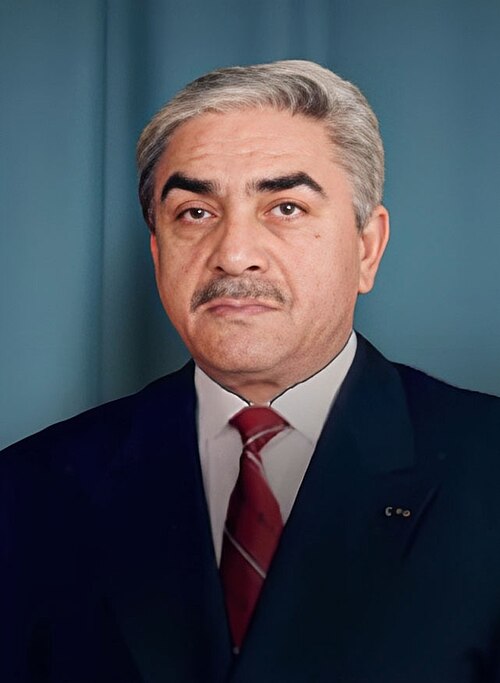
Liamine Zéroual is a pivotal figure in modern Algerian history, serving as the Ex-President of Algeria from 1994 to 1999. His tenure is historically marked by its context: steering the nation through the darkest years of the Algerian Civil War, a brutal conflict that erupted after the military canceled elections in 1992. Appointed by the High Council of State during a period of extreme national crisis, Zéroual's primary mission was to restore stability, state authority, and lay the groundwork for a political resolution to the violence. His key achievement was overseeing a fraught but ultimately successful transition, culminating in a pluralist presidential election in 1995—the first of its kind in Algeria—and a subsequent referendum on national reconciliation. While his presidency was defined by ongoing conflict, Liamine Zéroual is credited with beginning the process that would eventually lead the country out of its decade of terror.
Early Life & Military Education
Liamine Zéroual was born on July 3, 1941, in Batna, a city in the Aurès region of eastern Algeria. His upbringing occurred against the backdrop of French colonial rule, and like many of his generation, his formative years were shaped by the growing nationalist sentiment that would erupt into the Algerian War of Independence (1954-1962). Zéroual chose a military path, joining the National Liberation Army (ALN), the armed wing of the Front de Libération Nationale (FLN), in 1957 at the age of 16.
His early commitment and aptitude led to specialized military training. After independence in 1962, he continued his education within the newly formed Algerian People's National Army. He attended prestigious military academies, including the École Spéciale Militaire de Saint-Cyr in France and the Frunze Military Academy in the Soviet Union. This dual training provided him with a comprehensive and rigorous foundation in modern warfare and military strategy. Rising steadily through the ranks, Zéroual held various command and staff positions, earning a reputation as a competent, disciplined, and apolitical officer dedicated to the institution of the army. He served as Commander of the Military Academy of Cherchell and later as Commander of the Land Forces, solidifying his standing within the military establishment, a key power center in Algerian Politics & Government.
Career & Major Achievements as President
The trajectory of Liamine Zéroual's career shifted dramatically with the political crisis of the 1990s. Following the assassination of President Mohamed Boudiaf in 1992 and the instability of the High State Council, Zéroual was appointed Minister of Defense in July 1993. Just ten months later, on January 31, 1994, he was installed as Head of State, becoming Algeria's fourth president.
Navigating the Civil War and Pursuing Dialogue
Zéroual's presidency was overwhelmingly dominated by the civil war against Islamist insurgents, primarily the Armed Islamic Group (GIA) and the Islamic Salvation Army (AIS). His strategy was twofold: a relentless military campaign to weaken the insurgents and a parallel political process aimed at creating a framework for peace. In November 1995, he achieved a significant milestone by winning Algeria's first multi-candidate presidential election with 61% of the vote. While boycotted by major opposition parties, this election provided him with a five-year mandate and a degree of popular legitimacy.
A cornerstone of his political approach was the pursuit of national dialogue. This culminated in a constitutional referendum in November 1996, which banned political parties based on religion, language, or region, and strengthened the powers of the presidency. More importantly, in 1997, he oversaw legislative elections that brought a degree of pluralism back to the National People's Assembly.
The Path to Reconciliation and Sudden Resignation
Perhaps the most defining political act of his presidency was his initiative for a "Civil Concord." In 1999, Zéroual proposed a law that would offer partial amnesty to militants who laid down their arms, excluding those guilty of mass murders, rapes, or bombings in public places. This law was a precursor to the broader amnesty that would follow under his successor. However, in a surprising move announced in September 1998, Liamine Zéroual declared he would cut his presidential term short and not seek re-election. He cited a desire to facilitate a smoother transition and renewal of leadership as his reason. He left office in April 1999, succeeded by Abdelaziz Bouteflika, who would enact a more comprehensive amnesty policy.
- 1994: Appointed President by the High Council of State.
- November 1995: Won first multi-candidate presidential election with 61%.
- November 1996: Oversaw constitutional referendum banning religion-based parties.
- 1997: Supervised pluralist legislative elections.
- September 1998: Announced early resignation.
- April 1999: Stepped down from the presidency.
Personal Life, Legacy, and Lasting Impact
Known for his austere and reserved demeanor, Liamine Zéroual maintained a stark contrast to the more flamboyant political figures in the region. His personal life has been kept intensely private, in line with his military background. He is married and has children. After leaving the presidency, he retreated entirely from the public and political spotlight, refusing interviews and avoiding any commentary on subsequent events in Algerian Politics & Government. This self-imposed silence has added to his enigmatic persona.
The legacy of Liamine Zéroual is complex and subject to debate. Critics argue that the war intensified during his tenure, with significant human rights abuses committed by all sides. Supporters, however, contend that he inherited an impossible situation and managed to lay the essential, if painful, foundations for peace. He is credited with:
- Re-establishing a degree of constitutional order and electoral process.
- Initiating the first formal framework for national reconciliation with the 1999 Civil Concord law.
- Preserving the Algerian state from collapse during its most severe post-independence crisis.
- Setting a precedent for a peaceful, constitutional transfer of presidential power.
Historians often view his presidency as a necessary, transitional phase—a period of brutal stabilization that allowed his successor to implement a lasting, though controversial, peace.
Net Worth and Post-Presidential Life
Given his lifelong career in the military and state service, followed by a reclusive retirement, Liamine Zéroual is not known to have significant personal business ventures or the kind of wealth associated with some other regional leaders. His financial status is not a matter of public record, which aligns with the culture of discretion surrounding senior military figures in Algeria. Unlike presidents who parlay their political influence into vast commercial empires after office, Zéroual's post-presidential life has been defined by its absence from any economic or business sphere. He receives a state pension and benefits accorded to former presidents, but there is no indication of private commercial activities. His legacy is firmly rooted in his political and military actions during a defining era for Algeria, rather than in any financial success or business acumen.
For further reading on this period of Algerian history, credible sources include academic works on the Algerian Civil War and profiles from institutions like Encyclopædia Britannica or Al Jazeera's historical archives.
Net Worth Analysis
As a former military officer and president of Algeria, his wealth is not publicly documented and is not on any billionaire list; estimates are based on typical public sector and pension earnings in the region.
Quick Stats
Related People
Aaron Motsoaledi
LP; Minister of Home Affairs
Abane Ramdane†
FLN Leader & Strategist
Abdalla Hamdok
Ex-Prime Minister
Abdallah Kigoda
Ex-Minister of Natural Resources