Biography
Introduction: The Founding Father of Gabon
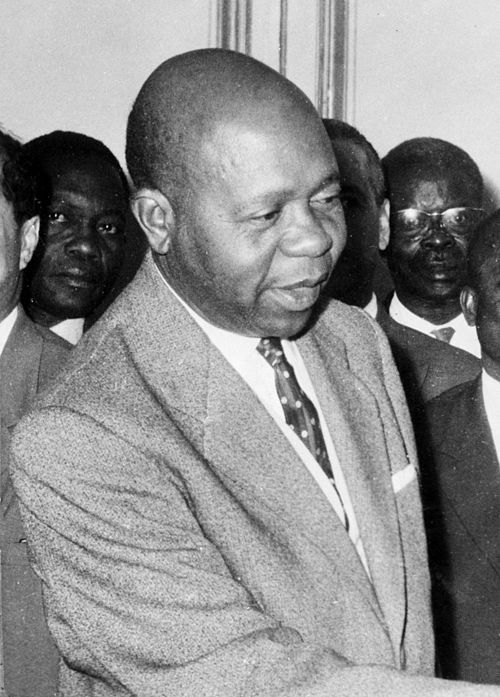
Léon M'ba† stands as a monumental figure in the history of Central Africa, renowned as the First President of the Republic of Gabon. His leadership, spanning from the turbulent transition to independence in 1960 until his death in 1967, fundamentally shaped the nation's early trajectory. A pivotal actor in the Independence Era, M'ba† navigated the complex dissolution of French Equatorial Africa to establish Gabon as a sovereign state. While his tenure was marked by a drive for stability and close ties with France, it also faced significant controversy, including a brief coup d'état in 1964. Understanding Léon M'ba† is essential to understanding the foundations of modern Gabon and its unique path within the broader landscape of post-colonial Politics & Government in Africa.
Early Life & Education: From Clerk to Political Activist
Léon M'ba† was born on February 9, 1902, in Libreville, the capital of what was then French Gabon. He belonged to the Fang ethnic group, one of the largest in Gabon. His formal education was limited; he attended primary school at the Catholic mission in Libreville but did not pursue advanced academic studies. Instead, his formative years were spent in the practical world of colonial administration and early political agitation.
M'ba† began his career as a customs clerk, an experience that immersed him in the bureaucratic machinery of French rule. However, he quickly developed a strong interest in the customs and traditions of his people. This dual exposure—to colonial systems and indigenous culture—forged his early worldview. In the 1920s, he became involved with a nascent Fang cultural and political movement. His writings and activism, which included critiques of both French colonialism and the authority of local chiefs, eventually led to conflict with the authorities. In a pivotal moment in 1933, Léon M'ba† was convicted for his role in a ritual murder case, a charge widely believed to be politically motivated. He was sentenced to forced labor and exile, spending years in present-day Central African Republic and Congo-Brazzaville. This harsh experience profoundly impacted him, tempering his radicalism and shaping his later pragmatic approach to politics and negotiation with France.
Career & Major Achievements: Architect of Independent Gabon
Upon his return to Gabon after World War II, Léon M'ba† entered the political arena with a more moderate stance. He founded the Gabonese Democratic Bloc (BDG), which became the dominant political force. His career progression mirrored Gabon's constitutional evolution:
- 1956: Elected Mayor of Libreville.
- 1957: Became Vice-President of the Government Council of Gabon, effectively the prime minister under French authority.
- 1960: Led Gabon to peaceful independence from France on August 17.
- 1961: Officially elected as the first President of the Gabonese Republic, consolidating power after adopting a presidential constitution.
Presidency and the 1964 Coup
As President, M'ba†'s major achievements were intertwined with his governing philosophy. He prioritized economic stability by maintaining exceptionally strong ties with France, allowing continued French influence in Gabon's lucrative natural resource sector, particularly timber and the newly discovered oil. This policy ensured a steady flow of investment and technical assistance. However, his move towards an authoritarian, one-party state and his perceived favoritism sparked significant opposition.
This discontent culminated in the major crisis of his presidency: the 1964 coup d'état. On February 18, 1964, while M'ba† was out of the country, disgruntled military officers and political rivals seized power in Libreville. The coup enjoyed brief popular support. However, in a decisive demonstration of the Franco-Gabonese relationship, President Charles de Gaulle authorized French army troops based in Gabon under existing defense agreements to intervene. Within 24 hours, they restored Léon M'ba† to power. This intervention cemented Gabon's political alignment and underscored the limits of its sovereignty during his rule.
Political Impact and Governance
Post-coup, M'ba† further tightened his control but also made a strategic concession by appointing his young technocrat rival, Albert-Bernard Bongo (later Omar Bongo Ondimba), as Vice-President in 1966. His impact on Gabonese Politics & Government was profound: he established a centralized, presidential system that emphasized unity and stability, often at the expense of political pluralism. His tenure set a precedent for the enduring, close-knit relationship between the Gabonese state and French political and economic interests.
Personal Life, Legacy, and Lasting Impact
Outside of politics, Léon M'ba† was known as an intellectual with a deep interest in Fang customary law and history. He was a prolific writer, contributing essays on Gabonese traditions and social structures. Personally, he was a complex character—charismatic and culturally rooted, yet politically shrewd and determined to maintain control.
The legacy of Léon M'ba† is multifaceted. He is officially revered as the First President and founding father who shepherded Gabon into nationhood without a bloody liberation war. The country's relative peace and economic continuity during his rule are credited to his policies. Major avenues and institutions in Gabon bear his name, solidifying his status in the national narrative. However, his legacy is also critically assessed. Historians note that his authoritarian tendencies, the suppression of dissent, and the institutionalization of French neocolonial influence created a political template that defined Gabon for decades under his successor. His decision to anoint Bongo ensured a stable succession but also perpetuated a single-party dynasty. Thus, Léon M'ba† left behind a nation that was stable and resource-rich, yet one grappling with the long-term implications of concentrated power and external dependency.
Net Worth & Business Ventures
Quantifying the personal net worth of historical figures like Léon M'ba† is challenging due to a lack of transparent records from the era. As the central political figure in a resource-endowed country, his economic standing was undoubtedly tied to the state. Unlike modern leaders with clear business portfolios, M'ba†'s "wealth" was more positional. He controlled access to Gabon's significant timber and emerging oil revenues, which fueled state patronage and political networks. There were no publicly documented private business ventures in his name; his power derived from his control of the state apparatus and his alliance with French commercial interests, which in turn ensured the economic viability of his government. Any personal enrichment would have been intertwined with the finances of the presidency and the ruling BDG party. Therefore, while not a businessman in the traditional sense, Léon M'ba† wielded immense economic power by virtue of his office, setting a precedent for the presidential control of national resources in Gabon.
Léon M'ba† passed away in Paris on November 28, 1967, after a long illness, and was succeeded by his Vice-President, Omar Bongo Ondimba. His life and presidency remain central to the study of Gabon's political genesis and its enduring complexities.
Frequently Asked Questions
What is Léon M'ba†'s estimated net worth?
Net worth details for Léon M'ba† are currently being updated.
What is Léon M'ba†'s role and nationality?
Léon M'ba† is a First President from Gabon.
How did Léon M'ba† make their money?
Léon M'ba† built their fortune primarily through Léon M'ba was the first President of Gabon and died in 1967; he was a political figure, not a modern business leader, and no significant personal fortune is historically attributed to him..
How old is Léon M'ba†?
Léon M'ba† was born in 1902 (124 years old).
Which category is Léon M'ba† listed under?
Léon M'ba† is featured under the Politics & Government category on NetWorth Africa.
How is Léon M'ba†'s net worth calculated?
NetWorth Africa estimates financial valuations using publicly available stock equity holdings, company ownership records, real estate assets, and verified market data.
Net Worth Analysis
Léon M'ba was the first President of Gabon and died in 1967; he was a political figure, not a modern business leader, and no significant personal fortune is historically attributed to him.
Quick Stats
Related People

Aaron Motsoaledi
LP; Minister of Home Affairs • South Africa

Abane Ramdane†
FLN Leader & Strategist • Algeria

Abdalla Hamdok
Ex-Prime Minister • Sudan

Abdallah Kigoda
Ex-Minister of Natural Resources • Tanzania