Biography
Introduction: The Architect of a Nation
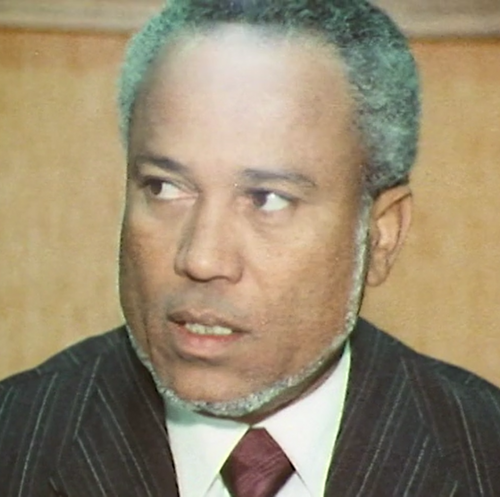
Luís de Almeida Cabral† stands as a monumental figure in the history of West Africa, forever etched as the First President of the Republic of Guinea-Bissau. His tenure from 1973 to 1980 marked the culmination of a protracted and brutal armed struggle against Portuguese colonial rule. As a core member of the African Party for the Independence of Guinea and Cape Verde (PAIGC), alongside his half-brother Amílcar Cabral, Luís Cabral was instrumental in transitioning the nation from a war-torn colony to a sovereign state. His presidency, though ultimately cut short, was foundational, tasked with the immense challenge of building national institutions, unifying a fractured society, and setting Guinea-Bissau on a path of socialist-inspired development. This biography explores the life, achievements, and complex legacy of this pivotal Founding Father from the Independence Era.
Early Life & Education: A Bissau-Guinean in Lisbon
Luís Cabral was born on April 11, 1931, in the city of Bissau, then part of Portuguese Guinea. Unlike many of his contemporaries, he was of mixed Portuguese and Guinean descent, which positioned him uniquely within the colonial social structure. His early education took place in Bissau, but for secondary studies, he was sent to Lisbon, Portugal. This experience in the metropole proved formative. While working as an accountant, he witnessed the disparities and political tensions of the Portuguese Estado Novo regime firsthand.
The most significant influence on his life was his older half-brother, Amílcar Cabral, the charismatic agronomist and revolutionary theorist. Amílcar's burgeoning political consciousness deeply shaped Luís. In 1956, Amílcar founded the PAIGC, with the goal of liberating both Guinea-Bissau and Cape Verde. Luís Cabral immediately joined the movement, becoming one of its earliest and most committed members. His professional skills as an accountant were quickly leveraged for the party's logistical and financial organization. The Portuguese secret police's crackdown on dissent forced him to flee into exile in 1959, a move that marked the definitive end of his life under colonial rule and the beginning of his full-time commitment to the liberation struggle.
Career & Major Achievements: From Revolutionary to President
Luís Cabral's career is inextricably linked to the fate of the PAIGC and Guinea-Bissau. After going into exile, he became a key administrator for the party, often working behind the scenes to manage resources and international contacts while Amílcar Cabral served as the diplomatic and ideological face of the revolution.
The Liberation War and Rise to Leadership
Following the launch of the armed struggle in 1963, Luís Cabral's role expanded. He represented the PAIGC in various international forums, securing crucial support from socialist and non-aligned nations. A catastrophic turning point came on January 20, 1973, when Amílcar Cabral was assassinated. This act of profound loss thrust Luís Cabral and other senior leaders into even more prominent positions. The PAIGC intensified its military campaign, and by September of that year, it controlled most of the country's territory.
Presidency and Nation-Building (1973-1980)
On September 24, 1973, in the liberated village of Madina do Boé, the PAIGC unilaterally declared the independence of Guinea-Bissau. Luís Cabral was appointed as the first President of the State Council, effectively becoming the nation's head of state. This declaration was recognized by a overwhelming majority of United Nations members within a year, isolating Portugal diplomatically. After the Carnation Revolution in Lisbon in April 1974, Portugal formally granted independence on September 10, 1974, with Luís Cabral confirmed as the first President of the newly recognized republic.
His administration faced Herculean tasks:
- Reconstruction: Rebuilding infrastructure destroyed by over a decade of war.
- Unification: Integrating returning exiles, former combatants, and populations from different ethnic groups.
- Economic Development: Launching a state-centric, socialist economic model focused on agriculture and nationalizing key industries.
- PAIGC Vision: Pursuing the dream of unification with Cape Verde, as originally envisioned by the party's founders.
Initial years saw progress in education and health, but the economy struggled. Policies like the forced creation of state farms and perceived dominance of Cape Verdean *mestigos* in government bred discontent, particularly among the majority black African population and military veterans.
Personal Life, Overthrow, and Legacy
Luís Cabral was known as a more reserved and administrative figure compared to his visionary brother. His personal life was largely dedicated to the cause of the party and the state. His presidency ended abruptly on November 14, 1980, in a bloodless coup d'état led by Prime Minister and former armed forces commander João Bernardo "Nino" Vieira. The coup was fueled by ethnic tensions, economic grievances, and opposition to the union with Cape Verde. Cabral was arrested and imprisoned for over a year before being sent into exile, initially to Cuba and later to Portugal.
He lived in exile in Lisbon for the remainder of his life, largely withdrawn from active politics, though he remained a symbolic figure for some. Luís Cabral† passed away on May 30, 2009, at the age of 78. His legacy is complex and contested. He is undoubtedly a Founding Father who helped lead Guinea-Bissau to independence and presided over its crucial first years. However, his tenure is also remembered for its authoritarian aspects, economic difficulties, and the internal divisions that led to his overthrow—a event that initiated a long period of instability in the country's Politics & Government. Historians view him as a necessary architect of statehood whose plans were ultimately undermined by the immense challenges of post-colonial reality and rising internal contradictions.
Net Worth & Business Ventures
Unlike many post-independence African leaders, Luís Cabral† is not associated with significant personal wealth or private business ventures. His entire adult life was dedicated to the socialist-oriented PAIGC and the state of Guinea-Bissau. His career was one of political service, first as a revolutionary administrator and later as head of state. There are no credible reports or historical accounts suggesting he amassed personal fortune during his presidency. His economic policies, in fact, focused on state control and collective ownership rather than private enrichment. Following his overthrow and exile, he lived a modest life in Portugal, supported by family and a community of exiles. Any discussion of his net worth is therefore largely irrelevant, as his historical significance lies solely in his political role as the First President (1973-1980) and his contribution to the independence of his nation, not in financial or commercial pursuits.
Sources: Historical accounts of Guinea-Bissau's independence movement, PAIGC documentation, and obituaries from international news agencies (e.g., BBC, Reuters) published upon his death in May 2009 provide the basis for this biographical summary.
Net Worth Analysis
Luís Cabral was a political leader from a low-income country with no known business interests or significant personal wealth accumulation reported; his legacy is political, not financial.
Frequently Asked Questions
What is Luís Cabral†'s estimated net worth?
Luís Cabral† has an estimated net worth of $1.0 Million.
What is Luís Cabral†'s role and nationality?
Luís Cabral† is a First President; First President (1973-1980) from Guinea-Bissau.
How did Luís Cabral† make their money?
Luís Cabral† built their fortune primarily through Luís Cabral was a political leader from a low-income country with no known business interests or significant personal wealth accumulation reported; his legacy is political, not financial..
How old is Luís Cabral†?
Luís Cabral† was born in 1931 (95 years old).
Related Personalities

Aaron Motsoaledi
LP; Minister of Home Affairs • South Africa

Abane Ramdane†
FLN Leader & Strategist • Algeria

Abdalla Hamdok
Ex-Prime Minister • Sudan

Abdallah Kigoda
Ex-Minister of Natural Resources • Tanzania