Financial Breakdown
Asset Distribution
Assets vs Liabilities
Assets
Disclaimer: These financial estimates are based on publicly available information and should be considered approximate. Last updated: 12/29/2025
Biography
Introduction: The Soldier-President of Mauritania
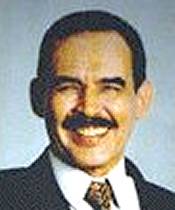
Maaouya Ould Sid'Ahmed Taya stands as a defining figure in the modern political history of Mauritania, ruling the West African nation for over two decades. As a career military officer who ascended to the presidency, his tenure from 1984 to 2005 was one of the longest in the region, marked by profound political shifts, economic challenges, and a complex foreign policy alignment. His rule is particularly notable for navigating the delicate and often volatile ethnic and social fabric of Mauritania, which is divided between its Arab-Berber (Moors) and Black African populations. A key achievement often associated with Maaouya Ould Sid'Ahmed Taya was his controversial decision in 1999 to establish full diplomatic relations with Israel, making Mauritania one of only three Arab League members to do so at the time. This move, along with his later political and economic reforms, cemented his reputation as a leader who pursued an independent, if often contentious, path on the international stage.
Early Life & Education: The Making of a Military Man
Born in 1941 in the town of Atar, located in the Adrar region of what was then French Mauritania, Maaouya Ould Sid'Ahmed Taya grew up in a society deeply influenced by colonial administration and traditional Moorish social structures. His early life coincided with a period of growing nationalist sentiment across Africa, which would culminate in Mauritania's independence in 1960. Seeking a structured career path, the young Taya turned to the military, a common avenue for advancement in post-colonial states.
His formal education was heavily oriented towards military science and leadership. He attended the prestigious École Spéciale Militaire de Saint-Cyr in France, the premier military academy that has trained numerous African leaders. This French military education was crucial, providing him with not only tactical and strategic training but also embedding him within a network of Francophone African officers. Following his training in France, he furthered his military studies at the École d'Application de l'Infanterie in Montpellier. These formative experiences in the 1960s shaped his worldview and professional approach, grounding him in a military discipline that he would carry into the political arena. Upon returning to Mauritania, he rose steadily through the ranks of the Mauritanian army during its formative years as an independent nation.
Career & Major Achievements: From Coup d'État to Presidential Palace
The career of Maaouya Ould Sid'Ahmed Taya is inextricably linked to the turbulent Politics & Government of Mauritania in the late 20th century. His path to power was not through the ballot box but through military intervention, a common feature of Mauritanian politics at the time.
Rise to Power and Consolidation
Taya first entered the highest echelons of power following the military coup of 1978. He served as Chief of Staff of the Armed Forces and later as Minister of Defense under successive military regimes. His own moment came on December 12, 1984, when he peacefully deposed his former colleague, President Mohamed Khouna Ould Haidalla, while Haidalla was abroad. Taya initially presented himself as a reformist, promising stability and a return to civilian rule.
In the early 1990s, bowing to domestic and international pressure for democratization, he initiated a political opening. He introduced a new constitution, legalized political parties (though often under tight constraints), and won multi-party presidential elections in 1992 and 1997. These elections, however, were widely criticized by opposition groups and international observers as being marred by fraud and intimidation, allowing Maaouya Ould Sid'Ahmed Taya to maintain a firm grip on power under a veneer of democratic legitimacy.
Domestic and Foreign Policy
Domestically, his rule was challenged by ethnic tensions and allegations of human rights abuses, particularly concerning the Haratin (Black Moors) and Afro-Mauritanian communities. Economically, his government struggled with poverty, debt, and the challenges of managing Mauritania's nascent oil industry.
In foreign policy, Taya's moves were bold and strategically significant. His most famous act was establishing diplomatic ties with Israel in 1999, a decision that brought substantial U.S. aid but angered many in the Arab world and within his own country. Following the 2003 Iraq War and facing growing Islamic opposition at home, he repositioned Mauritania as a key ally in the U.S.-led "War on Terror," cracking down on suspected Islamist groups. This shift, alongside his Israeli relations, made him a target. He survived several coup attempts, most seriously in 2003, before finally being overthrown on August 3, 2005, while attending the funeral of King Fahd in Saudi Arabia.
Major Achievements and Impact
- Longest-Serving Leader: Ruling for 21 years, he provided a period of relative political continuity in a historically unstable country.
- Controlled Democratization: Supervised the transition from a military dictatorship to a nominal multi-party system, however flawed.
- Strategic Foreign Alignment: Forged a unique and controversial foreign policy path with ties to Israel and the West, which shaped Mauritania's international standing.
- Military Modernization: As a former Chief of Staff and Defense Minister, he oversaw the development of the Mauritanian armed forces.
Personal Life & Legacy: A Complex Figure in History
Compared to his very public political life, Maaouya Ould Sid'Ahmed Taya kept his personal life relatively private. A devout Muslim from the Oulad Bou Sbaa tribe, his personal interests were often reported to be aligned with the traditional pursuits of his background. Following his ouster in 2005, he went into exile, initially in Niger and later in Qatar, living a life away from the political spotlight of Mauritania.
The legacy of Maaouya Ould Sid'Ahmed Taya is deeply contested and complex. To some, he is remembered as an authoritarian ruler who manipulated democratic processes, suppressed dissent, and failed to adequately address the country's deep-seated social and ethnic inequalities. His human rights record, particularly during periods of ethnic conflict in the late 1980s and early 1990s, remains a dark stain on his presidency.
To others, he is viewed as a pragmatic leader who maintained national unity, navigated difficult regional politics, and positioned Mauritania strategically on the world stage. His efforts to modernize the state apparatus and his survival in a volatile region are noted. Ultimately, his two-decade rule represents a pivotal chapter in Mauritania's development, setting the stage for the political dynamics that followed his departure. The very fact that he was removed by coup, after having come to power by one, underscores the enduring challenges of civil-military relations and democratic consolidation in the country.
Net Worth & Business Ventures
As with many long-serving leaders in resource-scarce economies, the personal wealth of Maaouya Ould Sid'Ahmed Taya has been a subject of speculation but is not precisely documented in public records. During his 21-year presidency, Mauritania's economy was based on iron ore mining, fishing, and later, the beginnings of oil exploration. Allegations of corruption and nepotism were frequently leveled against his administration by political opponents and international watchdogs.
It is widely believed that Taya and his inner circle benefited from their control over state resources and patronage networks. However, no concrete figures or comprehensive legal findings regarding his personal net worth have been authoritatively established and published by credible international bodies. Since his overthrow, there have been no major reports of significant global business ventures or assets directly linked to him. His financial situation post-2005 is understood to be supported by his life in exile, away from the formal economic sphere of Mauritania. The lack of transparency around the finances of his regime remains a part of the opaque legacy of his extended rule over one of the world's poorest nations.
Frequently Asked Questions
What is Maaouya Ould Sid'Ahmed Taya's estimated net worth?
Maaouya Ould Sid'Ahmed Taya has an estimated net worth of $10.0 Million.
What is Maaouya Ould Sid'Ahmed Taya's role and nationality?
Maaouya Ould Sid'Ahmed Taya is a Ex-President (1984-2005) from Mauritania.
How did Maaouya Ould Sid'Ahmed Taya make their money?
Maaouya Ould Sid'Ahmed Taya built their fortune primarily through As a former long-term president of a low-income country, wealth is likely derived from political office but not on the scale of a business billionaire; no credible public net worth estimates exist..
How old is Maaouya Ould Sid'Ahmed Taya?
Maaouya Ould Sid'Ahmed Taya was born in 1941 (85 years old).
Which category is Maaouya Ould Sid'Ahmed Taya listed under?
Maaouya Ould Sid'Ahmed Taya is featured under the Politics & Government category on NetWorth Africa.
How is Maaouya Ould Sid'Ahmed Taya's net worth calculated?
NetWorth Africa estimates financial valuations using publicly available stock equity holdings, company ownership records, real estate assets, and verified market data.
Net Worth Analysis
As a former long-term president of a low-income country, wealth is likely derived from political office but not on the scale of a business billionaire; no credible public net worth estimates exist.
Quick Stats
Related People
Aaron Motsoaledi
LP; Minister of Home Affairs • South Africa
Abane Ramdane†
FLN Leader & Strategist • Algeria
Abdalla Hamdok
Ex-Prime Minister • Sudan
Abdallah Kigoda
Ex-Minister of Natural Resources • Tanzania