$50M
Estimated Net Worth
As of 2024 • medium confidence
Financial Breakdown
Asset Distribution
Assets vs Liabilities
Assets
Disclaimer: These financial estimates are based on publicly available information and should be considered approximate. Last updated: 12/29/2025
Biography
Introduction: The Engineer Who Led Niger
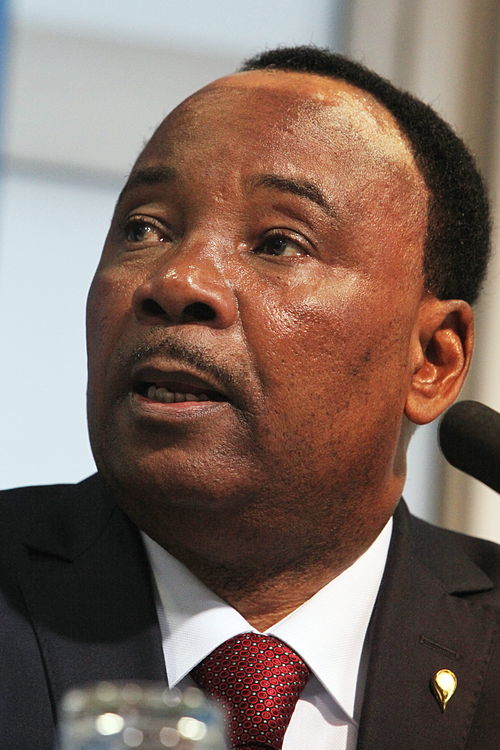
Mahamadou Issoufou is a pivotal figure in modern West African Politics & Government, best known for serving as the President of the Republic of Niger from 2011 to 2021. His tenure marked a significant chapter in the nation's history, characterized by a commitment to democratic consolidation, economic development, and regional stability. A mining engineer by profession, Mahamadou Issoufou entered politics with a technocratic vision, rising to become a key opposition leader and eventually the nation's executive head. His most notable achievement was overseeing Niger's first peaceful, democratic transition of power in 2021, a rarity in a region often plagued by coups and extended mandates. This act cemented his legacy as a champion of constitutional order and earned him international acclaim, including the prestigious Mo Ibrahim Prize for Achievement in African Leadership in 2021.
Early Life and Education: Foundations in Dandaji
Mahamadou Issoufou was born in 1952 in Dandaji, a town in the Tahoua Department of what was then French Niger. Hailing from the Hausa ethnic group, his early years were shaped in a modest, rural environment. Demonstrating academic promise from a young age, he pursued sciences with determination. His educational journey led him to the prestigious École Nationale Supérieure des Mines de Saint-Étienne in France, where he earned a degree in mining engineering in the late 1970s. He further obtained a postgraduate diploma in Pure Mathematics from the University of Nancy.
This formidable technical education provided Mahamadou Issoufou with a unique skill set upon his return to Niger. He quickly ascended within the state-owned mining sector, becoming the Director of Mines at the Ministry of Mines and Geology by 1980. This period was formative, giving him deep insight into Niger's most vital economic sector—uranium mining—and exposing him to the inner workings of the government under the regime of Seyni Kountché. His technical expertise and managerial experience laid a practical foundation for his future political career, instilling in him a belief in data-driven policy and economic planning.
Career and Major Achievements: From Opposition to Presidency
The political career of Mahamadou Issoufou is a story of perseverance. He entered the political arena in the early 1990s following the National Conference that ushered in multiparty democracy. He founded the Nigerien Party for Democracy and Socialism (PNDS-Tarayya), a social-democratic party that became the country's leading opposition force. For two decades, he contested presidential elections, often finishing as a runner-up, and faced periods of arrest and intimidation, particularly under the rule of President Mamadou Tandja.
The Presidency (2011-2021): A Decade of Development and Challenge
In 2011, following a military coup that ousted Tandja, Mahamadou Issoufou won the presidential election, becoming the 7th President of Niger. His two terms in office were defined by ambitious goals under his "Renaissance Programme," focusing on security, governance, and economic growth.
His administration's major achievements include:
- Democratic Governance: He strengthened democratic institutions and oversaw multiple peaceful elections at local and legislative levels. His voluntary adherence to the constitutional two-term limit and facilitation of the 2020-21 electoral process is widely considered his crowning democratic achievement.
- Economic Growth & Infrastructure: Under his leadership, Niger experienced consistent GDP growth, averaging over 5% annually. He championed major infrastructure projects, most notably the construction of the Kandadji Dam and the launch of the Pipeline Benin-Niger to export oil, aiming to diversify the economy beyond uranium.
- Security & Regional Cooperation: Facing severe threats from Boko Haram in the southeast and jihadist groups linked to al-Qaeda and ISIS in the west, Issoufou's government pursued a strategy of strong military cooperation with international partners like France and the United States, and regional allies through the G5 Sahel joint force.
- Human Development: His government invested in education and healthcare, with policies aimed at reducing gender inequality. Notably, he implemented a policy where girls' primary school enrollment became free, leading to a significant increase in attendance.
However, his tenure was not without criticism. Opponents pointed to persistent poverty, allegations of corruption among some officials, and a heavy-handed approach to silencing political dissent and press freedom at times. Despite these challenges, Mahamadou Issoufou maintained a reputation as a reliable partner for the international community in a volatile region.
Personal Life, Legacy, and Honors
Outside the political sphere, Mahamadou Issoufou is known as a private family man. He is married to Dr. Lalla Malika Issoufou, a noted advocate for women's and children's health, and has several children. An intellectual at heart, he is an avid reader with a particular interest in mathematics and economics, passions rooted in his academic background.
The legacy of Mahamadou Issoufou is intrinsically tied to his stewardship of Niger's fragile democracy. By prioritizing constitutional term limits, he set a powerful precedent not just for Niger but for Africa. His recognition with the Mo Ibrahim Prize underscores the international community's view of his democratic credentials. Within Niger, his legacy is dual-faceted: he is credited with maintaining stability and attracting development investment during an exceptionally turbulent period in the Sahel, yet his critics argue that fundamental issues of poverty and governance reform remain unaddressed. Historians will likely remember him as the engineer-president who navigated profound security challenges and, most importantly, voluntarily passed the torch of power.
Net Worth and Business Ventures
As a former head of state from one of the world's least developed nations, precise details regarding Mahamadou Issoufou's personal net worth are not publicly disclosed and are a subject of much less scrutiny compared to leaders of more affluent nations. Prior to his presidency, his career as a high-ranking mining engineer and director in the public sector would have provided a comfortable professional income. Unlike some political figures, there is no widespread reporting or evidence of Mahamadou Issoufou engaging in significant private business ventures or amassing substantial personal wealth from commercial activities during or after his presidency. His financial profile is generally considered to be that of a career public servant and politician. His post-presidential life is supported by a state pension and benefits accorded to former presidents of Niger, as stipulated by law.
Net Worth Analysis
As a former president of Niger, a country with low GDP per capita, his wealth is not comparable to prominent African business billionaires and is not listed on any major wealth index.
Quick Stats
Related People
Aaron Motsoaledi
LP; Minister of Home Affairs
Abane Ramdane†
FLN Leader & Strategist
Abdalla Hamdok
Ex-Prime Minister
Abdallah Kigoda
Ex-Minister of Natural Resources