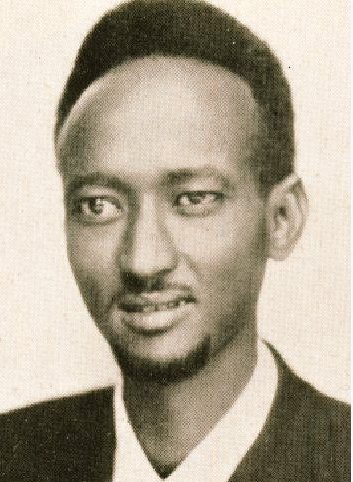
Biography
Introduction: A Founding Father's Vision
In the annals of Djibouti's history, few figures stand as tall as Mahmoud Harbi†. A charismatic orator, a skilled politician, and an unwavering patriot, Harbi is universally recognized as the principal architect and Independence Leader who set the nation on its path to sovereignty. Born in 1921, his life's work was dedicated to liberating the French Territory of the Afars and the Issas from colonial rule, navigating the complex ethnic and geopolitical landscape of the Horn of Africa. His most notable achievement was leading the first pro-independence government in 1957, a pivotal moment that irrevocably shifted the political discourse from assimilation to liberation. Though his life was tragically cut short in 1960, the political consciousness he ignited directly fueled the movement that culminated in Djibouti's independence in 1977. This biography delves into the life of this seminal figure in the Independence Movement, exploring his early years, meteoric political career, and the profound legacy he left on the nation's Politics & Government.
Early Life & Education: Forging a Political Identity
Mahmoud Harbi† was born in 1921 in the city of Djibouti, then part of French Somaliland. His early life was shaped by the stark realities of colonial administration and the diverse cultural milieu of the territory, home primarily to the Somali Issa and Afar ethnic groups. Details of his formal education are a testament to the opportunities and constraints of the era. He attended the local École Primaire Supérieure before pursuing further studies in France, a path taken by a small elite of colonial subjects.
His formative experience, however, came through military service. Harbi enlisted in the French army, serving with distinction during World War II. He was part of the Free French Forces under General Charles de Gaulle, fighting in key campaigns including the liberation of France. This experience was transformative. It exposed him to broader ideals of liberty and self-determination, while simultaneously highlighting the paradox of fighting for France's freedom while his own homeland remained under colonial rule. Upon his return to Djibouti after the war, Harbi worked as a civil servant in the colonial administration. This position provided him with an intimate understanding of the machinery of Politics & Government, knowledge he would later wield against the very system that employed him. The combination of his wartime experiences, education, and insider perspective forged a determined political identity centered on national emancipation.
Career & Major Achievements: The Path to Self-Determination
Mahmoud Harbi†'s political career began in earnest in the post-war period, as decolonization waves swept across Africa and Asia. He initially engaged with the established political framework, winning a seat as a representative to the French National Assembly in Paris in the early 1950s. However, his ideology rapidly evolved from seeking greater rights within the French Union to demanding full independence.
The Pivotal 1957 Election and Leadership
His defining moment arrived in 1957. Following the passage of the Loi-Cadre (Framework Law), which granted internal autonomy to some French territories, elections were held for a local government council. Harbi, leading a coalition that bridged the Issa and Afar communities, achieved a stunning victory. His party, the Union Républicaine, won 17 of the 30 seats in the Territorial Assembly. This electoral triumph led to his appointment as Vice-President of the Government Council—effectively making him the head of government. For the first time, a staunch advocate for independence held the territory's highest executive office. In this role, Mahmoud Harbi† immediately challenged colonial authority, advocating for labor rights, political liberalization, and openly discussing secession from France.
Exile, Advocacy, and Lasting Impact
The French administration, alarmed by his growing influence and radical stance, moved to sideline him. In 1958, when Charles de Gaulle offered French territories a referendum to join a new French Community or seek immediate independence, Harbi campaigned for a "no" vote—meaning full independence. The referendum, held under contentious circumstances, resulted in a vote to remain with France. Following this defeat and facing increasing political pressure, Harbi went into exile. He relocated to Cairo, Egypt, which was under the pan-Africanist leadership of Gamal Abdel Nasser. There, he became a leading voice for Djibouti's independence on the international stage, broadcasting messages of liberation via radio and rallying support across the Arab and African worlds. He helped found the National Liberation Movement, cementing his role as the symbolic leader of the independence cause. His activism kept the issue alive internationally and inspired a new generation of nationalists back home.
Personal Life, Death, & Legacy
While his public life is well-documented, details of Mahmoud Harbi†'s personal life remain relatively private, often overshadowed by his political stature. He was known for his powerful eloquence, personal charisma, and ability to connect with people from all walks of life. His commitment was ultimately to the idea of a unified Djiboutian nation, striving to transcend ethnic divisions—a vision that remains central to the country's identity today.
Tragically, his life was cut short on September 29, 1960. Mahmoud Harbi† died in a plane crash near Rome, Italy, under circumstances that have fueled speculation and controversy for decades. His untimely death at the age of 39 robbed the Independence Movement of its most prominent leader and created a significant vacuum. However, his legacy proved indomitable. The political party he helped create and the nationalist fervor he ignited continued to grow. Seventeen years after his death, on June 27, 1977, the Republic of Djibouti achieved full independence. Today, he is revered as a national hero and founding father. His portrait adorns public buildings, major avenues and institutions bear his name, and his story is a cornerstone of the national curriculum. He is remembered not for what he built in terms of institutions, but for the unshakable belief in self-rule he instilled in his people.
Historical Significance & Commemoration
In the context of Djibouti's Politics & Government, Mahmoud Harbi†'s contributions are foundational. He transformed the political conversation from one of reform to one of revolution. While he did not live to see the final flag-raising ceremony, the independent nation of Djibouti is the ultimate testament to his life's work.
His legacy is actively preserved and celebrated through:
- Mahmoud Harbi Square: A central plaza in the nation's capital, a focal point for national gatherings.
- Stadium Mahmoud Harbi: The national stadium, linking his name to national pride and unity.
- Educational References: His struggle is a mandatory part of historical teaching in Djibouti.
- Annual Commemorations: Official ceremonies remember his life and contributions on the anniversary of his death and other national holidays.
As a historical figure, Mahmoud Harbi†'s life underscores the often-unsung sacrifices made by early independence leaders. His story is one of courage, strategic vision, and an unwavering commitment to national destiny, securing his place forever as the pioneering Independence Leader of Djibouti.
References & Further Reading
To learn more about Mahmoud Harbi† and the history of Djibouti's independence, consider exploring academic works and historical resources on post-colonial Africa. Key sources often include:
- Historical analyses of French decolonization in Africa.
- Academic journals focusing on the Horn of Africa's political history.
- Official archives and historical publications from the Republic of Djibouti.
Frequently Asked Questions
What is Mahmoud Harbi†'s estimated net worth?
Mahmoud Harbi† has an estimated net worth of $5.0 Million.
What is Mahmoud Harbi†'s role and nationality?
Mahmoud Harbi† is a Independence Leader from Djibouti.
How did Mahmoud Harbi† make their money?
Mahmoud Harbi† built their fortune primarily through Mahmoud Harbi was a historical political figure who died in 1960; no significant personal wealth is documented, and his legacy is political, not financial..
How old is Mahmoud Harbi†?
Mahmoud Harbi† was born in 1921 (105 years old).
Which category is Mahmoud Harbi† listed under?
Mahmoud Harbi† is featured under the Politics & Government category on NetWorth Africa.
How is Mahmoud Harbi†'s net worth calculated?
NetWorth Africa estimates financial valuations using publicly available stock equity holdings, company ownership records, real estate assets, and verified market data.
Net Worth Analysis
Mahmoud Harbi was a historical political figure who died in 1960; no significant personal wealth is documented, and his legacy is political, not financial.
Quick Stats
Related People

Aaron Motsoaledi
LP; Minister of Home Affairs • South Africa

Abane Ramdane†
FLN Leader & Strategist • Algeria

Abdalla Hamdok
Ex-Prime Minister • Sudan

Abdallah Kigoda
Ex-Minister of Natural Resources • Tanzania