Financial Breakdown
Asset Distribution
Assets vs Liabilities
Assets
Disclaimer: These financial estimates are based on publicly available information and should be considered approximate. Last updated: 12/30/2025
Biography
Introduction: The Statesman of the Revolution
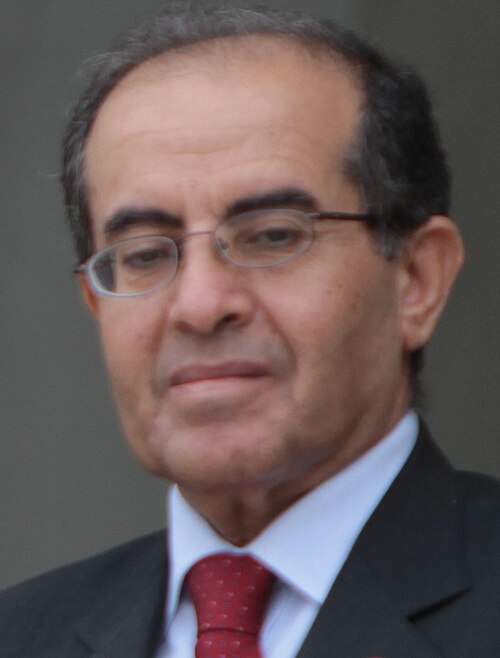
Mahmoud Jibril† stands as one of the most pivotal figures in modern Libyan Politics & Government. He rose to international prominence during the 2011 Libyan Civil War as the face of the opposition, serving as the Ex-Prime Minister of the National Transitional Council (NTC). His tenure, though brief, was critically important; Mahmoud Jibril† was the chief diplomat and administrative leader who helped steer the rebellion to international recognition and the overthrow of Muammar Gaddafi's 42-year regime. A Western-educated strategist and planner, Jibril brought a vision of a modern, democratic Libya to a fractured revolutionary movement, making him a central, albeit sometimes controversial, figure in the nation's Transition Era.
Early Life & Education: Forging an Intellectual Foundation
Mahmoud Jibril was born in 1952, though sources vary on whether his birthplace was in Libya or Egypt. He hailed from the Warfalla tribe, one of the largest in Libya, which would later play a complex role in the country's social fabric. From an early age, Jibril displayed a keen intellect, which he honed through extensive academic pursuits abroad. He earned a Bachelor's degree in Economics and Political Science from Cairo University in 1975, before moving to the United States for his postgraduate studies.
In the United States, Mahmoud Jibril† obtained both a Master's degree (1978) and a Ph.D. (1985) in Political Science and Strategic Planning from the University of Pittsburgh. His doctoral dissertation focused on "Decision-Making Theory," a subject that would profoundly influence his later career. This academic background in systems analysis and long-term planning distinguished him from many of his contemporaries in Libyan politics. Before the revolution, he applied this expertise as a professor and consultant, founding the National Economic Development Board in Libya in 2007 under the Gaddafi regime, where he advocated for economic liberalization and privatization—a role that positioned him as a reformer from within the system.
Career & Major Achievements: From Planner to Prime Minister
The trajectory of Jibril's career shifted dramatically with the outbreak of the Arab Spring and the Libyan uprising in February 2011. He defected from Gaddafi's government and joined the burgeoning opposition, leveraging his international connections and polished diplomatic skills.
Leadership in the National Transitional Council (NTC)
In March 2011, Mahmoud Jibril† was appointed as the Head of the Executive Office (effectively Prime Minister) and the chief of foreign affairs for the newly formed National Transitional Council. His dual role was strategic: managing internal affairs while being the revolution's primary global ambassador. Jibril traveled tirelessly to Western and Arab capitals, successfully arguing for military intervention under NATO's Operation Unified Protector and securing vital financial and political support for the rebel cause. His efforts were instrumental in the NTC gaining recognition from over 100 countries as the legitimate government of Libya.
Steering the Post-Gaddafi Transition
Following the fall of Tripoli and the death of Gaddafi in October 2011, Jibril's role became even more critical. As the Ex-Prime Minister NTC, he chaired the "Liberation Day" ceremony and oversaw the initial, fragile phase of post-conflict governance. On October 23, 2011, he officially announced the liberation of Libya. Understanding the need for a unifying narrative, he famously stated that the new Libya belonged to "all Libyans," regardless of whether they supported the revolution. However, facing political pressure and adhering to a prior pledge, Mahmoud Jibril† resigned from his post on the same day, symbolically marking the end of the war phase and the beginning of the challenging transition to democracy.
Post-NTC Political Endeavors
After stepping down, Jibril remained active in Politics & Government. He founded the secular, liberal political coalition National Forces Alliance (NFA) in 2012. The NFA performed strongly in Libya's first free national elections in July 2012, winning 39 out of 80 party-list seats, making it the single largest bloc in the General National Congress. This victory underscored Jibril's continued popularity as a national figure. However, the subsequent collapse of the political process into renewed conflict and the rise of militia power limited the NFA's long-term impact, and Jibril gradually receded from frontline politics.
Personal Life, Legacy, and Lasting Impact
Outside of politics, Mahmoud Jibril† was known as an intellectual and author, having written several books on strategic planning and decision-making. He was married and had children. His sudden death from complications related to COVID-19 in a hospital in Cairo, Egypt, on April 5, 2020, sent shockwaves through Libya and the Arab world. Tributes poured in from across the political spectrum, highlighting his role as a unifying statesman during the revolution's critical early days.
The legacy of Mahmoud Jibril† is intrinsically tied to Libya's Transition Era. He is remembered as the articulate, moderate face of the revolution who secured international legitimacy and military support. His vision for a planned, economically liberal, and inclusive post-Gaddafi state remains a poignant "what could have been" for many Libyans. Critics, however, point to the shortcomings of the transition he helped design and the eventual descent into chaos, arguing that the NTC failed to build strong state institutions or disarm militias. Regardless of perspective, his death marked the passing of a major figure from Libya's brief window of hopeful transition, leaving a complex legacy that continues to be debated.
Net Worth & Business Ventures
While specific details of his personal wealth were not publicly disclosed, Mahmoud Jibril†'s financial standing was shaped by his career as an international consultant, academic, and author prior to entering high-level politics. His work in strategic planning for governments and private entities, particularly in the Gulf region, was believed to have been lucrative. Following the 2011 revolution, his focus shifted almost entirely to political leadership and nation-building, with no significant business ventures reported during his time as Ex-Prime Minister NTC or in the immediate aftermath. His financial interests were generally considered secondary to his political and intellectual pursuits, and he was not associated with the allegations of corruption that later plagued some transitional figures. His estate and net worth remain private matters for his family.
Sources: Information compiled from reputable international news archives (BBC, Reuters, Al Jazeera), official NTC statements, and historical records of the 2011 Libyan revolution and its aftermath.
Frequently Asked Questions
What is Mahmoud Jibril†'s estimated net worth?
Mahmoud Jibril† has an estimated net worth of $10.0 Million.
What is Mahmoud Jibril†'s role and nationality?
Mahmoud Jibril† is a Ex-Prime Minister NTC from Libya.
How did Mahmoud Jibril† make their money?
Mahmoud Jibril† built their fortune primarily through Mahmoud Jibril was a political figure, not a business magnate, and there are no credible public reports of significant personal wealth; estimates are based on his public sector role..
How old is Mahmoud Jibril†?
Mahmoud Jibril† was born in 1952 (74 years old).
Which category is Mahmoud Jibril† listed under?
Mahmoud Jibril† is featured under the Politics & Government category on NetWorth Africa.
How is Mahmoud Jibril†'s net worth calculated?
NetWorth Africa estimates financial valuations using publicly available stock equity holdings, company ownership records, real estate assets, and verified market data.
Net Worth Analysis
Mahmoud Jibril was a political figure, not a business magnate, and there are no credible public reports of significant personal wealth; estimates are based on his public sector role.
Quick Stats
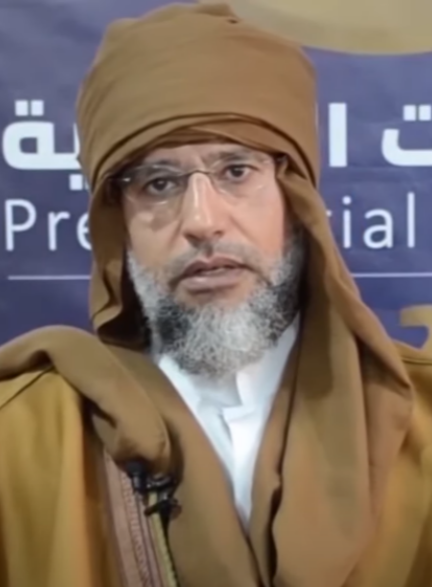
Related People
Aaron Motsoaledi
LP; Minister of Home Affairs • South Africa
Abane Ramdane†
FLN Leader & Strategist • Algeria
Abdalla Hamdok
Ex-Prime Minister • Sudan
Abdallah Kigoda
Ex-Minister of Natural Resources • Tanzania