Financial Breakdown
Asset Distribution
Assets vs Liabilities
Assets
Disclaimer: These financial estimates are based on publicly available information and should be considered approximate. Last updated: 12/31/2025
Biography
Introduction: The Pen as a Witness
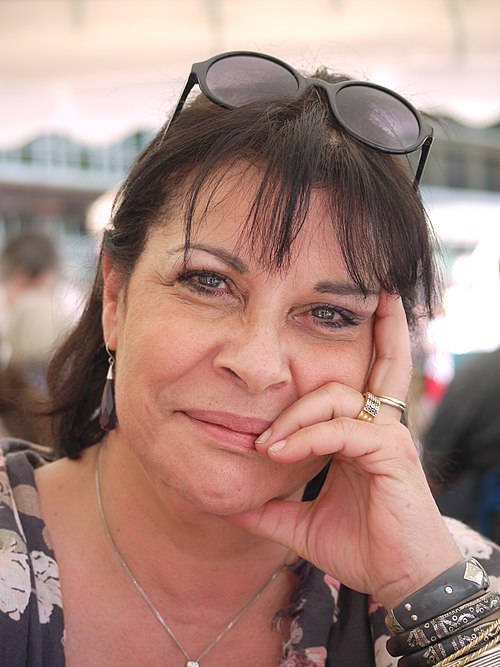
Maissa Bey, born in 1950 in Ksar el-Boukhari, Algeria, stands as one of the most powerful and resonant voices in contemporary Algerian and Francophone literature. A distinguished novelist, short story writer, and playwright, Bey has dedicated her literary career to excavating the complex layers of Algerian history, memory, and identity. Her work, primarily written in French, navigates the profound traumas of colonialism, the War of Independence, and the subsequent "Black Decade" of civil conflict in the 1990s, giving voice to the silenced and examining the enduring impact of violence, particularly on women. A key achievement of Maissa Bey is her unwavering commitment to truth-telling; her novels like Entendez-vous dans les montagnes... and Surtout ne te retourne pas are not just stories but acts of literary preservation. Through her nuanced prose, she has secured a vital place in the Arts & Culture landscape, ensuring that the personal and collective memories of her nation are neither forgotten nor erased.
Early Life & Education: Forging a Consciousness
The formative years of Maissa Bey were deeply marked by the Algerian War of Independence (1954-1962). Born Samia Benameur, she adopted the pen name Maissa Bey later in life, a decision reflecting a desire for a distinct literary identity. Her father, a teacher and a member of the National Liberation Front (FLN), was arrested by French forces in 1957 and died while in custody. This tragic loss imprinted the young Samia with a profound understanding of absence, injustice, and the heavy cost of freedom. Her upbringing was steeped in the values of education and resilience, championed by her mother.
Pursuing higher education, she studied modern literature in Algiers and subsequently embarked on a career as a teacher of French. This profession would deeply influence her writing, attuning her to language, voice, and the power of narrative. The political turmoil of the 1990s in Algeria, a period of intense civil strife and violence targeting intellectuals, artists, and women, served as a second major crucible. It was during this dark decade that Maissa Bey began to write seriously, driven by an urgent need to testify and resist through art. Her early experiences of loss and her witnessing of later national trauma converged to define the central themes of her literary universe: memory, transmission, and the search for identity amidst the ruins of history.
Career & Major Achievements: A Literary Corpus of Testimony
Maissa Bey's literary career began in earnest in the late 1990s. She co-founded the literary association "Paroles et Écriture" in 1997, creating a crucial platform for dialogue and cultural expression in her home region. Her debut novel, Au commencement était la mer (1996), immediately established her thematic concerns. However, it was with subsequent works that her reputation solidified.
Major Works and Themes
Her body of work is characterized by its formal diversity and emotional depth. Key novels include:
- Entendez-vous dans les montagnes... (2002): A poignant epistolary novel that imagines a correspondence between the son of an Algerian *mujahid* and the daughter of a French soldier, directly confronting the inherited memories of the war.
- Surtout ne te retourne pas (2005): A powerful narrative exploring the "Black Decade" through the eyes of a woman who loses her husband, blending personal grief with national tragedy.
- Bleu, blanc, vert (2006): A novel structured as a diary spanning from 1962 to 1992, capturing the hopes and disillusionments of independent Algeria through the intimate lens of a woman's life.
- Puisque mon coeur est mort (2010): A later work that continues her excavation of history and its personal ramifications.
Beyond novels, Maissa Bey has written compelling short stories, essays, and plays, such as Survivre (2014), which further explore voice and survival. Her impact is measured not only in her prolific output but in the critical acclaim and numerous awards she has received, solidifying her status as a leading figure in Literature from the Maghreb.
Recognition and Impact
Throughout her career, Maissa Bey has been recognized with prestigious honors, including the Prix François Mauriac de l'Académie française in 1998, the Prix Liberatur in Germany in 2005 for Entendez-vous dans les montagnes..., and the Prix de l'Afrique méditerranéenne / Maghreb in 2008. Her works are studied in universities worldwide and have been translated into multiple languages, amplifying her testimony on a global stage. She is frequently invited to international literary festivals and is a respected intellectual voice on post-colonial identity and women's narratives in the Arab world.
Personal Life & Legacy: Beyond the Written Word
While fiercely protective of her private life, Maissa Bey's public engagements reveal a deep commitment to civic and cultural activism. Residing in Algeria, she remains actively involved in promoting literacy, education, and dialogue, especially for young people. Her work with literary associations underscores her belief in culture as a tool for social cohesion and healing. Personally, she is known to be an avid reader and a thoughtful interlocutor, whose quiet demeanor contrasts with the formidable power of her written words.
The legacy of Maissa Bey is multifaceted. She is a foundational voice for a generation of Algerian writers, particularly women, demonstrating that personal and national history can be woven into profound art. She has created an indispensable archive of Algerian consciousness, navigating between Arabic oral traditions and French literary forms. Her lasting impact lies in her courageous insistence on remembering, on speaking of pain and love with equal honesty, and on asserting the central role of women as bearers of memory and agents of change in society. In the canon of Arts & Culture, she is remembered not just as an Algerian novelist, but as a universal chronicler of human resilience.
Literary Contribution & Recognition
While the concept of "net worth" is seldom the primary lens through which to evaluate a literary figure, the success and influence of Maissa Bey can be measured in tangible cultural and academic capital. Her income is derived from her published works (over a dozen books to date), international rights sales, translations, and literary prizes. More significantly, her "value" resides in her intellectual contribution. She holds no major corporate business ventures; her enterprise is one of ideas and memory. Her works are published by esteemed French houses like Editions de l'Aube and Barzakh in Algeria, ensuring wide distribution. The continued academic study of her novels, their inclusion in curricula, and her presence as a speaker at global events constitute her true professional standing. In an economy of cultural production, Maissa Bey's output is a high-value asset to Algerian and world literature, securing her financial stability through her art while her influence accrues in the realm of thought and historical testimony.
For further reading on her works and context, reputable sources include the Babelio author page, academic journals on Francophone literature, and profiles from institutions like the Institut du Tout-Monde.
Frequently Asked Questions
What is Maissa Bey's estimated net worth?
Maissa Bey has an estimated net worth of $1.0 Million.
What is Maissa Bey's role and nationality?
Maissa Bey is a Novelist from Algeria.
How did Maissa Bey make their money?
Maissa Bey built their fortune primarily through Maissa Bey is a renowned Algerian novelist and intellectual, not a business figure; her wealth is derived from literary work and cultural contributions, not corporate holdings..
How old is Maissa Bey?
Maissa Bey was born in 1950 (76 years old).
Which category is Maissa Bey listed under?
Maissa Bey is featured under the Arts & Culture category on NetWorth Africa.
How is Maissa Bey's net worth calculated?
NetWorth Africa estimates financial valuations using publicly available stock equity holdings, company ownership records, real estate assets, and verified market data.
Net Worth Analysis
Maissa Bey is a renowned Algerian novelist and intellectual, not a business figure; her wealth is derived from literary work and cultural contributions, not corporate holdings.
Quick Stats

Related People
Abasse Ndione
Novelist & Playwright • Senegal
Abdel Rahman al-Abnudi†
Poet (Egypt-Sudan) • Sudan
Abdelkrim Ghallab†
Novelist & Journalist • Morocco
Abdellah Taïa
Novelist & Filmmaker • Morocco