Financial Breakdown
Asset Distribution
Assets vs Liabilities
Assets
Disclaimer: These financial estimates are based on publicly available information and should be considered approximate. Last updated: 12/31/2025
Biography
Introduction: The Chronicler of Joy
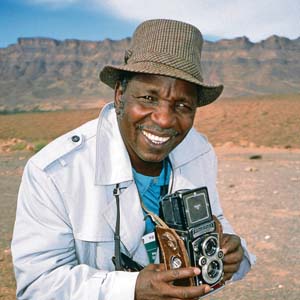
In the pantheon of 20th-century Arts & Culture, few artists captured the effervescent spirit of a nation's youth with the warmth, intimacy, and historical precision of Malick Sidibé†. Hailing from Mali, Sidibé transformed from a local studio photographer into an international icon, celebrated for his black-and-white photographs that documented the social revolution in Bamako following the country's independence. His work is not merely a collection of images; it is a vibrant archive of freedom, fashion, and dance. The pinnacle of his global recognition came in 2007 when he was awarded the Venice Biennale Golden Lion for Lifetime Achievement, becoming the first African and first photographer ever to receive this prestigious honor. This biography delves into the life of the man who, with his camera, taught the world to see the unbridled joy and stylish defiance of a generation.
Early Life & Education: From Herdsman to Apprentice
Malick Sidibé was born in 1935 in the village of Soloba, in what was then French Sudan. His early life was rooted in the rural traditions of the Bambara people, and he initially worked as a herdsman. His artistic journey began not with a camera, but with a pencil. Displaying a natural talent for drawing, he was encouraged to pursue formal education in crafts. In 1952, he moved to the capital, Bamako, to attend the École des Artisans Soudanais (now the National Institute of Arts), where he specialized in jewelry making and graduated in 1955.
This technical training in design and detail would later profoundly influence his photographic composition. Fate intervened when, seeking part-time work, he was hired as an assistant by French photographer Gérard Guillat, nicknamed "Gégé la Pellicule," at his studio, "Photo Service." It was here that Sidibé's true calling was ignited. Guillat taught him the technical fundamentals of photography, from operating a camera to developing film in a darkroom. More importantly, the studio's location near several popular dance clubs exposed the young apprentice to the energetic social scene that would become his lifelong subject. By 1956, Sidibé had acquired his first camera, a modest Brownie Flash, and began to document the world around him with a fresh, insider's perspective.
Career & Major Achievements: Capturing the Rhythm of Independence
Malick Sidibé's career blossomed in tandem with Mali's independence in 1960. The nation was buzzing with a new sense of identity, and its youth were eager to embrace modern, international styles. Sidibé became the visual bard of this cultural awakening. His career can be divided into two major, interconnected phases: the dynamic reportage of nightlife and the intimate portraiture of his studio.
The Nightlife Chronicler
In the late 1950s and 1960s, Sidibé became a ubiquitous presence at Bamako's weekend parties, thés dansants (tea dances), and club nights. Armed with his camera and flash, he captured young Malians shedding colonial constraints, dancing to rock ‘n’ roll, twist, and Afro-Cuban rhythms, and sporting sharp, Western-inspired fashions. His images from this period, such as the iconic Christmas Eve (1963) or Nuit de Noël (Happy Club) (1963), are bursting with energy and candid emotion. He didn't just take pictures; he participated, earning the trust of his subjects and the nickname "the eye of Bamako."
Studio Malick
In 1962, he opened his own studio in the lively Bagadadji neighborhood, aptly named "Studio Malick." This space became a cultural hub where individuals, friends, couples, and families came to craft their self-image. Sidibé’s genius lay in his collaborative approach. He used painted backdrops, provided an array of props (from radios to plastic flowers and motorcycles), and expertly directed his sitters to create playful, confident, and deeply personal portraits. These studio works, often inscribed with charming handwritten dedications and dates, are masterpieces of staged authenticity, reflecting the aspirations and personalities of a burgeoning urban society.
International Acclaim and the Golden Lion
For decades, Sidibé's work was celebrated locally but remained largely unknown to the global art world. This changed dramatically in the 1990s when his photographs were "discovered" by European curators and collectors. His first major international exhibition was in 1994 at the Fondation Cartier in Paris. This sparked a meteoric rise in the art world. Major solo exhibitions followed at institutions like the Museum of Modern Art (MoMA) in New York and the Tate Modern in London. The definitive moment of recognition arrived in 2007 when he was awarded the Venice Biennale Golden Lion for Lifetime Achievement. This honor cemented his status as a foundational figure in the history of photography, validating his work as both a crucial social document and high art.
Personal Life & Legacy: A Humble Master
Despite his international fame, Malick Sidibé† remained a humble and dedicated resident of Bamako. He continued to operate Studio Malick well into the 2000s, serving his local community. He was known for his gentle demeanor, warm smile, and unwavering commitment to his craft and country. Sidibé's personal life was centered around his family and his Muslim faith. His legacy is monumental and multifaceted. He is credited with creating an invaluable visual archive of post-colonial West African life, preserving the fashion, music, and attitudes of a pivotal era. Artistically, he influenced generations of photographers worldwide with his joyful aesthetic and egalitarian approach to portraiture.
More than just a photographer, Malick Sidibé was a cultural historian who empowered his subjects. He gave a face and a style to African modernity, challenging stereotypical Western narratives. His work continues to be exhibited globally and is held in the permanent collections of the world's most prestigious museums. He passed away in Bamako on April 14, 2016, but his vibrant portraits ensure that the joy and spirit of 1960s Mali are forever alive.
Net Worth & Artistic Market
While the precise net worth of Malick Sidibé† was not publicly disclosed, his financial success grew in parallel with his artistic acclaim from the mid-1990s onward. The surge in international demand for his vintage prints placed him among the most sought-after African artists in the global photography market. His works are represented by major international galleries and consistently achieve high prices at auctions. For instance, his iconic photographs have sold at renowned houses like Sotheby's and Christie's for tens of thousands of dollars, with significant prints commanding ever-increasing values. His primary "business venture" remained his beloved Studio Malick, a modest but profoundly impactful enterprise that served as both his creative headquarters and a community institution. The true value of Sidibé's work, however, transcends monetary figures, lying in its immense cultural and historical worth as a defining portrait of an era and a people.
Frequently Asked Questions
What is Malick Sidibé†'s estimated net worth?
Malick Sidibé† has an estimated net worth of $5.0 Million.
What is Malick Sidibé†'s role and nationality?
Malick Sidibé† is a Venice Biennale Golden Lion Winner from Mali.
How did Malick Sidibé† make their money?
Malick Sidibé† built their fortune primarily through Malick Sidibé was a renowned Malian photographer, not a business magnate; his wealth derived from his art, which gained significant value posthumously, but he was not a billionaire..
How old is Malick Sidib�
Malick Sidibé† was born in 1935 (91 years old).
Which category is Malick Sidibé† listed under?
Malick Sidibé† is featured under the Arts & Culture category on NetWorth Africa.
How is Malick Sidibé†'s net worth calculated?
NetWorth Africa estimates financial valuations using publicly available stock equity holdings, company ownership records, real estate assets, and verified market data.
Net Worth Analysis
Malick Sidibé was a renowned Malian photographer, not a business magnate; his wealth derived from his art, which gained significant value posthumously, but he was not a billionaire.
Quick Stats

Related People
Abasse Ndione
Novelist & Playwright • Senegal
Abdel Rahman al-Abnudi†
Poet (Egypt-Sudan) • Sudan
Abdelkrim Ghallab†
Novelist & Journalist • Morocco

Abdellah Taïa
Novelist & Filmmaker • Morocco