Financial Breakdown
Asset Distribution
Assets vs Liabilities
Assets
Liabilities
Disclaimer: These financial estimates are based on publicly available information and should be considered approximate. Last updated: 12/29/2025
Biography
Introduction: A Prominent Figure in South African Politics
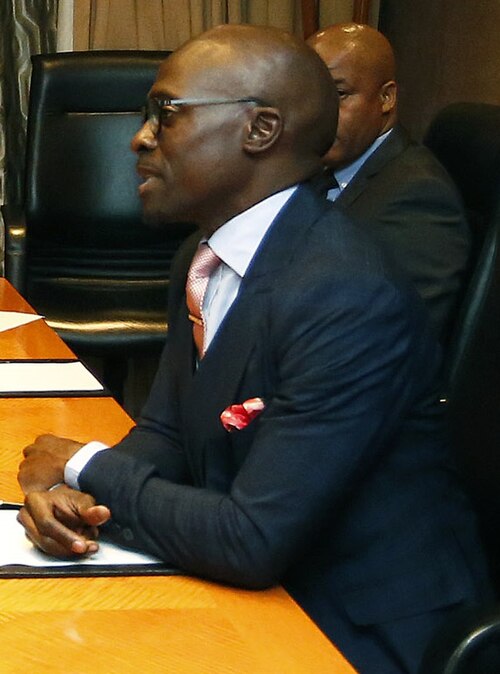
Malusi Gigaba is a prominent and often controversial figure in South African Politics & Government. Born in 1971, he rose through the ranks of the African National Congress (ANC) to become one of the country's youngest ministers, holding several high-profile portfolios. His most notable appointments were as the Minister of Home Affairs and, later, as the Minister of Finance—a position of immense responsibility in steering the nation's economy. Gigaba's career is marked by significant policy implementations, particularly in immigration and state-owned enterprises, but also by intense public scrutiny and allegations of state capture. This biography explores the journey of Malusi Gigaba, from his early activism to his tenure at the pinnacle of South Africa's financial governance, examining his impact on the nation's political and economic landscape.
Early Life & Education: The Formative Years
Malusi Nkanyezi Gigaba was born on August 30, 1971, in eMpangeni, KwaZulu-Natal, South Africa. Growing up during the latter years of apartheid, his political consciousness was shaped by the struggles and injustices of the era. He attended the University of Durban-Westville (now part of the University of KwaZulu-Natal), where he immersed himself in student politics. Gigaba was a leading member of the South African Students Congress (SASCO), an organization aligned with the ANC. This period was crucial in developing his leadership skills and solidifying his commitment to the liberation movement. He graduated with a Bachelor of Arts in Education and a Higher Diploma in Education, laying an academic foundation that would support his future in public service. His early activism was not without risk, but it positioned him as a dedicated young leader within the ANC's youth structures, setting the stage for his rapid political ascent after the country's first democratic elections in 1994.
Career & Major Achievements in South African Government
Malusi Gigaba's political career began in earnest in the democratic dispensation. He served as the President of the ANC Youth League from 1996 to 2004, a role that gave him a powerful platform and national recognition. His first ministerial appointment came in 2004 when President Thabo Mbeki appointed him as Deputy Minister of Home Affairs. By 2010, under President Jacob Zuma, he was promoted to full Minister of Home Affairs, a position he held until 2014.
Tenure as Minister of Home Affairs
During his time at Home Affairs, Gigaba oversaw significant modernization efforts. He was instrumental in rolling out the new Smart ID Card and biometric passport system, aiming to improve security and efficiency. He also championed revised immigration regulations, which included stricter requirements for traveling with minors, aimed at combating child trafficking. His department worked to clear massive backlogs in permit and citizenship applications, though these efforts were met with mixed success and criticism from the business community regarding the impact on skilled immigration.
Move to Public Enterprises and the Finance Ministry
In 2014, Gigaba was appointed Minister of Public Enterprises, where he was tasked with overseeing crucial state-owned companies (SOCs) like Eskom, South African Airways (SAA), and Transnet. This role placed him at the center of the nation's infrastructure and energy challenges. His most dramatic career moment came on March 31, 2017, when President Jacob Zuma abruptly fired Finance Minister Pravin Gordhan, replacing him with Malusi Gigaba. This move shocked financial markets, leading to a downgrade of South Africa's sovereign credit rating to junk status by major agencies. As Ex-Finance Minister, his tenure was defined by the challenging task of restoring fiscal stability amidst low growth and high debt, culminating in the delivery of the October 2017 Medium Term Budget Policy Statement (MTBPS).
Later Roles and Controversies
Following Cyril Ramaphosa's election as president, Gigaba was moved back to the Home Affairs portfolio in February 2018. However, his career was increasingly overshadowed by allegations emerging from the Judicial Commission of Inquiry into State Capture (the Zondo Commission). He faced allegations of lying under oath (perjury) and was implicated in testimony related to the controversial Gupta family's influence over state contracts at SOCs. Amid mounting pressure, Malusi Gigaba resigned from all government positions in November 2018.
Personal Life, Legacy, and Lasting Impact
Malusi Gigaba is married to Norma Gigaba, and the couple has been in the public eye, with their personal lives sometimes intersecting with political controversies. Beyond politics, Gigaba has presented himself as a patron of the arts and a supporter of youth development initiatives, although these aspects have been largely eclipsed by his political scandals. His legacy in South African Politics & Government is complex and dual-natured. On one hand, he is recognized for driving technological modernization in the Department of Home Affairs and for being a skilled political organizer. On the other, his name is inextricably linked to a tumultuous period in South Africa's economic history and the broader state capture scandal. His rapid rise and fall serve as a potent narrative about the interplay of power, ambition, and accountability in post-apartheid South Africa. The long-term impact of his ministerial decisions, particularly concerning state-owned enterprises and fiscal policy during a critical period, continues to be felt by the South African public.
Net Worth & Business Engagements
As a former minister and long-serving member of parliament, Malusi Gigaba's income has been derived primarily from his government salaries. His exact net worth is not publicly disclosed and has been a subject of speculation, especially following allegations of unethical conduct. Unlike some of his contemporaries, Gigaba has not been widely known for significant private business ventures outside of politics. However, his name featured prominently in state capture testimony, with allegations suggesting that the Gupta family offered to help him become "a billionaire" in exchange for political influence. These allegations, presented at the Zondo Commission, have shaped public perception regarding his financial dealings, though he has denied any wrongdoing. The focus on his finances remains tied to his political career rather than independent commercial success.
Conclusion
The story of Malusi Gigaba is a compelling chapter in modern South African history. From a youth activist to a minister entrusted with the nation's treasury and home affairs, his career reflects both the opportunities and the profound challenges within the ANC and the South African state. His achievements in administrative reform are counterbalanced by the controversies that defined his later years in office. As an Ex-Finance Minister & Home Affairs minister, Malusi Gigaba remains a significant, if contentious, figure whose career offers critical insights into the dynamics of power, governance, and accountability in South Africa.
Frequently Asked Questions
What is Malusi Gigaba's estimated net worth?
Malusi Gigaba has an estimated net worth of $5.0 Million.
What is Malusi Gigaba's role and nationality?
Malusi Gigaba is a Ex-Finance Minister & Home Affairs from South Africa.
How did Malusi Gigaba make their money?
Malusi Gigaba built their fortune primarily through As a former government minister, his wealth is not from major business holdings but from his political career; he is not listed on any billionaire ranking and has been subject to corruption allegations..
How old is Malusi Gigaba?
Malusi Gigaba was born in 1971 (55 years old).
Which category is Malusi Gigaba listed under?
Malusi Gigaba is featured under the Politics & Government category on NetWorth Africa.
How is Malusi Gigaba's net worth calculated?
NetWorth Africa estimates financial valuations using publicly available stock equity holdings, company ownership records, real estate assets, and verified market data.
Net Worth Analysis
As a former government minister, his wealth is not from major business holdings but from his political career; he is not listed on any billionaire ranking and has been subject to corruption allegations.
Quick Stats
Related People

Aaron Motsoaledi
LP; Minister of Home Affairs • South Africa

Abane Ramdane†
FLN Leader & Strategist • Algeria

Abdalla Hamdok
Ex-Prime Minister • Sudan

Abdallah Kigoda
Ex-Minister of Natural Resources • Tanzania