Financial Breakdown
Asset Distribution
Assets vs Liabilities
Assets
Disclaimer: These financial estimates are based on publicly available information and should be considered approximate. Last updated: 12/29/2025
Biography
Introduction: The Soldier-Statesman of Niger
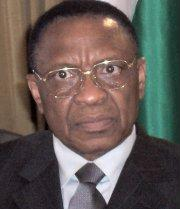
Mamadou Tandja† was a pivotal figure in the Politics & Government of West Africa, serving as the Ex-President of Niger for two consecutive terms from 1999 to 2010. His rise to power marked a significant transition for Niger, as he oversaw the country's return to democratic rule following a turbulent period of military coups and political instability. A career military officer turned politician, Tandja's presidency was initially hailed for bringing relative stability and economic growth. His key achievement was arguably his early tenure, which cemented a fragile peace with northern Tuareg rebels through the 1995 peace accords, which he helped implement as interior minister and later upheld as president. However, his legacy is complex, ultimately defined by a contentious attempt to extend his rule that led to his ousting in a military coup in 2010.
Early Life & Education: Forging a Path from Diffa
Mamadou Tandja was born in 1938 in the town of Maïné-Soroa, located in the Diffa Region of southeastern Niger. His early life was rooted in the pastoral and agricultural communities of the region, which later informed his political base. Seeking a structured career path, the young Tandja embarked on a military trajectory, a common avenue for advancement in post-colonial West Africa.
His formal education was heavily oriented towards military training. He attended the prestigious École Militaire Préparatoire in Burkina Faso (then Upper Volta) and later pursued officer training in Mali. His most formative professional military experience came at the École d'Application de l'Infanterie in Montpellier, France. This training shaped his disciplined, no-nonsense approach to leadership. Tandja's military career progressed steadily within the Nigerian Armed Forces. He served in various command posts and, crucially, held the position of Governor of the Maradi Region from 1974 to 1976 under the regime of Seyni Kountché. This early administrative role provided him with firsthand experience in regional governance and the complex tribal and economic dynamics of Niger, laying the groundwork for his future in Politics & Government.
Career & Major Achievements: From Colonel to President
Mamadou Tandja's political career began in earnest after his retirement from the military with the rank of Colonel. He entered the political arena during the tumultuous transition to multi-party politics in the early 1990s.
Rise to Political Prominence
In 1991, Tandja was appointed Minister of the Interior in the transitional government, a critical role that tasked him with maintaining security during a fragile period. He played a key part in implementing the 1995 peace agreement with Tuareg rebels, helping to end a devastating conflict in the north. His reputation as a stabilizer led him to co-found the National Movement for the Society of Development (MNSD-Nassara), a party that became a dominant force in Nigerian politics. After a failed presidential bid in 1993 and a stint as president of the MNSD, the political landscape shifted following the assassination of President Ibrahim Baré Maïnassara. In the 1999 election, seen as a reset for democracy, Mamadou Tandja† emerged victorious, winning a runoff with 59.9% of the vote.
Presidential Tenure: Stability and Controversy
President Tandja's first term (1999-2004) was widely considered successful. Key achievements included:
- Economic Growth: He presided over a period of macroeconomic stability and growth, partly fueled by foreign investment in the nascent uranium and oil sectors.
- Regional Diplomacy: He was an active proponent of regional integration, serving as Chairman of the Economic Community of West African States (ECOWAS) in 2004-2005 and helping to mediate conflicts in Ivory Coast and Togo.
- Infrastructure Development: His government initiated several road and public works projects aimed at improving national connectivity.
Re-elected in 2004, his second term grew increasingly contentious. The central crisis of his presidency began in 2009. Arguing he needed more time to complete major infrastructure projects, particularly the Kandadji Dam, Tandja moved to extend his rule. He dissolved the National Assembly and the Constitutional Court, and orchestrated a controversial referendum in August 2009 that abolished term limits, allowing him to seek a third term. This move, dubbed "Tazartche" (Hausa for "overstay"), drew fierce domestic opposition and severe condemnation from international partners like ECOWAS and the European Union, who suspended aid and imposed sanctions.
Downfall and Arrest
The constitutional crisis culminated on February 18, 2010, when soldiers stormed the presidential palace and captured Mamadou Tandja†, overthrowing his government in a military coup. He was placed under house arrest and later charged with corruption. The coup, while condemned globally, was met with widespread celebration in the streets of Niamey. This event marked a stark and dramatic end to his decade-long rule.
Personal Life, Legacy, and Death
Outside of politics, Mamadou Tandja was known as a devout Muslim and a private family man. He was married and had children. His interests remained tied to his roots; he was often associated with the pastoral and agricultural concerns of his native Diffa region. His legacy in Niger is profoundly dualistic. On one hand, he is remembered as the president who stabilized a young democracy and fostered economic hope. On the other, he is cited as a cautionary tale of democratic backsliding, a leader whose attempt to cling to power undermined the very constitutional order he was elected to uphold.
After his ouster, Tandja lived largely out of the public eye. He passed away on November 24, 2020, in Niamey at the age of 82. His death prompted official statements of mourning, recognizing his role in the nation's history while also reflecting on the complexities of his presidency. His life story encapsulates the challenges of governance, term limits, and democratic consolidation in the Politics & Government of the Sahel region.
Net Worth and Business Ventures
As with many political figures in the region, the precise net worth of Mamadou Tandja† was not publicly documented. His wealth was primarily accrued through a lifelong career in public service, first as a military officer and later as a senior government minister and president. During his time in Politics & Government, his official salary and benefits would have been his main source of income. While in office, he oversaw significant natural resource contracts, particularly in uranium mining with companies like France's Areva (now Orano). Allegations of corruption surfaced after his overthrow, and he was tried and convicted in absentia in 2012 for graft related to procurement, though these cases were politically charged. There is no substantial evidence of major private business ventures outside his political roles. His financial legacy remains tied to the controversies of his later presidency, with his actual personal wealth remaining undisclosed.
Frequently Asked Questions
What is Mamadou Tandja†'s estimated net worth?
Mamadou Tandja† has an estimated net worth of $1.0 Million.
What is Mamadou Tandja†'s role and nationality?
Mamadou Tandja† is a Ex-President of Niger from Niger.
How did Mamadou Tandja† make their money?
Mamadou Tandja† built their fortune primarily through As a former military officer and president of Niger, one of the world's poorest countries, his wealth was not from business but from a state salary; no credible source suggests billionaire or significant private wealth..
How old is Mamadou Tandja†?
Mamadou Tandja† was born in 1938 (88 years old).
Which category is Mamadou Tandja† listed under?
Mamadou Tandja† is featured under the Politics & Government category on NetWorth Africa.
How is Mamadou Tandja†'s net worth calculated?
NetWorth Africa estimates financial valuations using publicly available stock equity holdings, company ownership records, real estate assets, and verified market data.
Net Worth Analysis
As a former military officer and president of Niger, one of the world's poorest countries, his wealth was not from business but from a state salary; no credible source suggests billionaire or significant private wealth.
Quick Stats
Related People
Aaron Motsoaledi
LP; Minister of Home Affairs • South Africa
Abane Ramdane†
FLN Leader & Strategist • Algeria
Abdalla Hamdok
Ex-Prime Minister • Sudan
Abdallah Kigoda
Ex-Minister of Natural Resources • Tanzania