Biography
Introduction: The Consensus Builder in Crisis
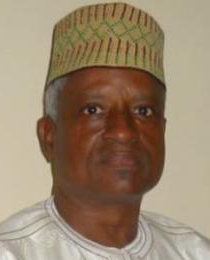
In the tumultuous landscape of West African Politics & Government, few roles are as challenging as that of a transitional leader. Manuel Serifo Nhamadjo, the Ex-Interim President of Guinea-Bissau, embodied this role during one of the nation's most precarious moments. Following a military coup in April 2012 that ousted President Raimundo Pereira and Prime Minister Carlos Gomes Júnior, the country faced a profound constitutional crisis and international isolation. It was in this vacuum that Manuel Serifo Nhamadjo emerged as a consensus figure, appointed in 2012 to lead a transitional government. His key achievement was steering Guinea-Bissau toward stability and the restoration of constitutional order, culminating in free and fair elections in 2014. His tenure, though temporary, was a critical bridge between chaos and democracy, highlighting the complex nature of Transitional Leadership in fragile states.
Early Life & Education: Formative Years in a Nascent Nation
Manuel Serifo Nhamadjo was born in 1958, a time when Guinea-Bissau was still under Portuguese colonial rule. His formative years were shaped by the struggle for independence, led by the African Party for the Independence of Guinea and Cape Verde (PAIGC), which was achieved in 1973-74. Growing up in a newly sovereign nation provided him with a front-row seat to the challenges of state-building and political instability that would later define his career.
Details of his early family life are sparse in public records, but his educational path points to a commitment to technical and administrative expertise. Manuel Serifo Nhamadjo pursued higher education in the former Soviet Union, a common trajectory for many post-colonial African students during the Cold War era. He specialized in electrical engineering, a field that demanded precision, systematic thinking, and a focus on infrastructure—skills that would later translate into his methodical approach to political crisis management. This technical background set him apart from many of his peers who emerged from purely military or ideological backgrounds, providing him with a unique perspective on national development.
Career & Major Achievements: From Parliament to the Presidency
The career of Manuel Serifo Nhamadjo was deeply intertwined with the political institutions of Guinea-Bissau. Before his rise to the highest office, he served as the President of the National People's Assembly, the country's parliament, from 2009 to 2012. This role positioned him at the heart of the nation's legislative process and established him as a senior figure with a deep understanding of constitutional procedure.
The 2012 Crisis and Ascension to Interim President
The pivotal moment came on April 12, 2012. Just weeks before a presidential runoff election, the military staged a coup, detaining the interim president and the front-running prime minister. The international community, including the United Nations, African Union, and ECOWAS, condemned the coup and demanded a return to civilian rule. After protracted negotiations, regional bloc ECOWAS brokered a transitional agreement. As the consensus candidate acceptable to both the military junta and political factions, Manuel Serifo Nhamadjo was appointed as the Ex-Interim President in May 2012. His appointment was initially contested by the ousted leadership, but it was ultimately accepted as the only viable path to end the impasse.
Steering the Transition: Key Accomplishments
Nhamadjo's tenure, which lasted from 2012 to 2014, was defined by monumental challenges:
- Restoring International Legitimacy: He worked tirelessly to re-engage with international partners and donors, whose support was crucial for the country's economy and the electoral process.
- Securing a Peaceful Environment: Managing the delicate relationship with the military leadership was paramount. His administration, under ECOWAS guidance, helped create a stable enough environment for campaigning to occur.
- Overseeing the 2014 Elections: His government's primary mandate was to organize credible elections. This was successfully achieved in April and May 2014, when José Mário Vaz was elected president, marking the end of the transition.
Despite these successes, his rule was not without controversy. Some factions never fully recognized his authority, viewing the transition as a product of the coup itself. Nevertheless, the peaceful handover of power in June 2014 stands as the definitive achievement of his interim presidency, allowing Guinea-Bissau to re-join the community of constitutional democracies.
Personal Life, Legacy, and Lasting Impact
Known as a reserved and soft-spoken figure, Manuel Serifo Nhamadjo was often described as more of a technocrat than a charismatic politician. This demeanor was arguably an asset during the transition, allowing him to operate as a neutral arbiter focused on process over personality. His personal life remained largely private, a contrast to the often-flamboyant nature of politics in the region.
The legacy of Manuel Serifo Nhamadjo is intrinsically linked to the concept of Transitional Leadership. He demonstrated that in moments of national fracture, a leader's ability to facilitate process, build consensus among rivals, and maintain a steady course toward a defined goal is invaluable. His legacy is the 2014 election itself—a testament to a transition completed. While the underlying political and military tensions in Guinea-Bissau have persisted, his interim period prevented a deeper collapse and provided a constitutional way forward. He passed away on March 17, 2020, in Lisbon, Portugal, after a prolonged illness, remembered as a pivotal figure who answered the call to serve during a national emergency.
Net Worth and Business Ventures
Unlike many political figures, there is scant public information or credible reporting on the personal net worth or private business ventures of Manuel Serifo Nhamadjo. His public career was primarily within the political and governmental spheres of Guinea-Bissau, notably as President of the National Assembly and later as Ex-Interim President. His background was in electrical engineering, but there is no documented evidence of significant commercial enterprises or substantial wealth accumulation tied to his name. This lack of information aligns with his relatively low-profile and technocratic style, suggesting that his focus remained on public service rather than private business during his documented career. In the context of Guinea-Bissau's economy, where state resources are limited, the finances of transitional figures like Nhamadjo are often not a matter of public record, making any estimation of net worth purely speculative.
Connected People & Network
Explore Full Interactive Map
Net Worth Analysis
As a former interim president and military officer from Guinea-Bissau, a low-income country, there are no credible reports of significant personal wealth, and he is not a known business figure.
Frequently Asked Questions
What is Manuel Serifo Nhamadjo's estimated net worth?
Manuel Serifo Nhamadjo has an estimated net worth of R 16.2 Million.
What is Manuel Serifo Nhamadjo's role and nationality?
Manuel Serifo Nhamadjo is a Ex-Interim President from Guinea-Bissau.
How did Manuel Serifo Nhamadjo make their money?
Manuel Serifo Nhamadjo built their fortune primarily through As a former interim president and military officer from Guinea-Bissau, a low-income country, there are no credible reports of significant personal wealth, and he is not a known business figure..
How old is Manuel Serifo Nhamadjo?
Manuel Serifo Nhamadjo was born in 1958 (68 years old).
Related Personalities
Aaron Motsoaledi
LP; Minister of Home Affairs • South Africa
Abane Ramdane†
FLN Leader & Strategist • Algeria
Abdalla Hamdok
Ex-Prime Minister • Sudan
Abdallah Kigoda
Ex-Minister of Natural Resources • Tanzania