Biography
Introduction: The Architect of Modern Ethiopia
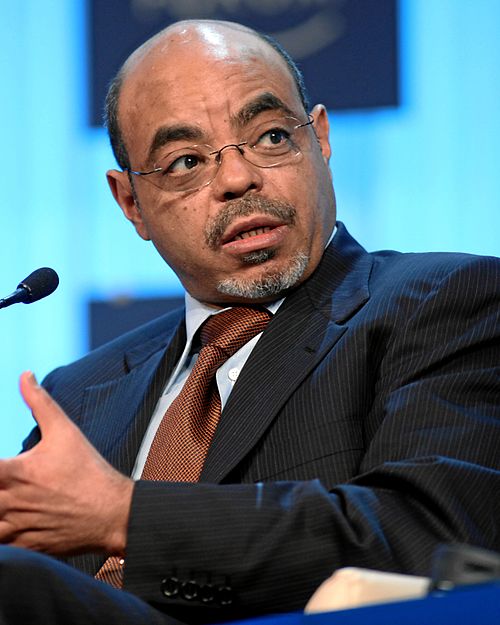
Meles Zenawi† was a towering and transformative figure in modern African politics, serving as the Prime Minister of Ethiopia from 1995 until his death in 2012. As the leader of the Ethiopian People's Revolutionary Democratic Front (EPRDF), he is credited with ending the brutal Derg regime in 1991 and fundamentally reshaping the nation's political and economic trajectory. His tenure, one of the longest in Africa, was marked by a paradoxical blend of remarkable economic growth and stringent political control. Meles Zenawi† positioned Ethiopia as a key strategic partner for the West in the Horn of Africa, a recipient of substantial development aid, and a nation experiencing rapid, state-led development. His legacy remains deeply contested, celebrated for poverty reduction and infrastructure expansion, yet criticized for human rights abuses and the entrenchment of ethnic federalism.
Early Life & Education: From Medical Student to Guerrilla Leader
Meles Zenawi was born on May 8, 1955, in Adwa, Tigray, a region with a proud history in resisting colonialism. He was born Legesse Zenawi but later adopted the nom de guerre "Meles" during his guerrilla years. His father was a senior official under Emperor Haile Selassie, providing young Meles with an insider's view of the imperial court. A brilliant student, he scored the second-highest marks in the country on his secondary school leaving examination and enrolled at the University of Addis Ababa in 1972 to study medicine.
His university years coincided with a period of immense social upheaval. The famine of 1973-74 and widespread discontent led to the overthrow of Emperor Haile Selassie by a military junta known as the Derg, led by Mengistu Haile Mariam. The Derg's violent Marxist-Leninist rule, known as the Red Terror, radicalized many students, including Meles. He abandoned his medical studies in 1975 and returned to Tigray to join the nascent Tigrayan People's Liberation Front (TPLF). His intellect and strategic acumen saw him rise rapidly through the ranks, becoming a key ideologue and military strategist. This formative period forged his worldview, blending Marxist analysis with a fierce commitment to Tigrayan self-determination within a reformed Ethiopian state.
Career & Major Achievements: State-Builder and Global Diplomat
The political career of Meles Zenawi† can be divided into two distinct phases: revolutionary leader and state executive. After years of guerrilla warfare, the TPLF, as the core of the broader EPRDF coalition, successfully overthrew the Derg regime in May 1991. Meles became the interim president and later, following the adoption of a new constitution in 1994, the first Prime Minister of the Federal Democratic Republic of Ethiopia in 1995.
Economic Transformation and Development
Meles Zenawi† championed a developmental state model. He oversaw a period of sustained, double-digit economic growth for much of his later tenure. His government prioritized massive public investments in:
- Infrastructure: The construction of dams, roads, and the ambitious Grand Ethiopian Renaissance Dam (initiated in 2011).
- Social Services: A vast expansion of primary schools and health clinics, significantly improving literacy and child mortality rates.
- Agricultural Development: The controversial but impactful Agricultural Development-Led Industrialization (ADLI) policy.
Poverty rates fell substantially, and Ethiopia became a darling of the international development community.
Political Framework and Foreign Policy
Domestically, Meles engineered a unique system of ethnic federalism, restructuring the country into nine ethnically based regional states. While intended to manage diversity, this system also centralized power under the EPRDF. His rule was characterized by a lack of political pluralism, with elections in 2005, 2010, and later marred by allegations of fraud and severe crackdowns on opposition, journalists, and civil society. In foreign policy, he was a respected intellectual voice on African issues, advocating for climate justice and representing the continent at G20 summits. He was a key ally in the US-led War on Terror, allowing counterterrorism operations in the region and sending troops into Somalia in 2006 to combat Islamic militants.
Military Leadership and Regional Hegemony
Under Meles, Ethiopia maintained one of the largest and most capable militaries in Africa. His decisive military intervention in Somalia in 2006 solidified Ethiopia's role as a regional security guarantor, but also entangled the country in a protracted conflict. His tenure also saw the conclusion of the bloody border war with Eritrea (1998-2000), which ended in a stalemate and a frozen conflict that persists today.
Personal Life, Death, and Legacy
Meles Zenawi was known for his austere lifestyle, intellectual depth, and formidable work ethic. He was a voracious reader, particularly fond of history and economics. In 1995, he married Azeb Mesfin, a former TPLF fighter who became a powerful politician and business figure in her own right. They had three children. Meles was a private individual who shunned the cult of personality common among long-serving African leaders.
His health declined in his final years, and he died on August 20, 2012, in Brussels from an undisclosed infection. His passing sent shockwaves through Ethiopia and the region, creating a significant leadership vacuum. The legacy of Meles Zenawi† is profoundly dualistic. He is remembered as the visionary who ended a dictatorship, delivered economic growth, and elevated Ethiopia's global stature. Simultaneously, he is criticized for establishing an authoritarian, one-party state that suppressed dissent and institutionalized ethnic politics. The tensions he managed—and those he created—continue to define Ethiopia's tumultuous political landscape today, making his biography essential to understanding the modern Horn of Africa.
Net Worth and Business Interests
Assessing the personal net worth of Meles Zenawi† is challenging due to the opaque nature of Ethiopia's political economy during his rule and his public image as an ascetic leader. Unlike many long-ruling figures, he did not amass visible, ostentatious personal wealth. Officially, his salary and assets were modest. However, critics argue that significant economic power was consolidated under the control of the EPRDF party and its affiliated conglomerates, such as the Endowment Fund for the Rehabilitation of Tigray (EFFORT). These party-owned enterprises dominated key sectors like construction, manufacturing, and import-export. While Meles may not have had direct personal ownership, his political authority ultimately oversaw this vast network of party capitalism. Therefore, discussions of wealth related to Meles Zenawi† are less about personal fortune and more about the centralized, party-controlled economic system he presided over, which blurred the lines between state, party, and business interests.
References and Further Reading
For more information on the life and impact of Meles Zenawi, consider these external references from credible sources:
Frequently Asked Questions
What is Meles Zenawi†'s estimated net worth?
Net worth details for Meles Zenawi† are currently being updated.
What is Meles Zenawi†'s role and nationality?
Meles Zenawi† is a Ex-Prime Minister from Ethiopia.
How did Meles Zenawi† make their money?
Meles Zenawi† built their fortune primarily through Meles Zenawi died in 2012 and was a career politician, not a business figure; no credible public net worth estimates exist for him..
How old is Meles Zenawi†?
Meles Zenawi† was born in 1955 (71 years old).
Which category is Meles Zenawi† listed under?
Meles Zenawi† is featured under the Politics & Government category on NetWorth Africa.
How is Meles Zenawi†'s net worth calculated?
NetWorth Africa estimates financial valuations using publicly available stock equity holdings, company ownership records, real estate assets, and verified market data.
Net Worth Analysis
Meles Zenawi died in 2012 and was a career politician, not a business figure; no credible public net worth estimates exist for him.
Quick Stats
Related People
Aaron Motsoaledi
LP; Minister of Home Affairs • South Africa
Abane Ramdane†
FLN Leader & Strategist • Algeria
Abdalla Hamdok
Ex-Prime Minister • Sudan
Abdallah Kigoda
Ex-Minister of Natural Resources • Tanzania