Financial Breakdown
Asset Distribution
Assets vs Liabilities
Assets
Disclaimer: These financial estimates are based on publicly available information and should be considered approximate. Last updated: 12/29/2025
Biography
Introduction: The Rebel Leader Turned President
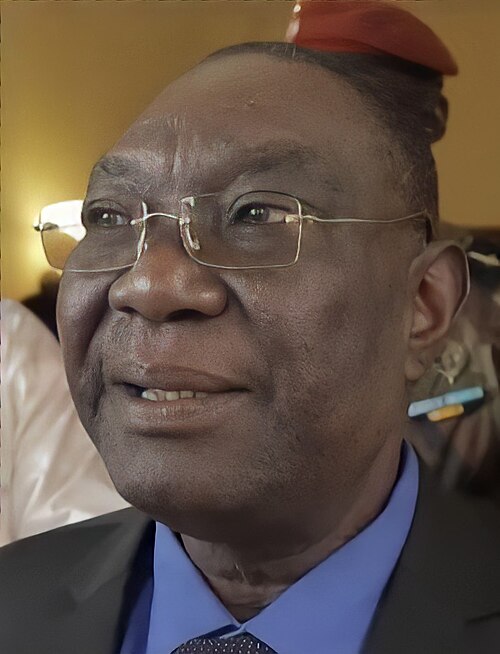
Michel Djotodia is a pivotal and controversial figure in modern Central African history, known for his brief but consequential tenure as the nation's Ex-President (2013-2014). His rise to the highest office in the Central African Republic was unprecedented, marking the first time a rebel leader seized power by force in the country's post-colonial era. As the leader of the Séléka rebel coalition, Djotodia ousted President François Bozizé in March 2013, declaring himself president and plunging the nation into a period of profound turmoil. His time in Executive Leadership was defined by his inability to control the very forces that brought him to power, leading to widespread violence, sectarian conflict, and international intervention. The presidency of Michel Djotodia represents a critical, tragic chapter in the nation's ongoing struggle for stability and governance, highlighting the deep-seated challenges within the realm of Politics & Government in one of the world's most fragile states.
Early Life & Education: Formative Years in a Turbulent Region
Born in 1949 in the northeastern region of Vakaga, near the border with Sudan, Michel Djotodia's early life was shaped by the remote and marginalized periphery of the Central African Republic. Details of his childhood are sparse, but it is known that he pursued higher education abroad, a path taken by many aspiring elites from former French colonies. He studied economics at the Patrice Lumumba Peoples' Friendship University in Moscow during the 1970s, a period that deeply influenced his political worldview. This Soviet education during the Cold War era exposed him to Marxist-Leninist ideology and established connections within the Eastern Bloc.
Upon returning to Central Africa, Michel Djotodia did not immediately enter the national political fray. He spent many years living in the neighboring country of Chad, working as a civil servant and a translator. This extended period outside his homeland was formative; it allowed him to build a network of contacts across the porous borders of the region, particularly among traders, community leaders, and dissident groups. His fluency in Arabic, French, and local languages, combined with his understanding of cross-border dynamics in the Sahel, later proved crucial in mobilizing the multi-ethnic Séléka coalition. These experiences away from the capital, Bangui, positioned him as an outsider to the traditional political establishment, a status he would later leverage to challenge the central government's authority.
Career & Major Achievements: The Path to Power and Presidency
Michel Djotodia's political career is inextricably linked to the Séléka rebellion. Prior to 2012, he was a relatively obscure figure in the Central African Republic's opposition circles. His major achievement, albeit a destructive one, was the formation and leadership of the Séléka coalition. The alliance brought together various armed factions, largely from the country's marginalized north and northeast, who were united by grievances against the government of President François Bozizé, including political exclusion, economic neglect, and the failure to implement peace agreements.
The Séléka Offensive and Seizure of Power
In December 2012, Séléka launched a swift military campaign from the north. By March 24, 2013, they had captured the capital, Bangui, forcing Bozizé to flee. This marked a seismic shift in the nation's Politics & Government. Michel Djotodia suspended the constitution, dissolved the government and parliament, and declared himself President of the Republic. Facing intense regional and international pressure, he later agreed to a transitional framework. On April 13, 2013, he was formally elected as interim President by a transitional council, a role he held for just under a year.
A Presidency in Crisis
Djotodia's tenure as Ex-President (2013-2014) was marked by catastrophic failure to govern. His major declared achievement was the overthrow of what he termed a corrupt and dictatorial regime. However, he proved utterly unable to control the Séléka rebels, who engaged in widespread looting, violence, and killings against the civilian population, particularly the Christian majority. This triggered the emergence of mainly Christian "anti-balaka" militias, leading to a brutal cycle of sectarian violence. The state collapsed, and humanitarian catastrophe ensued. His government exercised little authority beyond parts of Bangui. A significant, though forced, achievement was his eventual agreement to step down under immense pressure from the international community, including the African Union and the Economic Community of Central African States (ECCAS).
Regional Diplomacy and Resignation
Facing de facto regional isolation and the threat of an AU-led military intervention (MISMA), Djotodia attended a summit in N'Djamena, Chad, in January 2014. On January 10, 2014, he announced his resignation alongside his Prime Minister, Nicolas Tiangaye. This act, though not voluntary, is noted as a key moment that opened a path for a new transitional government. His resignation was a direct result of his failure to pacify the country or rein in his followers, underscoring the profound challenges of Executive Leadership in a fractured state.
Personal Life & Legacy: The Outsider's Complex Impact
Little is widely documented about Michel Djotodia's personal life, interests, or philanthropic activities. He is known to be married and has maintained a low profile since his exile. His legacy is overwhelmingly defined by the catastrophic consequences of the 2013-2014 transition. He is remembered as the president who presided over the descent of the Central African Republic into large-scale sectarian conflict, a dark period from which the country is still recovering.
The lasting impact of Michel Djotodia's actions is profound:
- Deepened Sectarian Divide: His rule and the Séléka's actions are widely seen as having ignited the deadly Muslim-Christian sectarian divide that had previously been less pronounced in the country's conflicts.
- Institutional Collapse: The complete disintegration of state authority during his presidency created a vacuum filled by armed groups, a problem that persists today.
- International Intervention: His tenure directly led to the deployment of robust UN (MINUSCA) and French (Sangaris) peacekeeping missions, making CAR a permanent item on the international security agenda.
- A Cautionary Tale: In the annals of Politics & Government, Djotodia's rule stands as a stark case study in the perils of seizing power without a viable plan for governance, reconciliation, or state-building.
Net Worth & Business Ventures
Specific, verified details regarding Michel Djotodia's net worth and business ventures are not publicly available through credible financial disclosures, a common reality for many figures in conflict and post-conflict zones. His early career as a civil servant and translator in Chad would not have generated significant wealth. Analysts and reports, such as those from UN expert panels, have often suggested that the Séléka coalition's financing came largely from control of resource-rich areas (like diamond and gold mines), taxation, and extortion along trade routes, rather than from Djotodia's personal fortune. Since his resignation and exile, primarily in Benin, there is no evidence of significant or legitimate business enterprises linked to him. His financial standing is likely tied to the opaque networks of patronage and control established during the rebellion, rather than to formal commercial success. Any discussion of his wealth remains speculative and unconfirmed, overshadowed by the larger political and humanitarian consequences of his actions.
For further reading on the context of his presidency, credible sources include the United Nations reports on the Central African Republic and archives from the African Union.
Frequently Asked Questions
What is Michel Djotodia's estimated net worth?
Michel Djotodia has an estimated net worth of $1.0 Million.
What is Michel Djotodia's role and nationality?
Michel Djotodia is a Ex-President (2013-2014) from Central African Republic.
How did Michel Djotodia make their money?
Michel Djotodia built their fortune primarily through As a former rebel leader and short-lived president of a very poor country, his wealth is not publicly documented and is not on any billionaire list; estimates are speculative and likely modest relative to major business figures..
How old is Michel Djotodia?
Michel Djotodia was born in 1949 (77 years old).
Which category is Michel Djotodia listed under?
Michel Djotodia is featured under the Politics & Government category on NetWorth Africa.
How is Michel Djotodia's net worth calculated?
NetWorth Africa estimates financial valuations using publicly available stock equity holdings, company ownership records, real estate assets, and verified market data.
Net Worth Analysis
As a former rebel leader and short-lived president of a very poor country, his wealth is not publicly documented and is not on any billionaire list; estimates are speculative and likely modest relative to major business figures.
Quick Stats
Related People

Aaron Motsoaledi
LP; Minister of Home Affairs • South Africa

Abane Ramdane†
FLN Leader & Strategist • Algeria

Abdalla Hamdok
Ex-Prime Minister • Sudan

Abdallah Kigoda
Ex-Minister of Natural Resources • Tanzania