$5B
Estimated Net Worth
As of 2024 • medium confidence
Financial Breakdown
Asset Distribution
Assets vs Liabilities
Assets
Liabilities
Disclaimer: These financial estimates are based on publicly available information and should be considered approximate. Last updated: 1/21/2026
Biography
Introduction: The Leopard of Zaire
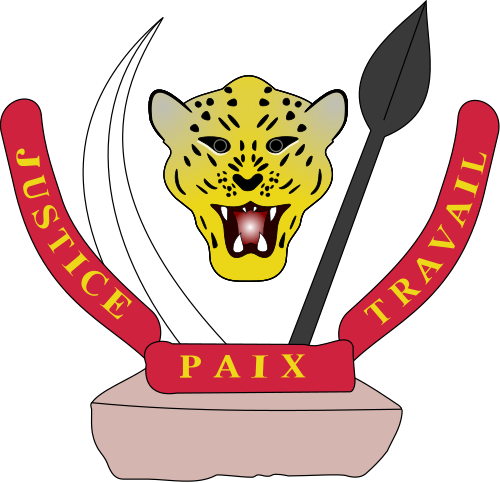
Mobutu Sese Seko† stands as one of the most defining and controversial figures in post-colonial African history. As the Ex-President (1965-1997) of the nation he renamed Zaire, now the Democratic Republic of the Congo, Mobutu ruled with an iron fist for over three decades. His rise to power was a product of the turbulent Politics & Government landscape following independence from Belgium in 1960. Initially seen as a stabilizing force, his regime quickly morphed into a byword for kleptocracy, extreme corruption, and brutal repression. His key "achievement" was the unprecedented centralization of power in his own person, creating a state that was both immensely wealthy in resources and catastrophically poor in governance. The legacy of Mobutu Sese Seko† is a complex tapestry of nationalist rhetoric, Cold War patronage, and profound economic devastation that continues to shape the Congo region today.
Early Life & Education: From Joseph-Désiré to Mobutu
Born on October 14, 1930, in Lisala, Belgian Congo, he was named Joseph-Désiré Mobutu. His early life was marked by modest beginnings; his father was a cook who died when Mobutu was young, and he was raised primarily by his mother and extended family. A bright student, he received a missionary education, which was the primary avenue for advancement under colonial rule. However, his rebellious nature led to his expulsion from several schools. This formative experience with authority and discipline would later influence his own rigid governing style.
In 1949, seeking opportunity, Mobutu enlisted in the Force Publique, the colonial army of the Belgian Congo. His seven years of service were transformative. He rose to the rank of sergeant-major, the highest position then available to Congolese, and worked as a clerk and journalist for the military newspaper. This period honed his administrative skills, exposed him to nationalist ideas circulating at the time, and provided him with a crucial network within the military—a network he would later exploit to seize power. After leaving the army in 1956, he worked as a journalist for the daily L'Avenir and later for the Belgian information service, further expanding his political awareness and connections within the burgeoning independence movement.
Career & Major Achievements: Seizure of Power and the "Zairianization" of a Nation
Mobutu's political career began in earnest during the Congo Crisis (1960-1965), a period of immense chaos following independence. Initially appointed Army Chief of Staff by Prime Minister Patrice Lumumba, Mobutu quickly became a pivotal power broker. In September 1960, with the country fractured, he staged his first coup, neutralizing both President Joseph Kasa-Vubu and Lumumba. After a period of unstable rule, he consolidated power definitively with a second coup on November 24, 1965, citing the nation's political paralysis. He declared himself president, a position he would hold for the next 32 years.
The Consolidation of an Authoritarian State
Mobutu moved swiftly to eliminate opposition. He banned all political parties except his own, the Mouvement Populaire de la Révolution (MPR), effectively making the state and the party one. He cultivated a pervasive personality cult, requiring portraits of himself to be displayed everywhere and journalists to refer to him as "The Guide" or "The Helmsman." His security apparatus, notably the Service National d'Intelligence et de Protection (SNIP), was feared for its brutality against dissenters.
"Authenticité" and the Creation of Zaire
In the early 1970s, Mobutu launched a radical cultural policy called Authenticité. This was a campaign to reject colonial influences and reclaim African identity. As its centerpiece, in 1971 he renamed the country the Republic of Zaire, the Congo River became the Zaire River, and he ordered citizens to adopt "authentic" African names. Joseph-Désiré Mobutu became Mobutu Sese Seko Kuku Ngbendu wa za Banga (often shortened to Mobutu Sese Seko). He mandated the wearing of the abacost (a short, Mao-style suit) instead of Western suits. While framed as a nationalist project, Authenticité also served to reinforce Mobutu's unique authority and distract from economic woes.
Economic Mismanagement and Kleptocracy
Mobutu's economic policies proved disastrous. In 1973, he decreed "Zairianization," which involved the seizure of foreign-owned businesses and plantations and their transfer to his political allies, who lacked the expertise to run them. This led to immediate economic collapse. Coupled with rampant corruption, where state funds were treated as Mobutu's personal treasury, the nation's vast mineral wealth was systematically looted. Key achievements in infrastructure from the early years crumbled, and by the 1980s, Zaire was a bankrupt state surviving on foreign loans and geopolitical relevance.
Cold War Patronage
A key to Mobutu's longevity was his staunch anti-communist stance during the Cold War. The United States and other Western powers, viewing him as a bulwark against Soviet influence in Central Africa, provided him with substantial military and financial support. This patronage shielded him from international criticism of his human rights record and economic mismanagement for decades. His regime only became truly vulnerable with the end of the Cold War in 1991, when Western support evaporated.
Personal Life & Legacy: The Paradox of Power
Mobutu's personal life was one of grotesque opulence contrasted with his nation's poverty. He owned multiple lavish palaces, including his gargantuan complex at Gbadolite in his home region, complete with an airport capable of handling Concorde jets, which he chartered for shopping trips to Europe. He was known for his distinctive leopard-skin hat and carved cane. While he presented himself as a unifying father figure, his rule was fundamentally divisive, exacerbating ethnic and regional tensions.
The legacy of Mobutu Sese Seko† is overwhelmingly negative. He left the Democratic Republic of the Congo in a state of:
- Economic Ruin: A collapsed infrastructure, hyperinflation, and a culture of systemic corruption.
- Political Decay: No functioning institutions, a culture of sycophancy, and a deeply ingrained model of rule-by-theft.
- Social Fragmentation: A weakened national identity and deep-seated distrust in government.
His overthrow in 1997 by Laurent-Désiré Kabila, following the devastating First Congo War, did not bring stability but instead plunged the region into a wider conflict known as Africa's World War. The challenges of governance, corruption, and conflict in the DRC today are inextricably linked to the foundations laid during the Authoritarian Era of Mobutu Sese Seko†.
Net Worth & Business: The Archetype of Kleptocracy
While an exact figure is impossible to ascertain, Mobutu Sese Seko† is widely considered one of history's most corrupt leaders. His personal fortune, built entirely on the systematic looting of state resources, was estimated to be in the billions of dollars at its peak. He did not run businesses in a conventional sense; instead, he treated Zaire's treasury, its mining revenues (especially from copper, cobalt, and diamonds), and its state-owned enterprises as his personal fiefdom. He owned vast estates in Zaire, luxury properties across Europe (in Belgium, Switzerland, and France), and held enormous secret bank accounts. His wealth was so legendary that the term "kleptocracy" (rule by thieves) was often used specifically to describe his regime. Following his overthrow, multiple countries froze his assets, but much of the wealth remained hidden or was dissipated, leaving little for the reconstruction of the nation he impoverished.
Sources: Historical accounts from scholars such as Michela Wrong ("In the Footsteps of Mr. Kurtz"), documentary archives from the Cold War era, and reports from international bodies like the World Bank and IMF detailing Zaire's economic collapse under Mobutu's rule provide the foundation for this biography.
Net Worth Analysis
Estimates of his embezzled wealth during his 32-year rule range from $5 to $15 billion, with $5 billion being a commonly cited figure for his personal fortune at its peak.
Quick Stats
Related People
Aaron Motsoaledi
LP; Minister of Home Affairs
Abane Ramdane†
FLN Leader & Strategist
Abdalla Hamdok
Ex-Prime Minister
Abdallah Kigoda
Ex-Minister of Natural Resources