Financial Breakdown
Asset Distribution
Assets vs Liabilities
Assets
Disclaimer: These financial estimates are based on publicly available information and should be considered approximate. Last updated: 12/31/2025
Biography
In the pantheon of Morocco's literary giants, Mohamed Choukri† stands as a singular, rebellious figure. A novelist who did not write his first word until the age of 20, Choukri forged a path from abject illiteracy to international acclaim, becoming one of the most translated Arab authors of his generation. His work, a visceral exploration of poverty, violence, and desire, ripped through the conventions of Arts & Culture in the Arab world, offering an unvarnished portrait of life on society's margins. Choukri's key achievement, the autobiographical novel For Bread Alone (Al-Khubz Al-Hafi), is not just a literary masterpiece; it is a seismic social document that challenged taboos and gave voice to the silenced. His legacy is that of a writer who transformed personal trauma into profound, universal art, securing his place as an indispensable pillar of 20th-century Moroccon and global literature.
Early Life & Education: A Childhood Forged in Hardship
The early life of Mohamed Choukri† reads like the brutal opening chapters of his own novels. Born in 1935 in the rural village of Ayt Chiker (Rif region), his childhood was defined by the famine that ravaged northern Morocco during World War II. In 1942, his family fled to the city of Tangier, a move that exchanged rural deprivation for urban squalor. Choukri's formative years were spent in the gritty alleyways of Tangier, a city then under international administration, which he would later immortalize in his prose.
Formal education was a luxury far beyond his reach. From the age of seven, Choukri was essentially fending for himself. His "education" was the street: a curriculum of odd jobs, petty crime, homelessness, and addiction. He witnessed and experienced extreme violence, both within his family and from the authorities. This period of profound illiteracy, which lasted until he was nearly twenty, became the raw material for his future writing. In a transformative decision at age 20, while serving a short prison sentence, Choukri resolved to learn to read and write classical Arabic. He enrolled in a night school, demonstrating a fierce autodidactic determination that would define his intellectual journey. This late but passionate pursuit of language was his liberation, the tool he would wield to excavate and narrate his past.
Career & Major Achievements: From Tangier's Streets to World Literature
The career of Mohamed Choukri† is a testament to the power of relentless self-invention. After mastering literacy, he became a schoolteacher of Arabic, a striking turnaround for a man who had spent his youth in ignorance. His literary break came through the vibrant, intercultural artistic scene of 1960s Tangier, where he befriended the American playwright Tennessee Williams and, most significantly, the exiled American writer Paul Bowles.
The Genesis of "For Bread Alone"
At Bowles's encouragement, Choukri began to write down memories of his childhood. Bowles translated these Arabic fragments into English, and in 1972, excerpts were published in the prestigious journal Antaeus. This led to the full publication of Al-Khubz Al-Hafi in 1973. The book was a literary detonation. Its graphic depiction of hunger, sexual awakening, drug use, and police brutality was unprecedented in Arabic literature. Consequently, it was banned in Morocco and across much of the Arab world until 1999. Its first Arabic edition was published in Lebanon in 1982. The English translation, For Bread Alone (1973, translated by Paul Bowles), propelled Choukri to international fame, with subsequent translations into over 30 languages.
A Prolific and Uncompromising Oeuvre
Choukri did not rest on this single success. He built a substantial body of work that continued his autobiographical project and captured the bohemian spirit of Tangier:
- Streetwise (Al-Shuttaar, 1992): The sequel to For Bread Alone, covering his tumultuous adolescence and early adulthood in Tangier.
- Jean Genet in Tangier (1974): A fascinating account of the French writer's 1968 visit, based on Choukri's time as his guide and companion.
- Paul Bowles: The Eye of the American (1997): A collection of insightful conversations and reflections on his friend and mentor.
- Time of Mistakes (Zaman al-Akhtaa, 1992): A collection of short stories further exploring themes of alienation and desire.
His impact on Arts & Culture was profound. Mohamed Choukri† pioneered a new, direct style of Arabic prose, stripped of ornate tradition, to match the roughness of his subject matter. He became a symbol of artistic courage, insisting on the writer's right to confront social and sexual taboos. His work provided a crucial, counter-narrative to romanticized visions of Morocco, influencing generations of Maghrebi and Arab writers to embrace autobiographical and socially critical forms.
Personal Life & Legacy: The Man Behind the Myth
Despite the harrowing nature of his work, those who knew Mohamed Choukri† described a man of great warmth, humor, and generosity. He remained deeply connected to Tangier, holding court in its cafes, particularly the famed Café Hafa, where he was a permanent fixture. A charismatic raconteur, he was a central node in the city's legendary literary and artistic network, interacting with figures like William S. Burroughs and Mohamed Mrabet.
His personal interests were inextricably linked to his writing and his city. He was a keen observer of human nature and a collector of stories from Tangier's diverse inhabitants. While not a philanthropist in the traditional sense, his life's work was an act of profound social philanthropy: giving narrative form to the suffering and resilience of the poor and disenfranchised. Mohamed Choukri† passed away in 2003 from cancer, but his legacy is more alive than ever. His books are studied worldwide, and he is revered as a cultural icon in Morocco. The initial censorship of his work only amplified its power, cementing his status as a fearless truth-teller. Today, he is recognized not just for the shocking content of his stories, but for their profound humanity, lyrical beauty, and unwavering commitment to artistic integrity.
Literary Estate & Posthumous Influence
While discussions of net worth are rarely appropriate for a figure like Mohamed Choukri†, whose value is cultural and literary, the management of his intellectual property is significant. Following his death, his literary estate has been managed by his heirs and publishers. The ongoing international sales and translations of his works, particularly For Bread Alone, ensure a continued stream of royalties. His writing remains a vital part of the academic curriculum in postcolonial and North African studies globally, driving consistent book sales. Furthermore, the cultural capital associated with his name and his portrayal of Tangier contributes to the city's allure in the realms of literary tourism and Arts & Culture. There are no commercial "business ventures" attached to his name in a conventional sense; his enterprise was his writing. The value he generated is immeasurable, residing in the countless readers and writers he has inspired, and in the permanent, unflinching mirror he held up to society. His work continues to be republished, analyzed, and celebrated, confirming that the voice of Mohamed Choukri† remains essential.
Sources & Further Reading: For verified information on Mohamed Choukri's life and work, consult academic databases, publishers like Telegram Books (UK) and éditions du Seuil (France), and resources from cultural institutions such as the British Museum or the Institut Marocain de l'Information Scientifique et Technique. His translated works are widely available through major book retailers and academic presses.
Frequently Asked Questions
What is Mohamed Choukri†'s estimated net worth?
Mohamed Choukri† has an estimated net worth of R 16.2 Million.
What is Mohamed Choukri†'s role and nationality?
Mohamed Choukri† is a Novelist from Morocco.
How did Mohamed Choukri† make their money?
Mohamed Choukri† built their fortune primarily through Mohamed Choukri was a celebrated but not commercially prolific novelist; his wealth was modest and derived from literary work, not business..
How old is Mohamed Choukri†?
Mohamed Choukri† was born in 1935 (91 years old).
Which category is Mohamed Choukri† listed under?
Mohamed Choukri† is featured under the Arts & Culture category on NetWorth Africa.
How is Mohamed Choukri†'s net worth calculated?
NetWorth Africa estimates financial valuations using publicly available stock equity holdings, company ownership records, real estate assets, and verified market data.
Net Worth Analysis
Mohamed Choukri was a celebrated but not commercially prolific novelist; his wealth was modest and derived from literary work, not business.
Quick Stats
Related People
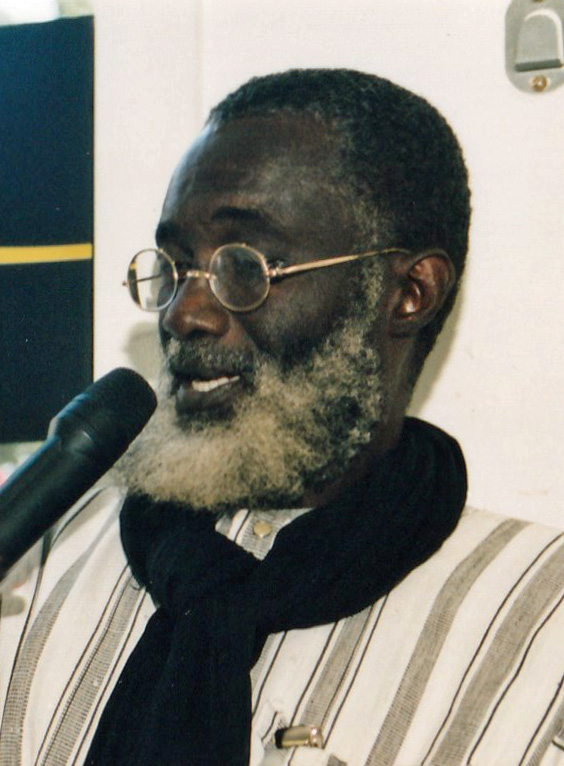
Abasse Ndione
Novelist & Playwright • Senegal
Abdel Rahman al-Abnudi†
Poet (Egypt-Sudan) • Sudan
Abdelkrim Ghallab†
Novelist & Journalist • Morocco
Abdellah Taïa
Novelist & Filmmaker • Morocco