Financial Breakdown
Asset Distribution
Assets vs Liabilities
Assets
Disclaimer: These financial estimates are based on publicly available information and should be considered approximate. Last updated: 12/30/2025
Biography
Introduction: A Defining Figure in the Horn of Africa
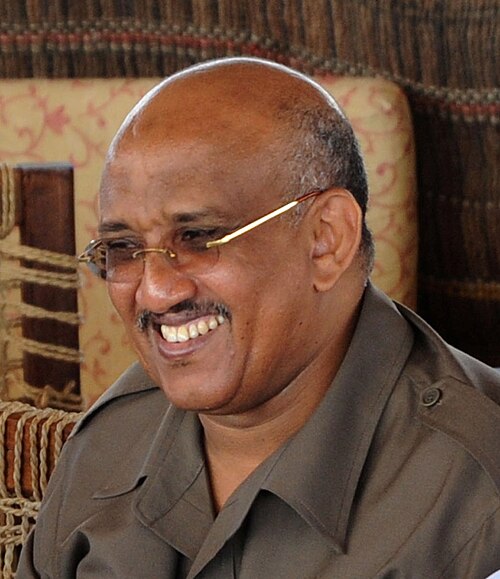
Mohamed Dileita Dileita† stands as one of the most significant political figures in the modern history of Djibouti. Serving as the nation's Prime Minister for over a decade, his tenure was marked by a period of relative stability, economic development, and active diplomacy in a volatile region. As a close confidant of President Ismail Omar Guelleh, Mohamed Dileita Dileita† was instrumental in implementing the government's strategic vision, navigating complex international relationships, and overseeing key infrastructure projects. His role extended beyond domestic administration, positioning Djibouti as a critical player in regional security and global trade logistics. This biography explores the life and career of this pivotal Ex-Prime Minister, whose leadership helped shape the trajectory of the small but strategically vital nation on the Horn of Africa.
Early Life & Education: Foundations of a Statesman
Born in 1958 in Djibouti City, then part of the French Territory of the Afars and the Issas, Mohamed Dileita Dileita† came of age during the final years of colonial rule and the fervent movement towards independence. This environment instilled in him a deep understanding of the delicate ethnic and political balances within Djiboutian society, primarily between the Afar and Issa (Somali) communities. His early education was rooted in the local system, after which he pursued higher studies abroad, a path common for the emerging elite of his generation.
Dileita's academic journey led him to France, where he attended the prestigious École Nationale d'Administration (ENA) in Paris, the renowned training ground for French high civil servants and numerous international leaders. Graduating from ENA provided him with a formidable toolkit in public administration, law, and economics. This formative experience in the French system profoundly influenced his technocratic and pragmatic approach to governance. Upon returning to Djibouti, which achieved independence in 1977, he entered the civil service, where his expertise and calm demeanor quickly marked him as a capable administrator destined for higher office.
Career & Major Achievements: A Decade at the Helm
The political career of Mohamed Dileita Dileita† is deeply intertwined with the ruling People's Rally for Progress (RPP) and the presidency of Ismail Omar Guelleh. He held several key diplomatic and ministerial positions before his apex appointment. His diplomatic acumen was first showcased as Djibouti's Ambassador to Ethiopia from 1993 to 1999, a critical posting given the historically tense relations between the two neighbors. His successful tenure there helped lay the groundwork for improved bilateral ties.
Appointment and Tenure as Prime Minister
In March 2001, President Guelleh appointed Mohamed Dileita Dileita† as the Prime Minister of Djibouti. He succeeded Barkat Gourad Hamadou and would hold the office for an impressive 12 years, until his resignation in April 2013. His long tenure is a testament to the stability of the administration and the trust placed in him by the presidency. As Prime Minister, Dileita was responsible for the day-to-day governance of the country, chairing the Council of Ministers and implementing the president's policies.
Key Achievements and Governance
His period in office witnessed several notable developments:
- Economic and Infrastructure Development: He oversaw significant investments in public infrastructure, including port modernization and road networks, capitalizing on Djibouti's strategic location as a gateway to the Red Sea and the Suez Canal.
- Diplomatic Engagement: Dileita played a key role in maintaining Djibouti's balanced foreign policy, hosting military bases for multiple global powers (including the US, France, and later China and Japan) while actively participating in regional organizations like IGAD (Intergovernmental Authority on Development).
- Domestic Stability: His government managed to maintain a fragile peace following the 1994 peace agreement that ended the Afar insurgency, focusing on national unity and development as tools for long-term stability.
- Constitutional Reform: In 2010, he presided over a controversial constitutional amendment that allowed President Guelleh to run for a third term, a move that consolidated the ruling party's power but drew criticism from opposition groups.
Throughout his premiership, Mohamed Dileita Dileita† was seen as a steady, reliable figure who provided administrative continuity. He effectively communicated government policy and represented Djibouti on numerous international stages, becoming a familiar face of Djiboutian Politics & Government.
Personal Life, Legacy, and Later Years
Mohamed Dileita Dileita† was known for his reserved and intellectual personality, often described as more of a technocrat than a populist politician. He maintained a relatively low public profile regarding his personal life, keeping his family out of the political spotlight. This discretion aligned with his image as a dedicated public servant focused on the affairs of state.
His legacy is complex and is viewed through different lenses. Supporters credit him with providing stable and consistent leadership during a period of economic growth and heightened geopolitical importance for Djibouti. They point to the infrastructure advancements and the country's rising profile in international affairs. Critics, however, argue that his tenure saw the further entrenchment of a one-party dominant system and restrictions on political pluralism and press freedom.
After stepping down as Prime Minister in 2013, he was appointed as a diplomatic advisor to President Guelleh, a role in which he continued to leverage his vast experience in international relations. Mohamed Dileita Dileita† passed away in 2023, leaving behind a significant chapter in the political history of his nation. His career exemplifies the trajectory of a post-colonial African statesman, educated abroad but deeply engaged in navigating the unique challenges and opportunities of his homeland.
Net Worth & Business Ventures
As with many high-ranking officials in Djibouti, precise details regarding the personal net worth and private business interests of Mohamed Dileita Dileita† are not publicly disclosed. His primary source of income throughout his adult life was his salary as a public servant, diplomat, and later as Prime Minister. Unlike some political figures in the region, he was not widely reported to have extensive personal business holdings or ventures outside of his government roles.
It is important to contextualize this within the economic structure of Djibouti, where the state plays a dominant role in the economy, particularly in strategic sectors like ports, logistics, and utilities. While in office, Dileita oversaw major national projects and international partnerships worth billions of dollars, but these were state-controlled enterprises. His financial legacy is thus intrinsically linked to his public service career rather than to independent commercial success. Any assessment of wealth remains speculative without verified financial disclosures, which are not a standard requirement in Djibouti's political system.
Conclusion
The story of Mohamed Dileita Dileita† is the story of modern Djibouti's consolidation. From his early training in France to his pivotal decade as Prime Minister, he embodied a style of governance that prioritized administrative competence, strategic diplomacy, and incremental development. Serving during a time when Djibouti transformed from a sleepy port into a globally significant logistical and military hub, his steady hand at the domestic helm provided a counterpart to the president's strategic vision. While debates about political openness during his era persist, his impact on shaping the institutions and international posture of Djibouti is undeniable. As an Ex-Prime Minister, his life and work remain essential to understanding the complex landscape of Politics & Government in the Horn of Africa.
Frequently Asked Questions
What is Mohamed Dileita Dileita†'s estimated net worth?
Mohamed Dileita Dileita† has an estimated net worth of $5.0 Million.
What is Mohamed Dileita Dileita†'s role and nationality?
Mohamed Dileita Dileita† is a Ex-Prime Minister from Djibouti.
How did Mohamed Dileita Dileita† make their money?
Mohamed Dileita Dileita† built their fortune primarily through As a former public official from Djibouti, a small and lower-income nation, his wealth is not comparable to major African business billionaires and is not listed on any major wealth index..
How old is Mohamed Dileita Dileita†?
Mohamed Dileita Dileita† was born in 1958 (68 years old).
Which category is Mohamed Dileita Dileita† listed under?
Mohamed Dileita Dileita† is featured under the Politics & Government category on NetWorth Africa.
How is Mohamed Dileita Dileita†'s net worth calculated?
NetWorth Africa estimates financial valuations using publicly available stock equity holdings, company ownership records, real estate assets, and verified market data.
Net Worth Analysis
As a former public official from Djibouti, a small and lower-income nation, his wealth is not comparable to major African business billionaires and is not listed on any major wealth index.
Quick Stats
Related People
Aaron Motsoaledi
LP; Minister of Home Affairs • South Africa
Abane Ramdane†
FLN Leader & Strategist • Algeria
Abdalla Hamdok
Ex-Prime Minister • Sudan
Abdallah Kigoda
Ex-Minister of Natural Resources • Tanzania