Financial Breakdown
Asset Distribution
Assets vs Liabilities
Assets
Disclaimer: These financial estimates are based on publicly available information and should be considered approximate. Last updated: 12/30/2025
Biography
Introduction: The Guardian of Nuclear Non-Proliferation
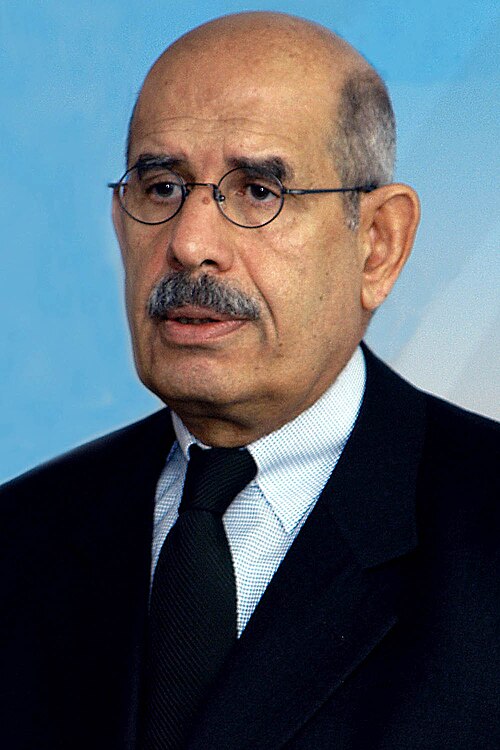
Mohamed ElBaradei stands as a towering figure in the realms of international diplomacy and global security. An eminent Egyptian diplomat and lawyer, he is best known for his pivotal role as the Director General of the International Atomic Energy Agency (IAEA) from 1997 to 2009. Alongside the IAEA, Mohamed ElBaradei was awarded the Nobel Peace Prize in 2005 for their extensive efforts to prevent nuclear energy from being used for military purposes and to ensure its safe, peaceful application. His career, spanning decades, has been defined by a steadfast commitment to multilateralism, rigorous verification, and courageous diplomacy, often placing him at the center of the world's most sensitive geopolitical crises, from Iraq to Iran and North Korea. Beyond his international service, Mohamed ElBaradei emerged as a significant political figure in his native Egypt, advocating for democratic transition and civil rights.
Early Life & Education: Forging a Global Perspective
Mohamed ElBaradei was born on June 17, 1942, in Cairo, Egypt, into a professional family with a strong tradition in law and public service. His father, Mostafa ElBaradei, was a lawyer and president of the Egyptian Bar Association, instilling in young Mohamed a deep respect for legal frameworks and justice. This early environment profoundly shaped his worldview and future career path.
ElBaradei's academic journey began at the University of Cairo, where he earned a Bachelor of Laws degree in 1962. Demonstrating exceptional talent, he subsequently entered the diplomatic service of Egypt. His pursuit of advanced education took him to the United States, where he completed a Doctor of Philosophy (Ph.D.) in International Law at the New York University School of Law in 1974. This period was formative, immersing him in the complexities of international relations and legal systems. Before his doctoral studies, he also earned a Diploma in International Law from the Hague Academy of International Law. His early professional years included postings in the Permanent Missions of Egypt to the United Nations in both New York and Geneva, where he honed his skills in multilateral negotiation and diplomacy. These experiences provided Mohamed ElBaradei with a unique blend of legal expertise and practical diplomatic insight, preparing him for the global challenges he would later confront.
Career & Major Achievements: A Pillar of International Security
The career of Mohamed ElBaradei is a testament to dedicated public service on the world stage. He joined the International Atomic Energy Agency (IAEA) in 1984, holding several senior legal and policy positions before being appointed as its Director General in December 1997. He would be re-elected twice, serving a total of twelve years.
Leadership at the IAEA and Nobel Peace Prize
As Director General, ElBaradei transformed and reinforced the IAEA's role as the world's nuclear watchdog. His tenure was marked by high-stakes inspections and unwavering advocacy for peaceful solutions. During the prelude to the 2003 Iraq War, he and the IAEA inspection team challenged the U.S. and U.K. claims that Saddam Hussein possessed weapons of mass destruction, stating there was no evidence of an active nuclear program. This stance, later proven correct, demonstrated his commitment to facts over political pressure. His work extended to the intricate dossiers of Iran and North Korea, where he consistently advocated for dialogue and verification. In 2005, in recognition of these efforts, the Norwegian Nobel Committee awarded the Nobel Peace Prize jointly to Mohamed ElBaradei and the IAEA. The committee stated they were honored "for their efforts to prevent nuclear energy from being used for military purposes and to ensure that nuclear energy for peaceful purposes is used in the safest possible way."
Key Diplomatic Stances and Initiatives
Throughout his career, ElBaradei championed several critical principles in Politics & Government on a global scale:
- Fact-Based Verification: Insisting on impartial, scientific evidence in nuclear inspections.
- Multilateral Diplomacy: Prioritizing dialogue and engagement over isolation and confrontation.
- Nuclear Disarmament: Publicly advocating for a world free of nuclear weapons, calling for a new security paradigm.
- Peaceful Use of Technology: Promoting the benefits of nuclear technology for medicine, agriculture, and energy.
His tenure saw the strengthening of the IAEA safeguards system and the promotion of the Additional Protocol, which grants inspectors broader access to information and sites.
Role in Egyptian Politics
Following his retirement from the IAEA in 2009, Mohamed ElBaradei turned his focus to domestic politics in Egypt. He became a leading voice for democratic reform, constitutional change, and social justice. He founded the National Association for Change, a political movement advocating for transparent elections. Following the 2011 Egyptian Revolution, he returned to Egypt and was seen as a unifying moral figure. He briefly served as Vice-President for International Affairs in the interim government after the July 2013 military intervention but resigned in protest against the violent dispersal of protest camps. This act solidified his reputation for principle over power, though it also marked his withdrawal from frontline electoral Politics & Government in Egypt.
Personal Life & Legacy: The Principles of a Global Citizen
Mohamed ElBaradei is known for his intellectual demeanor, calm under pressure, and deep ethical convictions. He is married to Aida El-Kachef, an early childhood teacher, and they have two children: a daughter, Laila, and a son, Mostafa. Fluent in Arabic, English, and French, ElBaradei is also an accomplished author. His memoir, The Age of Deception: Nuclear Diplomacy in Treacherous Times, published in 2011, offers a candid insider's view of the world's most critical nuclear negotiations and the political challenges he faced.
His legacy is multifaceted. Globally, he is revered as a Nobel Laureate who defended the integrity of international institutions and tirelessly worked to reduce the existential threat of nuclear war. He expanded the mandate and credibility of the IAEA, leaving it a stronger organization. In the Arab world and Egypt, he remains a symbol of intellectual integrity and principled opposition, advocating for a democratic, civil state grounded in the rule of law and human rights. His life's work underscores the power of patient diplomacy, the imperative of evidence-based policy, and the enduring need for courageous individuals to speak truth to power.
Net Worth & Recognition
While the exact net worth of Mohamed ElBaradei is not publicly disclosed, it is understood to stem primarily from his distinguished career in international civil service, including his tenure as a UN Under-Secretary-General and IAEA Director General, along with earnings from his literary work and speaking engagements. Unlike many in Politics & Government, he has not been associated with significant private business ventures or commercial enterprises. His financial profile is consistent with a lifetime of public service. His true "wealth" lies in the extensive recognition he has received, which includes:
- The 2005 Nobel Peace Prize (shared with the IAEA).
- Numerous honorary doctorates from universities worldwide.
- Prestigious international awards, including the Indira Gandhi Prize for Peace, Disarmament and Development (2008) and the Franklin D. Roosevelt Four Freedoms Award (2006).
- Respect and recognition as a global elder statesman and thought leader on security and diplomacy.
Frequently Asked Questions
What is Mohamed ElBaradei's estimated net worth?
Mohamed ElBaradei has an estimated net worth of $5.0 Million.
What is Mohamed ElBaradei's role and nationality?
Mohamed ElBaradei is a Nobel Laureate from Egypt.
How did Mohamed ElBaradei make their money?
Mohamed ElBaradei built their fortune primarily through As a career diplomat and international civil servant, his wealth stems from salaries and book deals, not business ownership; he is not on any billionaire list..
How old is Mohamed ElBaradei?
Mohamed ElBaradei was born in 1942 (84 years old).
Which category is Mohamed ElBaradei listed under?
Mohamed ElBaradei is featured under the Politics & Government category on NetWorth Africa.
How is Mohamed ElBaradei's net worth calculated?
NetWorth Africa estimates financial valuations using publicly available stock equity holdings, company ownership records, real estate assets, and verified market data.
Net Worth Analysis
As a career diplomat and international civil servant, his wealth stems from salaries and book deals, not business ownership; he is not on any billionaire list.
Quick Stats
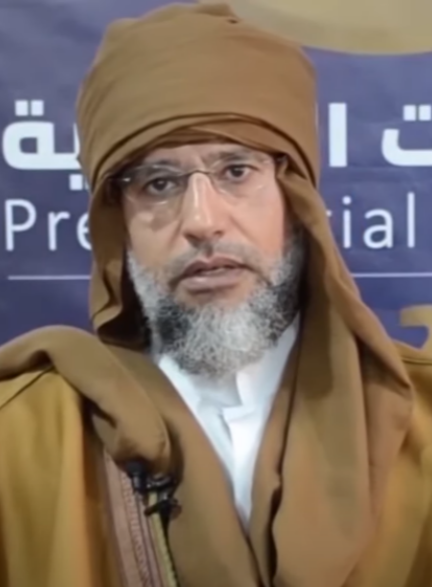
Related People
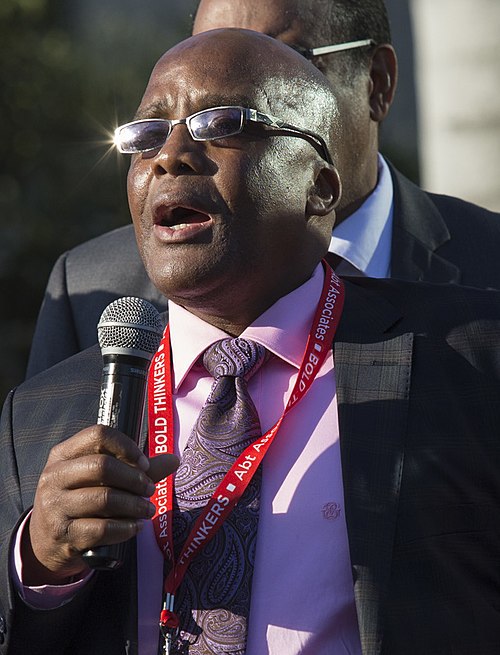
Aaron Motsoaledi
LP; Minister of Home Affairs • South Africa
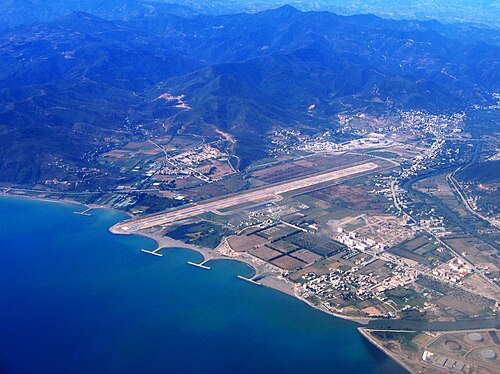
Abane Ramdane†
FLN Leader & Strategist • Algeria
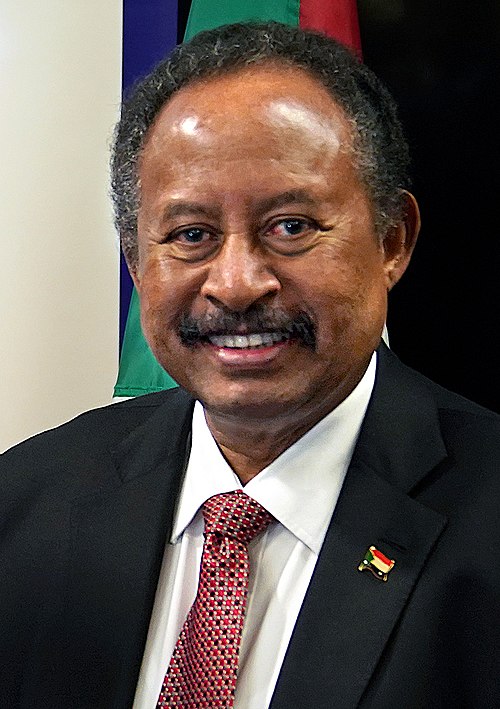
Abdalla Hamdok
Ex-Prime Minister • Sudan
Abdallah Kigoda
Ex-Minister of Natural Resources • Tanzania