Biography
Introduction: The Soldier-President of Mauritania
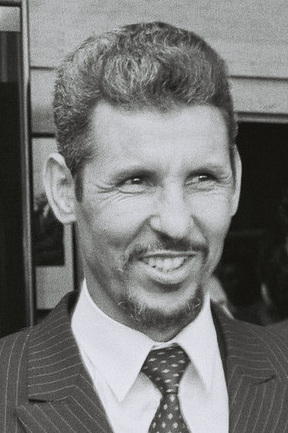
Mohamed Khouna Ould Haidalla stands as a pivotal figure in the modern political history of Mauritania, a nation whose post-colonial trajectory has been significantly shaped by military leadership. Serving as the head of state from 1980 to 1984, Haidalla's tenure was marked by profound internal reforms, regional conflict, and a decisive stance on the contentious issue of slavery. His rise to power through a military coup and his eventual ouster in another underscore the turbulent nature of Mauritanian Politics & Government during the late 20th century. As an Ex-President (1980-1984), his legacy is complex, characterized by efforts to forge a national identity, controversial policies, and a lasting impact on the country's socio-political structures.
Early Life & Education: Forging a Path in a Young Nation
Born in 1940 in the region of Mauritania, Mohamed Khouna Ould Haidalla came of age during the final years of French colonial rule. His early life was rooted in the social and cultural milieu of Mauritanian society, which would later influence his political perspectives. Unlike many civilian politicians, Haidalla's formative career path was carved within the military establishment, a common avenue for advancement and influence in many newly independent African states.
He pursued a military education, which provided him with the discipline and strategic mindset that would define his later political actions. Details of his specific early schooling are sparse, a reflection of the era and the focus on his military record. His training and service occurred as Mauritania gained independence in 1960, positioning him as part of the first generation of military officers in a sovereign nation. This period was crucial, as the young state grappled with nation-building, ethnic tensions between Arab-Berber Moors and Black Africans, and economic challenges. Haidalla's experiences in the military during these formative years for the country undoubtedly shaped his view of governance, stability, and the role of the armed forces in national life, setting the stage for his eventual ascent to the highest office.
Career & Major Achievements: From Coup d'État to Presidential Palace
The career of Mohamed Khouna Ould Haidalla is inextricably linked to the series of military interventions that characterized Mauritanian politics. His rise to prominence began in earnest following the coup d'état of July 10, 1978, which overthrew Mauritania's first president, Moktar Ould Daddah. Haidalla was a key member of the Military Committee for National Recovery (CMRN) that assumed power.
Ascent to Power and the Western Sahara War
Initially serving in various ministerial and high-level military roles, Haidalla navigated the unstable political landscape of the ruling committee. His big break came on January 4, 1980, when he was appointed Prime Minister by then-President Mohamed Mahmoud Ould Louly. In a swift move, he consolidated power and, by December 1980, had effectively sidelined Louly, becoming the de facto head of state. His formal presidency was confirmed in 1981. A defining external challenge of his early rule was the ongoing Western Sahara War. Mauritania had been a combatant alongside Morocco against the Polisario Front, a conflict that drained its fragile economy. One of Haidalla's most significant early decisions was to unilaterally withdraw from the war and sign a peace agreement with the Polisario in 1979, a move that refocused national resources but also strained relations with Morocco.
Domestic Policies and the Slavery Decree
Domestically, Haidalla's rule was marked by an attempt to impose a strict, reformist vision. He implemented Islamic law (Sharia) as the basis of the country's legal system in 1980. However, his most historically notable action came on July 5, 1980, and was reinforced by a more comprehensive decree in November 1981, with the formal abolition of slavery in Mauritania. While previous governments had issued abolition edicts, Haidalla's decree was the most forceful and explicit, criminalizing the practice and providing for the emancipation of enslaved individuals. This was a monumental step in a society where hereditary slavery, though officially denied, was deeply entrenched. The move was controversial, alienating powerful conservative Moorish elites who benefited from the traditional social hierarchy.
Political Repression and Overthrow
His regime grew increasingly authoritarian, intolerant of dissent. He survived a major coup attempt in 1981 and an assassination attempt in 1982, responding with crackdowns on opposition, which included both Islamists and leftist groups. His foreign policy also shifted, moving away from Morocco and towards alignment with Algeria and Libya. Ultimately, the internal discontent culminated in his overthrow. While attending a Franco-African summit in Burundi in December 1984, his former deputy and close associate, Maaouya Ould Sid'Ahmed Taya, orchestrated a bloodless coup and seized power. Mohamed Khouna Ould Haidalla returned home to find himself deposed, ending his four-year rule.
Personal Life, Legacy, and Later Years
Outside the sphere of Politics & Government, details of Mohamed Khouna Ould Haidalla's personal life and interests remain largely private, consistent with the discreet nature of many military leaders of his generation. His public persona was that of a stern, principled, and uncompromising figure, shaped by his military background and devout Islamic faith. Following his ouster, he remained a significant political figure, often as a symbol of opposition.
He contested the 2003 presidential election against his old rival, President Taya, a move that led to his imprisonment both before and after the vote on charges of plotting a coup. This imprisonment was widely criticized by international human rights organizations. After Taya's overthrow in 2005, Haidalla was released and continued to be an elder statesman, though not regaining executive power. His legacy is dual-edged. He is remembered for taking the boldest legal step in Mauritanian history to eradicate slavery, a cornerstone of his historical reputation. Conversely, his rule is also recalled for its authoritarianism and political repression. For scholars of Mauritania, Haidalla represents the complex era of military rule where well-intentioned social reforms were often pursued through undemocratic and harsh means, leaving a lasting imprint on the nation's struggle for governance and social justice.
Net Worth & Business Ventures
As with many former military leaders from developing nations, the precise net worth of Mohamed Khouna Ould Haidalla is not publicly documented or transparent. Unlike some contemporaries who leveraged political power for vast personal business empires, Haidalla's profile after office did not suggest significant involvement in major commercial ventures. His career was almost entirely within the state apparatus—first the military, then the presidency. His periods of imprisonment and political opposition also limited opportunities for accruing substantial wealth in the manner of a stable, long-term ruler.
It can be inferred that his primary sources of income throughout his life were his military salary, state pension as a former head of state, and possibly support from political allies. There is no public record of him owning large-scale businesses or international assets. In the context of Mauritanian Politics & Government, where economic power is often concentrated, Haidalla's post-presidential life appeared more focused on political and symbolic influence rather than financial accumulation. His economic legacy, therefore, is tied to the national policies he enacted—such as withdrawing from a costly war and attempting land reforms—rather than to personal business success.
Key Facts and Timeline
- 1940: Born in Mauritania.
- July 1978: Participates in the coup that overthrows President Moktar Ould Daddah.
- January 1980: Appointed Prime Minister of Mauritania.
- July 1980: Issues first decree for the abolition of slavery.
- December 1980: Assumes de facto presidential powers.
- November 1981: Signs the landmark decree criminalizing slavery.
- December 12, 1984: Overthrown in a coup by Maaouya Ould Sid'Ahmed Taya while abroad.
- 2003: Runs for president, is imprisoned before and after the election.
- 2005: Released from prison following the overthrow of President Taya.
For further reading on the history of Mauritania and its leaders, credible sources include the Encyclopædia Britannica and academic publications on Sahelian political history.
Frequently Asked Questions
What is Mohamed Khouna Ould Haidalla's estimated net worth?
Mohamed Khouna Ould Haidalla has an estimated net worth of $1.0 Million.
What is Mohamed Khouna Ould Haidalla's role and nationality?
Mohamed Khouna Ould Haidalla is a Ex-President (1980-1984) from Mauritania.
How did Mohamed Khouna Ould Haidalla make their money?
Mohamed Khouna Ould Haidalla built their fortune primarily through As a former military ruler of Mauritania, a country with low GDP per capita, his wealth is not publicly documented and is not on any billionaire list, suggesting more modest means typical for ex-presidents in the region..
How old is Mohamed Khouna Ould Haidalla?
Mohamed Khouna Ould Haidalla was born in 1940 (86 years old).
Which category is Mohamed Khouna Ould Haidalla listed under?
Mohamed Khouna Ould Haidalla is featured under the Politics & Government category on NetWorth Africa.
How is Mohamed Khouna Ould Haidalla's net worth calculated?
NetWorth Africa estimates financial valuations using publicly available stock equity holdings, company ownership records, real estate assets, and verified market data.
Net Worth Analysis
As a former military ruler of Mauritania, a country with low GDP per capita, his wealth is not publicly documented and is not on any billionaire list, suggesting more modest means typical for ex-presidents in the region.
Quick Stats
Related People
Aaron Motsoaledi
LP; Minister of Home Affairs • South Africa
Abane Ramdane†
FLN Leader & Strategist • Algeria
Abdalla Hamdok
Ex-Prime Minister • Sudan
Abdallah Kigoda
Ex-Minister of Natural Resources • Tanzania