Financial Breakdown
Asset Distribution
Assets vs Liabilities
Assets
Disclaimer: These financial estimates are based on publicly available information and should be considered approximate. Last updated: 12/29/2025
Biography
Introduction: A Defining and Divisive Figure
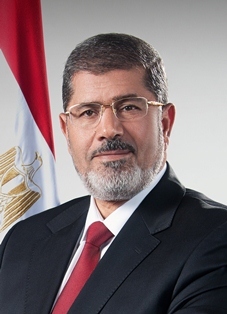
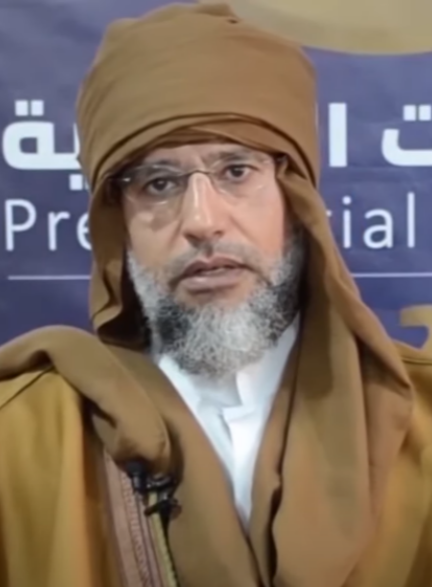
Mohamed Morsi† stands as one of the most pivotal and controversial figures in modern Egyptian history. Serving as the fifth President of Egypt from June 30, 2012, to July 3, 2013, his tenure was the culmination of the 2011 Arab Spring uprising that toppled Hosni Mubarak. Mohamed Morsi† made history by becoming the nation's first democratically elected civilian head of state, a landmark achievement in Egypt's political trajectory. His presidency, however, was exceptionally brief and tumultuous, defined by profound political polarization, economic challenges, and a powerful backlash from the entrenched state institutions. The legacy of Mohamed Morsi† is inextricably linked to the rise and fall of the Muslim Brotherhood in power, marking a critical, short-lived chapter known as the Brotherhood Era in Egyptian Politics & Government.
Early Life & Education: From Sharqia to Academia
Mohamed Morsi Ibrahim El-Ghattawi was born on August 20, 1951, in the village of El-Adwah, in the Sharqia Governorate of Egypt. He was raised in a modest, rural family, an experience that shaped his connection to the country's populous agricultural heartland. A bright student, Mohamed Morsi† pursued higher education in engineering, earning a Bachelor of Science degree in Engineering from Cairo University in 1975 and a Master's degree in Metallurgical Engineering in 1978.
His academic journey then took him to the United States. He obtained a Ph.D. in Materials Science from the University of Southern California in 1982, where he also worked as an assistant professor. This period was formative; he served as the president of the Egyptian Student Association in the U.S. and was noted for his religious devotion and organizational skills. Despite opportunities abroad, he returned to Egypt in 1985 to teach at Zagazig University, ascending to become the head of the engineering department. His professional background as a professor of engineering often contrasted sharply with his later political image.
Formative Political and Ideological Development
Parallel to his academic career, Mohamed Morsi† was deeply involved with the Muslim Brotherhood, an Islamist organization founded in 1928. He joined the group in the 1970s and rose steadily through its ranks. His political activism under the Mubarak regime came at a cost; he was imprisoned several times for his affiliation with the banned organization. In 2000, he won a seat in parliament as an independent candidate (since the Brotherhood was banned from formal politics), serving until 2005. This period honed his political tactics and solidified his role as a prominent spokesman and strategist for the Brotherhood's parliamentary bloc.
Career & Major Achievements: A Meteoric Rise and Swift Fall
The political landscape of Egypt was fundamentally altered by the 2011 revolution. In the subsequent democratic elections, the Brotherhood's political wing, the Freedom and Justice Party (FJP), emerged victorious in parliamentary polls. When the Brotherhood's first-choice presidential candidate was disqualified, Mohamed Morsi† became the substitute candidate. In a historic and tightly contested runoff in June 2012, he defeated Ahmed Shafik, Mubarak's last prime minister, with 51.7% of the vote. On June 30, 2012, Mohamed Morsi† was sworn in as President (2012–2013).
Key Actions and Mounting Crises
His presidency was marked by several critical, yet polarizing, actions:
- Constitutional Declaration of November 2012: Morsi issued a decree granting himself sweeping temporary powers, placing his decisions beyond judicial review. This move, intended to bypass a judiciary still dominated by Mubarak-era figures, was widely denounced as authoritarian and triggered massive protests.
- Rush to a New Constitution: He fast-tracked a referendum on a new constitution, which was approved but boycotted by secular and Christian groups who felt it failed to protect minority rights and overly reflected Islamist principles.
- Foreign Policy Shift: Mohamed Morsi† maintained the pivotal peace treaty with Israel but took a more assertive stance in support of Palestinian Hamas in Gaza. He also welcomed Iranian President Mahmoud Ahmadinejad to Cairo, a first since the 1979 Iranian Revolution, signaling a potential regional realignment.
- Economic Struggles: The economy, battered since 2011, continued to falter. Foreign reserves dwindled, tourism collapsed, and fuel shortages became common, eroding public patience.
The June 30th Protests and Military Intervention
Opposition to Morsi's rule coalesced into the "Tamarod" (Rebellion) movement, which claimed to gather millions of signatures demanding his resignation. On June 30, 2013, the first anniversary of his inauguration, millions of Egyptians protested across the country. Citing the protests and a failure to achieve national consensus, the Egyptian military, led by Defense Minister General Abdel Fattah el-Sisi, issued an ultimatum. On July 3, 2013, the military removed President Mohamed Morsi† from power, suspended the constitution, and installed an interim government. This event marked a definitive end to the Brotherhood Era.
Personal Life, Incarceration, and Legacy
Mohamed Morsi was known for a modest personal life. He was married to Naglaa Ali Mahmoud, often referred to in the media as "Umm Ahmed," and they had five children. His image as a devout, family-oriented man resonated with his support base. Following his ouster, he and many other Brotherhood leaders were detained. Mohamed Morsi† faced a series of trials on charges widely criticized by international human rights groups as politically motivated, including espionage and escaping prison during the 2011 revolution.
He spent nearly six years in solitary confinement, with access to lawyers and family severely restricted. Reports about his poor prison conditions raised repeated concerns from organizations like Amnesty International. On June 17, 2019, during a court session, Mohamed Morsi† collapsed and died. The Egyptian authorities stated the cause was a heart attack. His death was met with international condemnation of his detention conditions, with the UN calling for an investigation.
A Complex and Contested Legacy
The legacy of Mohamed Morsi† is deeply fractured. To his supporters, he remains a legitimate president and a martyr who was the victim of a deep state coup that reversed Egypt's democratic transition. They view his year in office as an imperfect but genuine attempt at democratic governance. To his detractors, his presidency was proof that the Muslim Brotherhood sought to monopolize power and impose its religious vision, justifying his removal to save the state. His tenure exposed the profound fault lines in Egyptian society—between Islamists and secularists, between new democratic forces and the old military and bureaucratic establishment. In the annals of Egyptian Politics & Government, the presidency of Mohamed Morsi† represents a critical, failed experiment in Islamist democracy, whose aftermath continues to shape the nation's political reality.
Net Worth & Financial Standing
Unlike his predecessor Hosni Mubarak, Mohamed Morsi† was not associated with significant personal wealth or business ventures. His financial profile was consistent with his background as a university professor and political activist. Prior to his presidency, his primary sources of income were his academic salary and his parliamentary stipend during his tenure as an MP. During and after his presidency, he and the Muslim Brotherhood faced accusations of illicit foreign funding, which they denied. No credible evidence of personal enrichment or substantial assets was ever substantiated. At the time of his death, his family reported having limited means, consistent with a lifestyle that was perceived as austere and modest. His net worth was not a subject of significant public discourse, especially when contrasted with the dramatic political and constitutional battles that defined his career.
Frequently Asked Questions
What is Mohamed Morsi†'s estimated net worth?
Net worth details for Mohamed Morsi† are currently being updated.
What is Mohamed Morsi†'s role and nationality?
Mohamed Morsi† is a President (2012–2013) from Egypt.
How did Mohamed Morsi† make their money?
Mohamed Morsi† built their fortune primarily through Mohamed Morsi was a former Egyptian president from a modest background who died in 2019, and there are no credible reports of significant personal wealth; his assets were likely limited to state salary and personal property..
How old is Mohamed Morsi†?
Mohamed Morsi† was born in 1951 (75 years old).
Which category is Mohamed Morsi† listed under?
Mohamed Morsi† is featured under the Politics & Government category on NetWorth Africa.
How is Mohamed Morsi†'s net worth calculated?
NetWorth Africa estimates financial valuations using publicly available stock equity holdings, company ownership records, real estate assets, and verified market data.
Net Worth Analysis
Mohamed Morsi was a former Egyptian president from a modest background who died in 2019, and there are no credible reports of significant personal wealth; his assets were likely limited to state salary and personal property.
Quick Stats
Related People

Aaron Motsoaledi
LP; Minister of Home Affairs • South Africa

Abane Ramdane†
FLN Leader & Strategist • Algeria

Abdalla Hamdok
Ex-Prime Minister • Sudan

Abdallah Kigoda
Ex-Minister of Natural Resources • Tanzania