$100M
Estimated Net Worth
As of 2024 • medium confidence
Financial Breakdown
Asset Distribution
Assets vs Liabilities
Assets
Liabilities
Disclaimer: These financial estimates are based on publicly available information and should be considered approximate. Last updated: 12/29/2025
Biography
Introduction: The Soldier-President of Mauritania
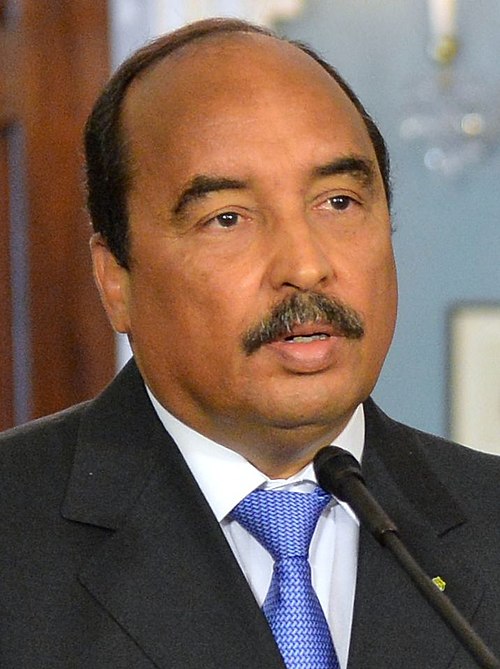
Mohamed Ould Abdel Aziz is a defining figure in modern Mauritanian history, serving as the nation's President from 2009 to 2019. His decade-long tenure at the helm of the Islamic Republic of Mauritania was marked by a unique trajectory from military leadership to executive power. A career soldier who rose to the rank of General, Mohamed Ould Abdel Aziz first seized national and international attention in 2008 when he led a military coup that toppled the elected government of President Sidi Ould Cheikh Abdallahi. This pivotal event set the stage for his subsequent election and a presidency focused on security, economic development, and asserting Mauritania's role on the regional stage. His rule, characterized by both significant infrastructure progress and criticisms of authoritarian tendencies, left an indelible mark on the country's Politics & Government landscape.
Early Life & Military Education
Born in 1956 in Akjoujt, a mining town in western Mauritania, Mohamed Ould Abdel Aziz hailed from the Oulad Bou Sbaa tribe, part of the influential Arab-Berber (Bidhan) community. His formative years were shaped by the early post-colonial era of Mauritania, which gained independence from France in 1960. From a young age, he was drawn to a career in the armed forces, seeing it as a pathway to influence and national service.
His professional journey began at the Royal Military Academy in Meknes, Morocco, a prestigious institution that trained many future military leaders from across Africa and the Arab world. This education provided him with not only tactical and strategic military training but also crucial regional networks. Upon returning to Mauritania, he quickly ascended through the ranks of the Mauritanian army. His early career was marked by involvement in several key moments of national instability, including the 1978 coup that ended Moktar Ould Daddah's rule and various internal shifts in power. By the late 1990s and early 2000s, he had become a commander of the Presidential Security Battalion (BASEP), an elite unit responsible for protecting the head of state. This position placed him at the very heart of power in Nouakchott and proved instrumental for his future rise.
Career & Major Achievements: From Coup to Constitutional Presidency
The 2008 Coup and Path to Presidency
The defining moment in the career of Mohamed Ould Abdel Aziz occurred on August 6, 2008. As head of the presidential guard, he and other senior officers deposed President Sidi Ould Cheikh Abdallahi, whom they accused of corruption and ineptitude in managing food price crises. The coup was initially condemned internationally, leading to sanctions from the African Union and others. However, Abdel Aziz moved swiftly to consolidate power, forming a ruling military council and promising a swift return to democratic rule. In a controversial political transition, he resigned from the military in April 2009 to run for president. He won the July 2009 election with 52% of the vote, though the opposition disputed its fairness. Thus began his formal decade in executive leadership.
Key Policies and Domestic Focus
President Mohamed Ould Abdel Aziz prioritized several key areas during his two terms:
- Security and Counterterrorism: He positioned Mauritania as a bulwark against Islamist militant groups in the Sahel, notably Al-Qaeda in the Islamic Maghreb (AQIM). Under his command, the military conducted effective operations, and the country avoided major terrorist attacks after 2011, earning praise and support from Western allies like the United States and France.
- Economic and Infrastructure Development: His administration launched numerous high-profile projects, including the new international airport in Nouakchott, the extension of the deep-water port, and new road networks. He championed foreign investment in Mauritania's extractive industries, particularly iron ore, gold, and offshore gas.
- Constitutional Controversy: In 2017, a controversial constitutional referendum was passed, abolishing the elected Senate and altering the national flag. Opponents viewed this as a move to centralize power and weaken institutional checks.
Foreign Policy and Regional Role
In foreign affairs, Mohamed Ould Abdel Aziz worked to rehabilitate Mauritania's image post-coup and became an active player in Sahelian diplomacy. He served as Chairman of the African Union from 2014 to 2015, where he focused on continental security issues. He maintained a complex relationship with neighboring Morocco and Algeria while fostering close ties with Gulf Arab states. His government also took a firm stance on regional migration issues.
Personal Life, Legacy, and Post-Presidency
Known for his charismatic and often blunt style, Mohamed Ould Abdel Aziz cultivated an image of a decisive, no-nonsense leader directly connected to the people. He was married and had several children. His legacy remains deeply polarizing within Mauritania. Supporters credit him with bringing a decade of relative stability, economic growth, and improved infrastructure to a country plagued by coups and poverty. They point to the visible development in the capital and the containment of the terrorist threat as his signature achievements.
Critics, however, argue that his rule was marked by increased corruption, the erosion of democratic norms, and the suppression of dissent and opposition voices. The circumstances of his initial rise to power via a military coup continued to shadow his presidency. His post-presidential period has been turbulent. In 2021, he was arrested and faced charges including abuse of power, money laundering, and illicit enrichment related to his time in office, a rare move against a former head of state in the region. This ongoing legal battle continues to shape perceptions of his final impact on Mauritanian Politics & Government.
Net Worth and Financial Scrutiny
The financial standing of Mohamed Ould Abdel Aziz has been a subject of significant public speculation and legal investigation. As a career military officer turned president, his official salary was publicly documented but modest. However, allegations of accumulated wealth disproportionate to his income have been persistent. Following his presidency, an official parliamentary inquiry was launched, leading to the serious charges he now faces. Prosecutors have alleged that he and his family acquired substantial assets, including real estate and holdings in companies, through illicit means. These legal proceedings aim to determine the origins of his wealth, which remains officially unquantified but central to the controversy surrounding his legacy. The case underscores broader issues of governance and accountability in the region's executive leadership structures.
This biography of former President Mohamed Ould Abdel Aziz is based on widely reported historical events, official records, and international media coverage of his presidency and subsequent legal proceedings. For further reading, credible sources include archives from Reuters, BBC News, Jeune Afrique, and official African Union communiqués.
Net Worth Analysis
Estimates based on his tenure as president and subsequent corruption investigations, with no credible source listing him as a billionaire. His wealth is typically reported in the tens to low hundreds of millions.
Quick Stats
Related People
Aaron Motsoaledi
LP; Minister of Home Affairs
Abane Ramdane†
FLN Leader & Strategist
Abdalla Hamdok
Ex-Prime Minister
Abdallah Kigoda
Ex-Minister of Natural Resources