$2B
Estimated Net Worth
As of 2024 • medium confidence
Financial Breakdown
Asset Distribution
Assets vs Liabilities
Assets
Disclaimer: These financial estimates are based on publicly available information and should be considered approximate. Last updated: 12/30/2025
Biography
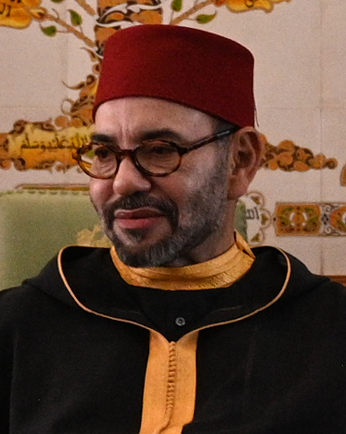
Introduction: The Commander of the Faithful and Modern Reformer
His Majesty King Mohammed VI is the 23rd monarch of the Alaouite dynasty and the current King of Morocco, ascending to the throne on July 23, 1999, following the death of his father, King Hassan II. As a pivotal figure in contemporary Politics & Government in North Africa, Mohammed VI has carved out a reputation as a modernizing force, balancing deep-rooted tradition with progressive reform. His reign is notably defined by his direct, hands-on approach to governance, earning him the popular nickname "the King of the Poor" for his focus on social and economic development. A key early achievement was the groundbreaking reform of the Moudawana (Family Code) in 2004, which dramatically expanded women's rights in Morocco. As both the political head of state and the "Commander of the Faithful," a spiritual title, he has navigated the complex challenges of the 21st century, positioning Morocco as a stable and influential player in regional and international affairs.
Early Life & Education: Forging a 21st-Century Sovereign
Mohammed Ben Al Hassan, the future King Mohammed VI, was born on August 21, 1963, in Rabat, the capital of Morocco. As the eldest son of King Hassan II and Lalla Latifa Hammou, he was groomed for leadership from a young age. His early education was meticulously overseen within the royal palace, instilling in him a profound sense of duty and a deep connection to Moroccan history and Islamic scholarship.
His formal higher education is a testament to the blend of traditional and modern preparation he received. He earned a bachelor's degree in law from the Mohammed V University in Rabat in 1985, with a thesis on "The Arab-African Union and the Strategy of the Kingdom of Morocco in matters of International Relations." He then pursued advanced studies in public law and political science. In a significant step for a royal heir, he obtained a PhD in Law from the French University of Nice Sophia Antipolis in 1993 with a dissertation on "EEC-Maghreb Relations." This academic background provided him with a sophisticated, international perspective on governance, economics, and diplomacy. His practical training was equally comprehensive, including military education at the Royal Military Academy, where he attained the rank of Major General, and numerous diplomatic assignments under his father's guidance.
Career & Major Achievements: A Reign of Reform and Development
Since his enthronement, King Mohammed VI has embarked on an ambitious project to transform Morocco socially, economically, and politically, while maintaining national stability.
Constitutional and Social Reforms
A cornerstone of his reign has been constitutional reform. In response to the 2011 Arab Spring protests, he proactively initiated and endorsed a new constitution, which was approved by a national referendum. The 2011 constitution enhanced the powers of the elected parliament and prime minister, while reinforcing the King's role as a supreme arbiter and guarantor of the state's continuity. Socially, his most celebrated achievement remains the reform of the Moudawana. This law raised the legal age of marriage for women to 18, granted women the right to initiate divorce, and placed severe restrictions on polygamy, marking a revolutionary shift in Morocco's legal and social landscape.
Economic and Infrastructure Development
King Mohammed VI has personally championed massive economic development projects. He launched the National Initiative for Human Development (INDH) in 2005, a multi-billion dollar program aimed at combating poverty and social exclusion. His vision for infrastructure is evident in landmark projects such as:
- The Tanger-Med Port, now one of the largest and most efficient ports in the Mediterranean and Africa.
- The Al Boraq high-speed rail line, connecting Casablanca to Tangier, making Morocco the first African nation with a high-speed train service.
- Major investments in renewable energy, with ambitious goals for solar (Noor Ouarzazate complex) and wind power.
Foreign Policy and Diplomacy
In foreign policy, Mohammed VI has maintained Morocco's strong ties with the West, particularly the United States and the European Union, while actively expanding influence in Africa. He has spearheaded a strategic return to the African Union (rejoined in 2017) and fostered extensive economic and diplomatic relationships across sub-Saharan Africa. A defining aspect of his foreign policy remains the assertion of Morocco's sovereignty over the Western Sahara. The 2020 U.S. recognition of Moroccan sovereignty over the territory, in exchange for normalizing relations with Israel, was a significant diplomatic milestone for his reign.
Personal Life & Legacy: The Man Behind the Crown
King Mohammed VI is known for a more reserved and private personal style compared to his father. He married Salma Bennani (now Princess Lalla Salma) in 2002, a historic move as she was the first spouse of a Moroccan ruler to be publicly acknowledged and given a title. They have two children: Crown Prince Moulay Hassan (born 2003), the heir apparent, and Princess Lalla Khadija (born 2007). The King has a well-documented passion for photography and is an avid fan of jet skiing. His philanthropic interests are deeply integrated into his royal duties, with a strong personal focus on disability rights, microfinance, and humanitarian causes through the vast Mohammed V Foundation for Solidarity.
The legacy of King Mohammed VI is still being written, but its contours are clear. He is shaping a Morarchy that is actively engaged in national development, a monarchy that seeks to be an engine of modernization rather than just a symbol. His lasting impact will likely be judged on his success in reducing socioeconomic disparities, integrating Morocco into the global economy, and managing the delicate equilibrium between gradual reform and the preservation of stability and tradition in a rapidly changing region.
Net Worth & Royal Holdings
The personal net worth of King Mohammed VI and the finances of the Moroccan royal institution are not publicly disclosed in detail and are a subject of occasional international estimation and reporting. The King is considered one of the world's wealthiest monarchs. A significant portion of this wealth is tied to the vast commercial holdings of SNI (Société Nationale d'Investissement), now Al Mada, one of Africa's largest private investment funds. The royal family's portfolio, through this holding company, has interests across key sectors of the Moroccan economy, including:
- Banking and finance (Attijariwafa Bank)
- Telecommunications (Maroc Telecom)
- Mining (Managem Group)
- Agriculture and retail (Label'Vie, Aksal)
For further reading on the constitutional role of the monarchy, visit the official portal of the Kingdom of Morocco. Information on royal initiatives can be found through the Mohammed V Foundation for Solidarity.
Net Worth Analysis
King Mohammed VI's wealth is not officially disclosed, but estimates from sources like Forbes and Business Insider place it around $2 billion, derived from extensive holdings in the Moroccan economy.
Quick Stats
Related People
Aaron Motsoaledi
LP; Minister of Home Affairs
Abane Ramdane†
FLN Leader & Strategist
Abdalla Hamdok
Ex-Prime Minister
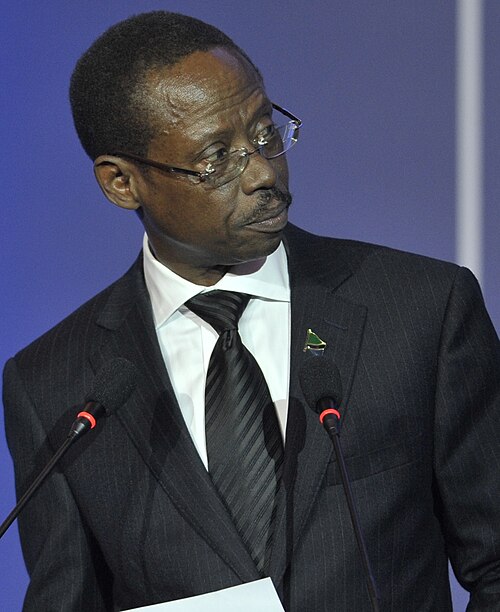
Abdallah Kigoda
Ex-Minister of Natural Resources