Financial Breakdown
Asset Distribution
Assets vs Liabilities
Assets
Disclaimer: These financial estimates are based on publicly available information and should be considered approximate. Last updated: 12/29/2025
Biography
Introduction: The Conscience of a Nation
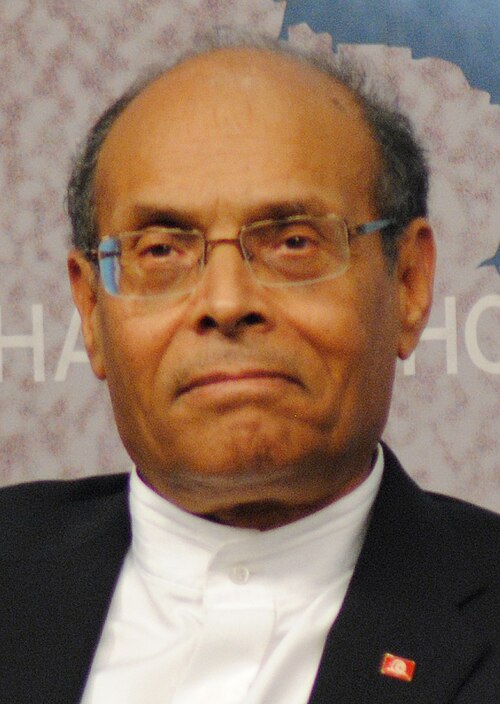
Moncef Marzouki stands as a pivotal figure in modern Tunisian and Arab history. A distinguished neurologist, a lifelong human rights activist, and a political leader, he is best known for serving as the first democratically elected President of Tunisia following the 2011 Jasmine Revolution. His ascent to the executive presidency in December 2011 symbolized Tunisia's historic break from decades of autocratic rule under Zine El Abidine Ben Ali. As a key player in the nation's fragile transition to democracy, Moncef Marzouki helped steer Tunisia through its most critical and turbulent period, ensuring the survival of its nascent democratic institutions. His presidency, though marked by political challenges and economic difficulties, cemented his legacy as a principled defender of civil liberties and a symbol of the Arab Spring's promise for peaceful political change.
Early Life & Education: Formative Years of Principle
Moncef Marzouki was born on July 7, 1945, in the coastal city of Grombalia, Tunisia. From an early age, he was immersed in an environment that valued education and public service. His father was a local judge and an early Tunisian nationalist, which likely influenced Marzouki's own sense of justice and civic duty. The family later moved to the city of Ksar Hellal.
Marzouki's academic path was one of excellence. He pursued his medical studies at the University of Strasbourg in France, specializing in neurology and public health. He earned his doctorate in 1973, demonstrating an early commitment to understanding and healing the human condition. His time in France during the politically charged late 1960s also exposed him to ideas of activism and dissent. Upon returning to Tunisia, he joined the faculty of the University of Sousse's Medical School, where he founded the department of community medicine. It was during this period that his dual identity as a healer and an advocate began to solidify. He witnessed firsthand the social and political constraints under the regimes of Habib Bourguiba and later Ben Ali, which steered him irrevocably toward human rights activism.
Career & Major Achievements: From Dissident to President
The career of Moncef Marzouki is a testament to unwavering commitment to democratic principles, often at great personal cost. His journey can be divided into three distinct phases: the activist, the exile, and the president.
The Human Rights Activist and Political Dissident
In 1979, Marzouki co-founded the Tunisian League of Human Rights (LTDH), one of the first organizations of its kind in the Arab world. His activism placed him in direct opposition to the authoritarian government. In 1994, he took the bold step of announcing his candidacy for the presidency against Zine El Abidine Ben Ali, a move that was both symbolic and dangerous, as Ben Ali ran unopposed. This act of defiance led to severe persecution. He faced harassment, surveillance, and was barred from practicing medicine. In 2001, he was arrested and imprisoned. Following international pressure, he was released but chose to go into exile in France in 2002 to escape further repression.
The Exile and the Road to Revolution
During his years in Paris, Moncef Marzouki remained a potent voice for democracy in Tunisia. He taught at the University of Paris, wrote extensively, and continued to lead the Congress for the Republic (CPR), a secular opposition party he founded in 2001. From afar, he galvanized international opinion against the Ben Ali regime. His exile lasted nearly a decade, ending dramatically with the success of the Jasmine Revolution in January 2011. He returned to Tunisia as a hero of the opposition and a credible candidate for national leadership.
The Presidency: Steering a Democratic Transition
In the historic October 2011 elections for the National Constituent Assembly, Marzouki's CPR party won the second-largest number of seats. In a landmark coalition deal with the moderate Islamist Ennahda Movement, which had won the plurality, Marzouki was elected as Interim President of Tunisia on December 12, 2011. His major achievements during his term (2011-2014) were foundational:
- Guaranteeing Democratic Processes: He presided over the peaceful drafting and adoption of Tunisia's progressive 2014 Constitution, widely hailed as one of the most democratic in the Arab world.
- Protecting Civil Liberties: True to his roots, he was a vocal defender of freedom of speech, women's rights, and the independence of civil society.
- Navigating Political Crisis: He managed profound political polarization and security challenges, including the assassinations of two leftist politicians in 2013, by facilitating a national dialogue that ultimately led to a technocratic government and peaceful elections.
- Restoring International Standing: He worked tirelessly to rebuild Tunisia's international relationships and attract support for its fragile democracy.
In December 2014, he lost the presidential election to Beji Caid Essebsi, accepting defeat gracefully—a moment that solidified Tunisia's democratic credentials. His concession was as significant for the region as his election had been.
Personal Life & Legacy: The Man Beyond the Office
Outside the intense realm of Politics & Government, Moncef Marzouki is known as an intellectual and a man of simple habits. He is a prolific author, having written numerous books and articles on medicine, human rights, and politics. He is fluent in Arabic, French, and English. Marzouki is married and has three daughters. His personal integrity and modest lifestyle, often contrasting with the opulence associated with other regional leaders, have been a hallmark of his public image.
The legacy of Moncef Marzouki is complex. To his supporters, he is the moral compass of the Tunisian revolution, a selfless leader who placed principle above power and guided the nation away from the brink of civil war. Critics point to the economic struggles and political instability that persisted during his tenure. However, his undeniable and lasting impact lies in his role as a key guarantor of Tunisia's democratic transition. He demonstrated that a peaceful transfer of power was possible in a post-revolutionary Arab state. His life's work, from the LTDH to the presidency, embodies a continuous struggle for dignity, freedom, and the rule of law in Tunisia.
Post-Presidency & Public Stance
Since leaving office, Marzouki has remained an active commentator on Tunisian and regional affairs. He has been critical of subsequent governments, including that of President Kais Saied, whose consolidation of power beginning in July 2021 Marzouki has denounced as a "coup" against the 2014 constitution he helped usher in. In 2022, he was tried in absentia and sentenced to prison on charges of "assaulting state security," a ruling he and international rights groups deem politically motivated. This ongoing confrontation underscores his enduring role as a dissenting voice and his unwavering commitment to the democratic ideals of the 2011 revolution.
For further reading on his work and Tunisia's transition, credible sources include the Encyclopaedia Britannica, reports from Human Rights Watch, and analyses from the Carnegie Endowment for International Peace.
Frequently Asked Questions
What is Moncef Marzouki's estimated net worth?
Moncef Marzouki has an estimated net worth of $500,000.
What is Moncef Marzouki's role and nationality?
Moncef Marzouki is a Ex-President of Tunisia from Tunisia.
How did Moncef Marzouki make their money?
Moncef Marzouki built their fortune primarily through As a former president and human rights activist from Tunisia, his wealth is not from major business holdings; public reports suggest a modest net worth consistent with a public servant's career..
How old is Moncef Marzouki?
Moncef Marzouki was born in 1945 (81 years old).
Which category is Moncef Marzouki listed under?
Moncef Marzouki is featured under the Politics & Government category on NetWorth Africa.
How is Moncef Marzouki's net worth calculated?
NetWorth Africa estimates financial valuations using publicly available stock equity holdings, company ownership records, real estate assets, and verified market data.
Net Worth Analysis
As a former president and human rights activist from Tunisia, his wealth is not from major business holdings; public reports suggest a modest net worth consistent with a public servant's career.
Quick Stats
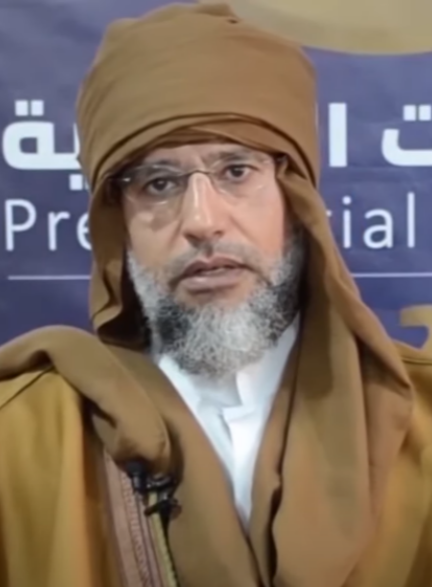
Related People
Aaron Motsoaledi
LP; Minister of Home Affairs • South Africa
Abane Ramdane†
FLN Leader & Strategist • Algeria
Abdalla Hamdok
Ex-Prime Minister • Sudan
Abdallah Kigoda
Ex-Minister of Natural Resources • Tanzania