Financial Breakdown
Asset Distribution
Assets vs Liabilities
Assets
Liabilities
Disclaimer: These financial estimates are based on publicly available information and should be considered approximate. Last updated: 12/31/2025
Biography
In the pantheon of African literary giants, Mongo Beti† stands as a monumental figure—a fearless novelist, incisive essayist, and unwavering critic of colonialism and its enduring legacies. Born Alexandre Biyidi Awala in 1932 in Mbalmayo, Cameroon, he would adopt the pen name Mongo Beti†, meaning "son of the Beti people," to become one of the most potent literary forces from the continent. His work, firmly rooted in the Arts & Culture of his homeland, transcended mere storytelling to become a weapon of political resistance and a mirror held up to the injustices of his time. As a Novelist & Anti-Colonial Writer, his key achievement lies in his foundational early novels, particularly Le pauvre Christ de Bomba (1956), which delivered a devastating and satirical critique of missionary colonialism, forever altering the landscape of African literature and post-colonial discourse.
Early Life & Education: The Seeds of Resistance
The formative years of Mongo Beti† were shaped directly by the colonial reality he would later dissect in his writing. He was born in 1932 in the then-French-administered territory of Cameroon. His early education took place at Catholic mission schools, an experience that provided him with a front-row seat to the complex and often hypocritical interplay between religious evangelism and colonial domination. This firsthand exposure to the missionaries' methods—their condescension, cultural erasure, and alliance with the colonial administration—planted the seeds of the fierce critique that would blossom in his later novels.
Beti was an exceptional student. He pursued his secondary education at the Lycée Leclerc in Yaoundé, before moving to France in 1951 for higher studies. He studied literature at the University of Aix-en-Provence and later at the Sorbonne in Paris. Immersed in the intellectual ferment of 1950s Paris, he encountered the burgeoning currents of anti-colonial thought and the vibrant community of African and Caribbean intellectuals, including fellow writer Aimé Césaire. It was during this period that he began his literary career, publishing his first novel, Ville cruelle (1954), under the pseudonym Eza Boto. However, it was the subsequent adoption of the name Mongo Beti† that marked his full embrace of a literary identity committed to speaking truth to power on behalf of his people and continent.
Career & Major Achievements: The Pen as a Weapon
The career of Mongo Beti† can be divided into two distinct but interconnected phases: his early, explosive literary period in the 1950s and 1970s, and his later period of active political engagement and writing following his return to Cameroon.
The Foundational Anti-Colonial Novels
Between 1954 and 1974, Mongo Beti† published a series of novels that cemented his reputation. His breakthrough came with Le pauvre Christ de Bomba (1956). The novel, presented through the diary of a young African catechist, uses irony and satire to expose the moral bankruptcy and cultural destructiveness of a French missionary. It was an instant scandal, banned in many French colonies, but a critical success that announced a bold new voice. This was followed by Mission terminée (1957, awarded the Prix Sainte-Beuve) and Le Roi miraculé (1958). Together, these works form a powerful trilogy critiquing the colonial apparatus. After a long hiatus, he returned with Perpétue et l'habitude du malheur (1974) and Remember Ruben (1974), which shifted focus to the failures and tyrannies of the post-independence African regimes.
Political Exile and Militant Journalism
Parallel to his fiction, Mongo Beti† was a prolific and trenchant essayist. From 1978 to 1991, he and his wife, Odile Tobner, published the bimonthly review Peuples Noirs / Peuples Africains (Black Peoples / African Peoples). This publication became a vital platform for radical criticism of neo-colonialism and the dictatorships plaguing Africa, particularly that of Ahmadou Ahidjo in Cameroon. His exile in France, which lasted from 1959 to 1991, was a period of intense political activism through writing. He authored several non-fiction works, including Main basse sur le Cameroun (1972), a scathing indictment of the Ahidjo regime that was immediately censored in France—a testament to the power and danger of his words.
The Return and Final Acts
Following political liberalization in Cameroon, Mongo Beti† returned to his homeland in 1991. His return was not one of quiet retirement. He opened the Librairie des Peuples Noirs (Bookstore of Black Peoples) in Yaoundé, a cultural hub and act of defiance against intellectual control. He also continued to write, publishing novels like L'histoire du fou (1994) and Trop de soleil tue l'amour (1999), which blended satire with detective fiction to critique contemporary Cameroonian society. Until his death in 2001, he remained an engaged and critical citizen, a living conscience for his nation.
Personal Life, Legacy, and Lasting Impact
Beyond the public intellectual, Mongo Beti† was a dedicated family man. He married Odile Tobner in 1963, a partnership that was both personal and professional, as they collaborated closely on Peuples Noirs / Peuples Africains. His life in exile was marked by his work as a literature teacher in Rouen, France, a profession that connected him to the next generation. His personal interests were inextricably linked to his fight: a deep love for African Arts & Culture, a commitment to Pan-African solidarity, and an unshakeable belief in the power of the written word to effect change.
The legacy of Mongo Beti† is profound and multifaceted. He is remembered as:
- A Literary Pioneer: He paved the way for a generation of African writers to address political and social issues with unflinching honesty and sophisticated satire.
- The Conscience of a Continent: His work provides an essential historical and critical framework for understanding the trauma of colonialism and the disillusionment of the post-independence era.
- A Model of Intellectual Courage: He risked censorship, exile, and alienation to speak truth to power, embodying the role of the writer as a necessary critic of society.
Net Worth & Business Ventures: The Value of Principle
Quantifying the net worth of a figure like Mongo Beti† in purely financial terms misses the essence of his life's work. As a Novelist & Anti-Colonial Writer operating often in opposition to powerful regimes, his path was not one chosen for monetary gain. His income derived primarily from his teaching salary in France, royalties from his published works—which faced bans and censorship—and the operation of the Librairie des Peuples Noirs in Yaoundé. This bookstore, more a labor of love and activism than a lucrative business venture, was a cultural project aimed at making critical texts available to the Cameroonian public. The true "wealth" of Mongo Beti† lies in his immense intellectual contribution, the enduring value of his literary canon, and the incalculable impact he had on African political thought and Arts & Culture. His legacy is one of principle, courage, and transformative ideas, assets that far surpass any conventional measure of net worth.
Sources & Further Reading: The works of Mongo Beti† (available in translation); critical studies on African literature; historical analyses of colonial and post-colonial Cameroon; archives of the journal Peuples Noirs / Peuples Africains.
Net Worth Analysis
Mongo Beti (1932-2001) was a renowned novelist and political activist, not a business figure; his wealth was not publicly documented and was not of the billionaire/millionaire industrialist category.
Quick Stats
Related People
Abasse Ndione
Novelist & Playwright
Abdel Rahman al-Abnudi†
Poet (Egypt-Sudan)
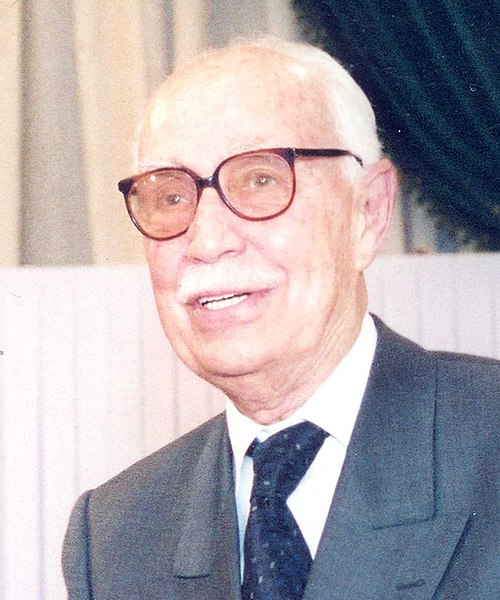
Abdelkrim Ghallab†
Novelist & Journalist
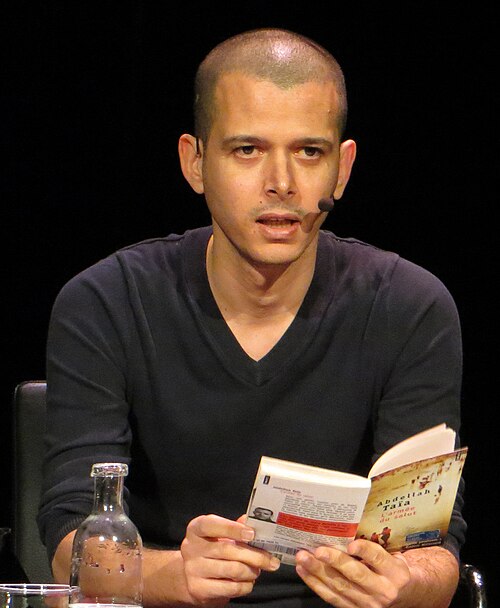
Abdellah Taïa
Novelist & Filmmaker