Financial Breakdown
Asset Distribution
Assets vs Liabilities
Assets
Disclaimer: These financial estimates are based on publicly available information and should be considered approximate. Last updated: 12/29/2025
Biography
Introduction: The People's Champion
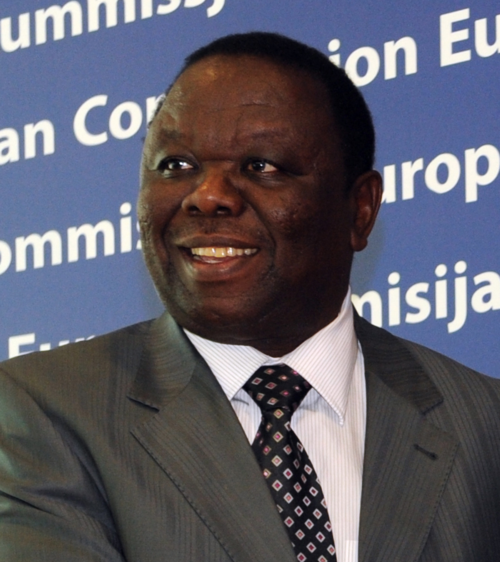
Morgan Richard Tsvangirai† stands as a monumental figure in the modern political history of Zimbabwe, embodying the decades-long struggle for democratic change against the entrenched rule of Robert Mugabe. As the founding president of the Movement for Democratic Change (MDC) in 1999, Tsvangirai emerged as the most formidable opposition leader the nation had ever seen. His journey from trade unionist to Prime Minister of Zimbabwe in a contentious unity government is a testament to his resilience and commitment. The pinnacle of his political career was his role as Ex-Prime Minister from 2009 to 2013, a period that brought a fragile stability to a nation ravaged by economic collapse and political violence. Morgan Tsvangirai's life was defined by extraordinary personal courage, enduring repeated state-sponsored intimidation, arrests, and a severe beating in 2007, yet he never wavered in his pursuit of a democratic Zimbabwe.
Early Life & Education: Forging Resilience in Gutu
Morgan Tsvangirai was born on March 10, 1952, in the rural village of Gutu, in Southern Rhodesia (now Zimbabwe). He was the eldest of nine children in a humble family, an experience that ingrained in him a deep understanding of the struggles faced by ordinary Zimbabweans. His formal education was cut short after completing his O-levels due to financial constraints, a common reality for many black Zimbabweans under the colonial regime. At the age of 20, in 1972, he began working at the Trojan Nickel Mine in Bindura. This entry into the mining industry would prove to be the crucible for his future in Politics & Government.
His natural leadership qualities quickly surfaced. He became a foreman and, more importantly, a passionate trade unionist. Rising through the ranks of the Associated Mineworkers Union, Tsvangirai was elected to the executive committee of the National Mineworkers Union by 1985. His formative years in the labor movement were critical; they taught him organization, mass mobilization, and the power of collective bargaining—skills he would later deploy on the national political stage. The harsh realities of colonial and later post-colonial economic policies, witnessed firsthand on the mine floors, solidified his resolve to fight for social and economic justice, setting the foundation for his eventual role as MDC Founder.
Career & Major Achievements: From Unionist to Prime Minister
Trade Union Leadership and Political Awakening
Morgan Tsvangirai's national profile soared when he was elected Secretary-General of the Zimbabwe Congress of Trade Unions (ZCTU) in 1988. Under his leadership, the ZCTU transformed from a state-aligned body into a powerful, independent force. Throughout the 1990s, he organized a series of successful mass strikes and protests against the Mugabe government's economic structural adjustment programs, which had eroded workers' living standards. By the late 1990s, with public discontent soaring due to economic mismanagement and corruption, Tsvangirai and other civic leaders saw the need to channel grassroots energy into a political vehicle. This led to the historic founding of the Movement for Democratic Change (MDC) on September 11, 1999, with Tsvangirai as its president.
Confronting Mugabe and the 2008 Election
The MDC's first electoral challenge in the 2000 parliamentary elections was remarkably strong, nearly defeating Mugabe's ZANU-PF. This marked the beginning of an era of intense persecution. Tsvangirai faced multiple treason charges, constant surveillance, and physical attacks. The most brutal was his March 2007 assault by state security agents after attempting to attend a prayer meeting. Despite this, he persisted. The 2008 presidential election became his crowning political achievement. Official results showed Morgan Tsvangirai won the first round with 47.9% of the vote against Mugabe's 43.2%, forcing a runoff. However, a state-orchestrated campaign of violent terror against MDC supporters led to Tsvangirai's heartbreaking but strategic withdrawal to save lives, despite likely having the popular mandate to win.
The Global Political Agreement and Prime Ministership
The post-election crisis forced regional mediation by the Southern African Development Community (SADC), led by South Africa's Thabo Mbeki. This resulted in the signing of the Global Political Agreement (GPA) in September 2008. On February 11, 2009, Morgan Tsvangirai was sworn in as Prime Minister of Zimbabwe in a Government of National Unity, with Mugabe remaining President. As Ex-Prime Minister, his tenure, though hampered by constant power struggles, achieved critical short-term successes:
- Economic Stabilization: He championed the adoption of the US dollar, which halted the world-record hyperinflation that had reached 89.7 sextillion percent.
- Social Service Restoration: His MDC-led ministries helped reopen schools and hospitals, and restored basic water and sanitation services.
- International Re-engagement: He was instrumental in securing limited donor support and humanitarian aid for the shattered nation.
His term ended after the disputed 2013 elections, which were won by ZANU-PF amid allegations of irregularities.
Personal Life, Illness, and Legacy
Morgan Tsvangirai's personal life was marked by both profound tragedy and enduring love. He was married to his first wife, Susan, for over 30 years until her tragic death in a 2009 car accident that also left Tsvangirai injured. He later married Elizabeth Macheka in 2012. A devoted father, his family was a source of strength. In 2016, he publicly disclosed his diagnosis with colon cancer, battling the disease with characteristic fortitude while continuing his political work. Morgan Tsvangirai passed away on February 14, 2018, at the age of 65.
His legacy is complex and enduring. He is universally remembered as a democrat who broke ZANU-PF's political monopoly and provided millions with hope for change. He normalized political opposition in Zimbabwe and demonstrated that Mugabe's rule could be challenged. The challenges he faced—including internal party splits and the difficulties of coalition governance—also offer crucial lessons for opposition politics globally. His greatest legacy is perhaps the empowered citizenry and the enduring idea that Zimbabweans deserve a genuine democratic alternative, a principle for which he risked and ultimately gave his life.
Net Worth & Business Ventures
Unlike many of his political contemporaries, Morgan Tsvangirai was not known for significant personal wealth or business empires. His financial standing was largely tied to his career as a trade unionist and later as a political leader. During his tenure as Prime Minister, he received an official state salary and benefits. Public records and estimates from Zimbabwean watchdogs suggested his net worth was modest, especially when compared to the vast fortunes amassed by some in the ruling elite. His primary "venture" was political—the building of the MDC into a mass movement. Any personal assets were considered relatively humble, a fact that bolstered his image as a man of the people who lived a lifestyle closer to the ordinary Zimbabweans he represented. His wealth was measured more in political capital and the unwavering support of millions than in financial terms.
For further reading on the life and times of Morgan Tsvangirai, credible sources include the Encyclopaedia Britannica, documented reports from Human Rights Watch on the political context, and archival news from reputable outlets like the BBC and Reuters covering Zimbabwean Politics & Government.
Frequently Asked Questions
What is Morgan Tsvangirai†'s estimated net worth?
Morgan Tsvangirai† has an estimated net worth of $1.0 Million.
What is Morgan Tsvangirai†'s role and nationality?
Morgan Tsvangirai† is a MDC Founder & Ex-Prime Minister from Zimbabwe.
How did Morgan Tsvangirai† make their money?
Morgan Tsvangirai† built their fortune primarily through Morgan Tsvangirai was a trade unionist and opposition politician, not a business figure; his wealth was modest and not on any billionaire list, with most reports indicating he died with limited assets..
How old is Morgan Tsvangirai†?
Morgan Tsvangirai† was born in 1952 (74 years old).
Which category is Morgan Tsvangirai† listed under?
Morgan Tsvangirai† is featured under the Politics & Government category on NetWorth Africa.
How is Morgan Tsvangirai†'s net worth calculated?
NetWorth Africa estimates financial valuations using publicly available stock equity holdings, company ownership records, real estate assets, and verified market data.
Net Worth Analysis
Morgan Tsvangirai was a trade unionist and opposition politician, not a business figure; his wealth was modest and not on any billionaire list, with most reports indicating he died with limited assets.
Quick Stats
Related People

Aaron Motsoaledi
LP; Minister of Home Affairs • South Africa

Abane Ramdane†
FLN Leader & Strategist • Algeria

Abdalla Hamdok
Ex-Prime Minister • Sudan

Abdallah Kigoda
Ex-Minister of Natural Resources • Tanzania