Biography
Introduction: The Pillar of Algerian Independence
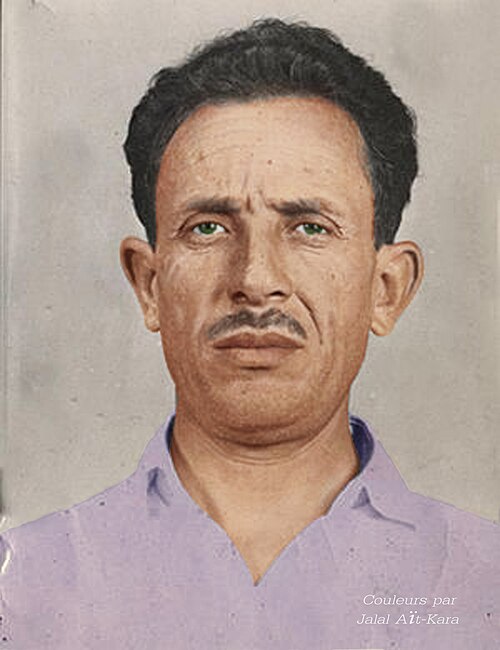
In the pantheon of Algerian national heroes, Mostefa Ben Boulaïd† stands as a foundational pillar of the revolution. As a principal founder and the first commander of the FLN (National Liberation Front) and its armed wing, the ALN (National Liberation Army), his strategic genius and unwavering commitment ignited the Algerian War of Independence in 1954. Born in 1917 in the Aurès Mountains, a region that would become the crucible of the revolt, Ben Boulaïd's journey from a decorated World War II veteran to a revolutionary leader encapsulates the struggle against French colonial rule. His key achievement was not only orchestrating the launch of armed resistance on November 1, 1954, but also establishing the military and political structures that would sustain the revolution. His martyrdom in 1956 cemented his status as an immortal symbol of sacrifice for Algeria's freedom, making his biography essential to understanding the nation's Liberation Era.
Early Life & Education: Forging a Patriot
Mostefa Ben Boulaïd was born in 1917 in the village of Arris, in the rugged Aurès region of northeastern Algeria. This Berber heartland, known for its fierce independence and resistance throughout history, profoundly shaped his character. His early education was traditional, rooted in local Quranic schools, instilling in him the values of justice and community. However, the realities of colonial Algeria soon intervened. Like many Algerians of his generation, Ben Boulaïd was conscripted into the French army during World War II. He served with distinction in the Italian campaign, earning the prestigious Croix de Guerre medal for bravery. This experience was a double-edged sword; it provided him with invaluable military training in logistics, tactics, and weaponry, but it also exposed him to the stark hypocrisy of fighting for France's freedom while his own people lived under its oppressive colonial rule.
Returning to Algeria after the war, he found a country simmering with discontent. The 1945 Sétif and Guelma massacres, where thousands of Algerian demonstrators were killed by French authorities, were a pivotal moment. Ben Boulaïd, now a respected veteran and a successful businessman running a transport company, began his political awakening. He joined the Movement for the Triumph of Democratic Liberties (MTLD) and later its secret paramilitary wing, the Special Organization (OS). His business, which involved travel across the Aurès, provided perfect cover for organizing clandestine networks. These formative experiences—his deep roots in the Aurès, his military acumen from the war, and his growing political consciousness—forged the man who would become the military backbone of the coming revolution.
Career & Major Achievements: The Revolutionary Commander
The career of Mostefa Ben Boulaïd† is synonymous with the birth of the modern Algerian armed struggle. By the early 1950s, convinced that peaceful political avenues were exhausted, he became a central figure in the clandestine group known as the "Committee of the Twenty-Two." This group would evolve into the revolutionary command that planned the insurrection. In 1954, Ben Boulaïd was a key signatory of the proclamation that created the FLN and appointed as the commander of Wilaya I (the Aurès region), the most critical and challenging military zone.
Mastermind of November 1, 1954
On November 1, 1954, a series of coordinated attacks across Algeria marked the start of the war. Ben Boulaïd's zone, the Aurès, saw some of the most intense and symbolically important initial engagements. His meticulous planning and deep knowledge of the terrain were instrumental. He transformed the rugged mountains into an impregnable fortress and a base for guerrilla operations, successfully applying the military lessons he had learned.
Military and Political Architect
His achievements extended beyond battlefield tactics. Ben Boulaïd was instrumental in:
- Establishing the fundamental structure and chain of command for the ALN.
- Forging crucial alliances with local populations, ensuring the revolution had a social base.
- Representing the FLN at the landmark Bandung Conference in April 1955, where he successfully secured diplomatic recognition and support from Afro-Asian nations, internationalizing the Algerian cause.
His leadership was characterized by strategic brilliance, personal courage, and a profound connection to his fighters and the people. In early 1955, he authored a detailed report to the FLN leadership outlining the military and political situation, a document that remains a primary source for historians. His capture by French forces in February 1955 was a major blow, but his escape from the formidable Condor Prison in Constantine six months later became the stuff of legend, massively boosting revolutionary morale.
Personal Life & Legacy: The Enduring Symbol
Outside his revolutionary persona, Mostefa Ben Boulaïd was a man of his community. Before the war, he was a family man and an entrepreneur, respected for his integrity. His personal sacrifice was total; he abandoned his business and family life, dedicating everything to the national cause. This selflessness is central to his image as a pure martyr. His legacy is indelibly etched into the identity of modern Algeria. He is remembered not just as a military leader, but as a unifying figure whose integrity and strategic vision were unparalleled in the early, fragile days of the revolution.
Tragically, his life was cut short on March 22, 1956. While returning from a mission abroad, the radio he was carrying, a gift from Egyptian President Gamal Abdel Nasser, exploded. French intelligence had rigged it with a bomb. His assassination robbed the revolution of one of its most revered founders. Today, Mostefa Ben Boulaïd† is a national icon. His likeness graces Algerian currency, countless streets, schools, and institutions bear his name, and the date of his death is commemorated. He represents the foundational spirit of the war—the courage to initiate, the skill to organize, and the ultimate willingness to die for independence. His legacy continues to inspire and serves as a cornerstone of Algeria's national narrative in the Politics & Government sphere.
Net Worth & Business: The Entrepreneurial Revolutionary
Prior to his full immersion in the independence struggle, Mostefa Ben Boulaïd† achieved notable success in the private sector. He owned and operated a transport company, a venture that provided him with financial independence and, more importantly, strategic mobility. This business was far from a source of personal wealth in the traditional sense; it was a revolutionary asset. His trucks and travel permits allowed him to move freely throughout the Aurès region and beyond, facilitating the clandestine movement of people, funds, and messages for the nascent resistance network. Any financial resources he accumulated were ultimately channeled into the revolutionary cause. Therefore, while he was a successful entrepreneur, discussing his "net worth" is anachronistic. His true value was not measured in currency, but in the organizational capacity and cover his business provided, which proved invaluable in building the infrastructure for the impending war. His story in this regard highlights how many revolutionaries leveraged their civilian professions as tools for national liberation.
Sources: The life and actions of Mostefa Ben Boulaïd are documented in historical records of the Algerian War, including official FLN communiqués, French military archives, and biographies by Algerian historians. Key details are corroborated in works such as "A Savage War of Peace: Algeria 1954-1962" by Alistair Horne and the memoirs of his contemporaries within the FLN leadership.
Frequently Asked Questions
What is Mostefa Ben Boulaïd†'s estimated net worth?
Net worth details for Mostefa Ben Boulaïd† are currently being updated.
What is Mostefa Ben Boulaïd†'s role and nationality?
Mostefa Ben Boulaïd† is a FLN Leader & Martyr from Algeria.
How did Mostefa Ben Boulaïd† make their money?
Mostefa Ben Boulaïd† built their fortune primarily through Mostefa Ben Boulaïd was a revolutionary leader and martyr who died in 1956, not a business figure, so he did not accumulate personal wealth in a conventional sense..
How old is Mostefa Ben Boulaïd†?
Mostefa Ben Boulaïd† was born in 1917 (109 years old).
Which category is Mostefa Ben Boulaïd† listed under?
Mostefa Ben Boulaïd† is featured under the Politics & Government category on NetWorth Africa.
How is Mostefa Ben Boulaïd†'s net worth calculated?
NetWorth Africa estimates financial valuations using publicly available stock equity holdings, company ownership records, real estate assets, and verified market data.
Net Worth Analysis
Mostefa Ben Boulaïd was a revolutionary leader and martyr who died in 1956, not a business figure, so he did not accumulate personal wealth in a conventional sense.
Quick Stats
Related People
Aaron Motsoaledi
LP; Minister of Home Affairs • South Africa
Abane Ramdane†
FLN Leader & Strategist • Algeria
Abdalla Hamdok
Ex-Prime Minister • Sudan
Abdallah Kigoda
Ex-Minister of Natural Resources • Tanzania