Financial Breakdown
Asset Distribution
Assets vs Liabilities
Assets
Disclaimer: These financial estimates are based on publicly available information and should be considered approximate. Last updated: 12/31/2025
Biography
Introduction
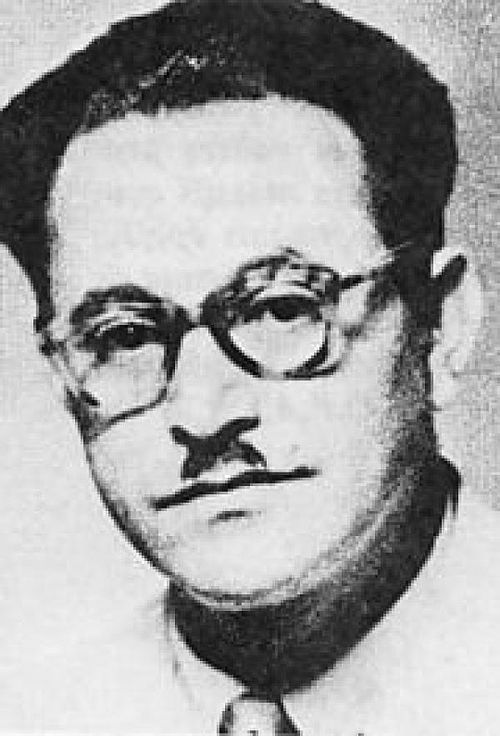
Mouloud Feraoun† (1913-1962) stands as one of the most pivotal and poignant figures in Algerian literature. A distinguished Novelist & Teacher, his life and work are inextricably linked to the struggle for identity, justice, and human dignity during one of the most turbulent periods in his nation's history. Born into a modest Kabyle family, Feraoun used his pen to chronicle the lives, traditions, and hardships of his people with unparalleled authenticity and empathy. His key achievement lies in being among the first Algerian writers to publish novels in French that gave a genuine, unromanticized voice to the indigenous experience, bridging the worlds of colonial Algeria and the yearning for self-determination. More than just an author, Mouloud Feraoun† was an educator dedicated to enlightenment, whose tragic assassination in 1962 cemented his status as a martyr for culture and peace.
Early Life & Education
Mouloud Feraoun was born on March 8, 1913, in Tizi Hibel, a small village in the rugged Kabylie region of French colonial Algeria. His birth name was Aït-Chabane, which he later changed. His early life was marked by the profound poverty and traditional agrarian lifestyle common to the Berber communities of the time. This humble beginning deeply shaped his worldview and later literary themes. A gifted student, his life took a decisive turn when a schoolteacher recognized his potential and encouraged his father to allow him to pursue further studies.
Against significant odds, Feraoun attended the École Normale d’Instituteurs (Teacher Training College) in Bouzaréah, Algiers, graduating in 1935. This education was a rare opportunity for a Kabyle boy, placing him among a small elite of Algerians who achieved professional qualifications under the colonial system. His formative years as a student, navigating between his native Kabyle culture and the French educational apparatus, instilled in him a complex dual perspective. He became a mediator of sorts, deeply rooted in the values of his community while mastering the language and tools of the colonizer, which he would later wield to articulate a powerful indigenous narrative.
Career & Major Achievements
Mouloud Feraoun† embarked on a dual career as a teacher and writer, two vocations he saw as complementary missions of enlightenment and representation. For over two decades, he taught in various schools across Kabylie, including in Tizi Hibel and Taourirt Moussa, deeply committed to educating Algerian youth.
Literary Masterpieces
His literary career began with the semi-autobiographical novel Le Fils du pauvre ("The Poor Man's Son"), written in 1939 and published in 1950. This groundbreaking work offered a meticulous, heartfelt portrait of Kabyle life—its customs, struggles, and familial bonds—through the eyes of a boy named Fouroulou Menrad. It was a landmark in Maghrebi literature for its authentic depiction from within the culture. He followed this with other significant novels:
- La Terre et le sang (1953): Exploring themes of emigration, labor, and the clash between tradition and modernity.
- Les Chemins qui montent (1957): A complex tale of forbidden love and social constraints.
- Jours de Kabylie (1954): A collection of insightful journal entries and essays on daily life.
The War of Independence and His Journal
Feraoun's most historically vital work is his Journal, 1955-1962, published posthumously. As the Algerian War for Independence intensified, Mouloud Feraoun† meticulously documented the escalating violence, his personal anguish, and the moral decay affecting all sides. He wrote with courageous impartiality, condemning colonial repression and FLN (National Liberation Front) atrocities alike, always centering the suffering of the civilian population. This journal is an indispensable first-hand account of the war, reflecting his unwavering commitment to truth and human dignity above partisan politics. During this period, he also worked with social centers to support educational and cultural development.
Personal Life & Legacy
Mouloud Feraoun was a family man, married to Dehbia Feraoun, with whom he had seven children. His personal life was defined by a deep attachment to his Kabylie roots and a modest, principled existence. He was known for his integrity, kindness, and steadfast belief in the power of education as a force for progress. His humanist philosophy rejected hatred, seeking instead understanding and moral clarity even amidst chaos.
Tragically, his life was cut short on March 15, 1962, just days before the ceasefire ending the Algerian War. He was assassinated in Algiers, alongside five colleagues, by members of the far-right French terrorist organisation OAS (Organisation de l'armée secrète), who targeted him as a symbol of Franco-Algerian dialogue and intellectual resistance. This act of violence immortalized him as a martyr for Arts & Culture.
The legacy of Mouloud Feraoun† is profound. He is celebrated as:
- A founding father of modern Algerian literature in French.
- A crucial ethnographer of Kabylie society in transition.
- A moral witness whose Journal remains a key historical document.
- An inspiration for subsequent generations of Maghrebi writers seeking to express their cultural identity.
Net Worth & Business
As a dedicated public school teacher and author focused on social realism, Mouloud Feraoun† did not pursue wealth or commercial business ventures. His life was one of modest means and public service. Any financial success from his writings was secondary to his mission of testimony and education. In the context of colonial and wartime Algeria, the concept of "net worth" is largely inapplicable to a figure like Feraoun. His true value lies not in monetary accumulation but in the immense cultural and literary capital he generated. His works, translated into multiple languages and continuously studied worldwide, represent an invaluable and enduring asset to Algerian and world Literature. The posthumous recognition and academic interest in his body of work affirm that his legacy is priceless, cementing his place in the pantheon of great 20th-century humanist writers.
Net Worth Analysis
Mouloud Feraoun was an Algerian novelist and teacher who was assassinated in 1962; he was not a business figure and his legacy is cultural, not financial.
Quick Stats
Related People
Abasse Ndione
Novelist & Playwright
Abdel Rahman al-Abnudi†
Poet (Egypt-Sudan)
Abdelkrim Ghallab†
Novelist & Journalist
Abdellah Taïa
Novelist & Filmmaker