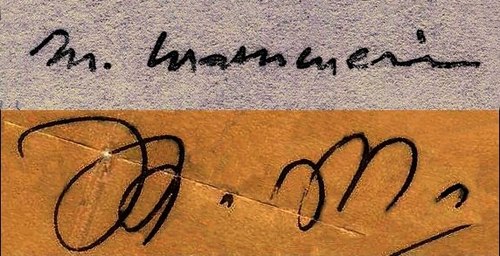
Biography
Introduction: The Guardian of Amazigh Heritage
Mouloud Mammeri† stands as a monumental figure in the landscape of Algerian and North African Arts & Culture. Born in 1917, he was a prolific Novelist & Anthropologist whose life's work was dedicated to preserving, studying, and revitalizing the indigenous Amazigh (Berber) culture and language of Algeria. His significance transcends literary acclaim; he was a cultural activist, linguist, and intellectual who dared to assert the identity of the Amazigh people during periods of intense political and cultural homogenization. His key achievement lies in his dual legacy: crafting profound novels that captured the soul of Algerian society and pioneering rigorous anthropological and linguistic work that saved the Tamazight language from the brink of obscurity. The life and work of Mouloud Mammeri† remain a testament to the power of cultural resilience.
Early Life & Education: Forging an Intellectual Path
Mouloud Mammeri was born on December 28, 1917, in the Kabyle village of Taourirt Mimoun, in the rugged mountains of Algeria. Growing up in a traditional Amazigh community, he was immersed in the oral poetry, tales, and customs that would later form the core of his anthropological research. His early education began in his native village, but his intellectual promise soon led him to the Lycée Louis-le-Grand in Paris. This experience placed him at the crossroads of his indigenous Kabyle culture and the French colonial education system, a tension that would deeply influence his writing.
His academic journey was interrupted by World War II, during which he was mobilized and participated in the Allied campaigns. After the war, he resumed his studies, focusing on literature and linguistics. He earned a degree from the Sorbonne and later studied at the École nationale des langues orientales vivantes. This formidable academic training equipped Mouloud Mammeri† with the tools to analyze his own culture with scholarly precision, while his lived experience provided the authentic material for his literary genius. These formative years created the unique blend of the storyteller and the scientist that defined his career.
Career & Major Achievements: Between the Novel and the Field
The career of Mouloud Mammeri† is a rich tapestry woven with literary creation and scholarly dedication. He first gained prominence with his 1952 novel, La Colline oubliée (The Forgotten Hill). This groundbreaking work, written in French, offered an intimate, nuanced portrait of Kabyle village life, exploring themes of tradition, change, and colonial impact. It was a landmark in Maghrebi literature for its authentic representation from within the culture, rather than an orientalist gaze. He followed this with other significant novels like Le Sommeil du juste (The Sleep of the Just, 1955) and L'Opium et le bâton (The Opium and the Stick, 1965), the latter providing a critical perspective on the Algerian War of Independence.
Anthropological and Linguistic Crusade
Parallel to his literary output, Mammeri embarked on his crucial work as an Anthropologist. In the 1960s and 70s, he systematically collected and transcribed oral poetry, proverbs, and legal texts from the Kabyle region. His most famous anthropological contribution is Les Isefra (1969), a collection and translation of poems by the 19th-century Kabyle poet Si Mohand-ou-Mhand. This work was not merely archival; it was an act of cultural reclamation.
His dedication culminated in the development of a standardized grammar for the Tamazight language. In 1976, he published Tajerrumt n Tmazight (tantala taqbaylit), a grammar of the Kabyle language, which became an essential tool for students and activists. Perhaps the most pivotal moment in his career was the 1980 cancellation of his lecture on ancient Kabyle poetry at the University of Tizi Ouzou. This act of censorship sparked the "Berber Spring" (Printemps berbère), a major political and cultural movement demanding official recognition of the Amazigh language and identity. This event cemented Mouloud Mammeri† as a symbol of the Amazigh cultural revival.
Recognition and Lasting Impact
Mammeri's achievements were recognized through various positions and honors. He taught at the University of Algiers and served as a researcher at the Centre National de la Recherche Scientifique (CNRS). He was also a founding member of the Union des Écrivains Algériens. His work created the foundational pillars for modern Amazigh studies:
- Literary Canon: Establishing the Amazigh experience as a central subject of Algerian literature.
- Linguistic Tools: Providing the first modern grammatical framework for Kabyle Tamazight.
- Cultural Archive: Preserving a vast repository of oral heritage that was in danger of being lost.
- Political Symbol: Inspiring a generation of activists through the Berber Spring.
Personal Life & Legacy: The Man Behind the Work
While intensely private, Mouloud Mammeri† was known as a man of profound integrity and unwavering commitment. His personal interests were inextricably linked to his professional passions; he was a perpetual student of language and human societies. He was not a philanthropist in the conventional sense, but his life was an act of philanthropy toward his culture—donating his intellect and energy to a cause greater than himself. He passed away on February 26, 1989, in a car accident near Aïn Defla, Algeria, leaving a nation in mourning.
His legacy is immense and living. Today, the Amazigh language (Tamazight) is a national and official language in Algeria, a status achieved on the bedrock of his scholarship and activism. Academic centers, streets, and the Mouloud Mammeri University of Tizi-Ouzou bear his name. More importantly, he inspired countless writers, linguists, and citizens to take pride in their heritage. The contemporary flourishing of Amazigh music, film, and literature owes a direct debt to the path forged by Mouloud Mammeri†.
Intellectual Contribution & Cultural Capital
Discussing the "net worth" of a figure like Mouloud Mammeri† in purely financial terms would be to misunderstand the nature of his contribution. His wealth was cultural, intellectual, and symbolic. He was an academic and writer, not a business magnate. His income derived from his work as a professor, researcher, and author. There is no public record of significant business ventures or personal fortune, as his ventures were in the realm of ideas and cultural preservation.
However, his cultural capital is incalculable. He invested in the intangible wealth of a people—their language, stories, and history. The value of this investment is seen in the revitalization of Tamazight, a movement that has created its own economy of teachers, publishers, artists, and media professionals. The legacy of Mouloud Mammeri† is a powerful reminder that the most enduring fortunes are not always monetary, but are those that enrich the identity and spirit of a nation for generations to come.
Sources and further reading on the life of Mouloud Mammeri† can be found through academic databases and institutions like the Encyclopedia of World Biography, and research from the Centre de Recherche en Anthropologie Sociale et Culturelle in Algeria.
Frequently Asked Questions
What is Mouloud Mammeri†'s estimated net worth?
Net worth details for Mouloud Mammeri† are currently being updated.
What is Mouloud Mammeri†'s role and nationality?
Mouloud Mammeri† is a Novelist & Anthropologist from Algeria.
How did Mouloud Mammeri† make their money?
Mouloud Mammeri† built their fortune primarily through Mouloud Mammeri was a renowned Algerian writer and anthropologist, not a business figure, and passed away in 1989. His legacy is cultural, not financial..
How old is Mouloud Mammeri†?
Mouloud Mammeri† was born in 1917 (109 years old).
Which category is Mouloud Mammeri† listed under?
Mouloud Mammeri† is featured under the Arts & Culture category on NetWorth Africa.
How is Mouloud Mammeri†'s net worth calculated?
NetWorth Africa estimates financial valuations using publicly available stock equity holdings, company ownership records, real estate assets, and verified market data.
Net Worth Analysis
Mouloud Mammeri was a renowned Algerian writer and anthropologist, not a business figure, and passed away in 1989. His legacy is cultural, not financial.
Quick Stats


Related People
Abasse Ndione
Novelist & Playwright • Senegal
Abdel Rahman al-Abnudi†
Poet (Egypt-Sudan) • Sudan
Abdelkrim Ghallab†
Novelist & Journalist • Morocco
Abdellah Taïa
Novelist & Filmmaker • Morocco