Financial Breakdown
Asset Distribution
Assets vs Liabilities
Assets
Disclaimer: These financial estimates are based on publicly available information and should be considered approximate. Last updated: 12/30/2025
Biography
Introduction: The Architect and Defector
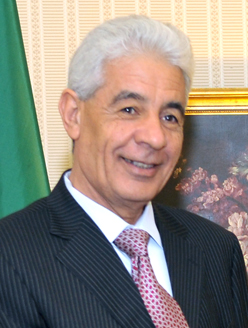
Moussa Koussa stands as one of the most enigmatic and pivotal figures in modern Libyan Politics & Government. For decades, he was a cornerstone of Colonel Muammar Gaddafi's regime, serving as the head of external intelligence for over fifteen years before ascending to the role of Ex-Foreign Minister of Libya in 2009. His career was defined by a deep involvement in Libya's most controversial international affairs, from its sponsorship of militant groups to its subsequent renunciation of weapons of mass destruction. However, Moussa Koussa achieved global notoriety in 2011 when he became the highest-ranking official to defect from Gaddafi's government during the Libyan Civil War. His dramatic departure and subsequent role as a key intermediary between the regime and the West cemented his status as a complex figure whose life story is intertwined with the turbulent history of Libya itself.
Early Life & Education: Formative Years in a Kingdom and a Revolution
Moussa Koussa was born in 1949, a time when Libya was a monarchy under King Idris I. Details about his early childhood and family background remain sparse, a common theme for officials who rose within Gaddafi's secretive revolutionary system. He pursued higher education in the United States, earning a bachelor's degree in sociology from Michigan State University in the early 1970s. This period abroad during a time of global political ferment likely shaped his worldview and understanding of Western societies—knowledge he would later wield as both an adversary and a negotiator.
His return to Libya coincided with a transformed nation. In 1969, Muammar Gaddafi had seized power in a bloodless coup. The young, educated Moussa Koussa joined the revolutionary ranks, quickly aligning himself with Gaddafi's Arab nationalist and socialist ideology. He became an active member of the revolutionary committees, the ideological enforcers of the new regime. His Western education, combined with his revolutionary fervor, made him a valuable asset. He reportedly worked at the Libyan People's Bureau (embassy) in London in the late 1970s, but his true rise began when he moved into the shadowy realm of intelligence, a move that would define the next three decades of his career.
Career & Major Achievements: From Spymaster to Diplomat
The career of Moussa Koussa can be divided into two distinct but interconnected phases: his long tenure as intelligence chief and his shorter, final role as Foreign Minister.
The Spymaster (Late 1970s – 2009)
Appointed as the head of the Libyan External Security Organization (JSO), Moussa Koussa operated at the heart of Gaddafi's international machinations for over 15 years. His office was implicated in coordinating state-sponsored activities that made Libya a pariah in the West. Most infamously, he was linked by Western intelligence agencies to the 1988 bombing of Pan Am Flight 103 over Lockerbie, Scotland, which killed 270 people. While never formally charged, his alleged role led the United States to sanction him directly in 1993. During this period, he was a central figure in Libya's support for various international militant groups.
The Diplomat and Defector (2009 – 2011)
In a surprising shift, Gaddafi appointed Moussa Koussa as Foreign Minister in March 2009. This move signaled Libya's desire for further rehabilitation on the world stage following its 2003 agreement to dismantle its WMD programs. As Ex-Foreign Minister, he worked to normalize ties, overseeing agreements on immigration, trade, and counter-terrorism with European nations.
His most dramatic act, however, came in 2011. As the Arab Spring ignited and protests in Libya escalated into a full-scale civil war and NATO intervention, Moussa Koussa made a calculated break. In late March 2011, he traveled to Tunisia and flew to the United Kingdom, announcing his resignation from Gaddafi's government. He stated he was "no longer willing to represent this regime." His defection was a massive propaganda blow to Gaddafi and encouraged further high-profile departures.
While in the UK, he was debriefed by British intelligence and Scottish authorities regarding the Lockerbie bombing. He later traveled to Qatar to act as an intermediary, attempting to negotiate a peaceful end to the conflict, though these efforts ultimately failed. His defection and cooperation marked the final, definitive turn in a career spent navigating the darkest corridors of power.
Personal Life, Legacy, and Lasting Impact
Extremely private, little is known about the personal life of Moussa Koussa. He was known to be a chain smoker and a skilled chess player, a hobby that metaphorically reflected his strategic, patient approach to intelligence and Diplomacy. Unlike other regime figures, he avoided the flamboyant lifestyle, maintaining an image of austere dedication to his work.
The legacy of Moussa Koussa is profoundly dualistic. To many in the West and to post-Gaddafi Libyan authorities, he remained a sinister figure associated with state terrorism. The Libyan National Transitional Council sought to try him for crimes upon his potential return. To others, he was a pragmatic operator who, from within the system, helped steer Libya away from isolation and ultimately abandoned a sinking ship, providing critical intelligence to the opposition.
His lasting impact lies in his embodiment of the Gaddafi era's contradictions: a Western-educated man who served an anti-Western regime; a feared intelligence chief who became a key diplomat for reconciliation; a loyalist whose defection helped topple his leader. After the war, he lived in exile, reportedly in Qatar and Algeria, a ghost from Libya's past while the country struggled to build a new future. His life serves as a complex chapter in the study of Politics & Government in authoritarian states, where survival and power often necessitate profound moral ambiguity.
Net Worth & Post-Government Activities
Accurately assessing the net worth of Moussa Koussa is challenging due to the opaque nature of the Gaddafi regime's finances and his own secretive life. As a top-tier official for over three decades, he undoubtedly had access to significant state resources and wealth. Following the 2011 revolution, the UN and various governments froze assets belonging to numerous Gaddafi-era figures. While specific amounts linked directly to Moussa Koussa are not publicly detailed in broad sources, he was subject to these international asset freezes, implying he held substantial wealth abroad.
Unlike some former regime members who attempted to engage in business or public commentary, Moussa Koussa vanished from public view after 2011. He undertook no known business ventures or commercial activities. His post-defection life appears to have been one of quiet exile, sustained by whatever assets he had secured prior to the fall of Tripoli. His primary "asset" remained his extensive knowledge of the regime's inner workings and international dealings, the value of which was realized during his 2011 debriefings but has not been translated into public commercial enterprise.
Key Dates in the Life of Moussa Koussa
- 1949: Born in Libya.
- Early 1970s: Earns BA in Sociology from Michigan State University, USA.
- Late 1970s: Begins work with Libyan intelligence apparatus.
- ~1994-2009: Serves as head of the Libyan External Security Organization (JSO).
- March 2009: Appointed Foreign Minister of Libya.
- March 30, 2011: Defects from Gaddafi regime, flees to the United Kingdom.
- April 2011: Cooperates with intelligence agencies and travels to Qatar for mediation attempts.
- Post-2011: Lives in exile, out of the public eye.
Frequently Asked Questions
What is Moussa Koussa's estimated net worth?
Net worth details for Moussa Koussa are currently being updated.
What is Moussa Koussa's role and nationality?
Moussa Koussa is a Ex-Foreign Minister from Libya.
How did Moussa Koussa make their money?
Moussa Koussa built their fortune primarily through Moussa Koussa is a former Libyan official and diplomat, not a business figure; his wealth is not publicly documented, and he is not on any billionaire list. His assets were likely frozen under international sanctions following the 2011 Libyan civil war..
How old is Moussa Koussa?
Moussa Koussa was born in 1949 (77 years old).
Which category is Moussa Koussa listed under?
Moussa Koussa is featured under the Politics & Government category on NetWorth Africa.
How is Moussa Koussa's net worth calculated?
NetWorth Africa estimates financial valuations using publicly available stock equity holdings, company ownership records, real estate assets, and verified market data.
Net Worth Analysis
Moussa Koussa is a former Libyan official and diplomat, not a business figure; his wealth is not publicly documented, and he is not on any billionaire list. His assets were likely frozen under international sanctions following the 2011 Libyan civil war.
Quick Stats

Related People

Aaron Motsoaledi
LP; Minister of Home Affairs • South Africa

Abane Ramdane†
FLN Leader & Strategist • Algeria

Abdalla Hamdok
Ex-Prime Minister • Sudan

Abdallah Kigoda
Ex-Minister of Natural Resources • Tanzania